Close Menu
 World
World
 Biography
 Health
 Education
 Business
 Lifestyle
 Sports
 Technology
 Animals
 History
 Food
Food
 Religious
 Startups
 Movies
 Politics
 Fashion
 Covid
Covid
 Diet
Diet
 Fitness
 Marketing
 Travel
 Science
 Reviews
 Social media
 Stories
 Facts
Facts
 Art
Art
 Entertainment
Badal

Health
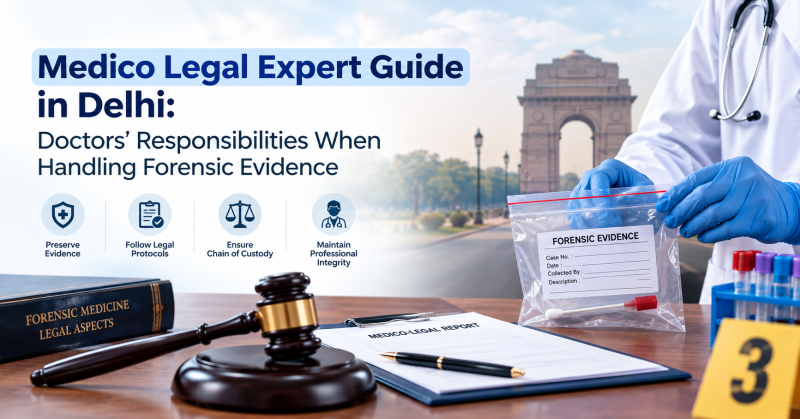
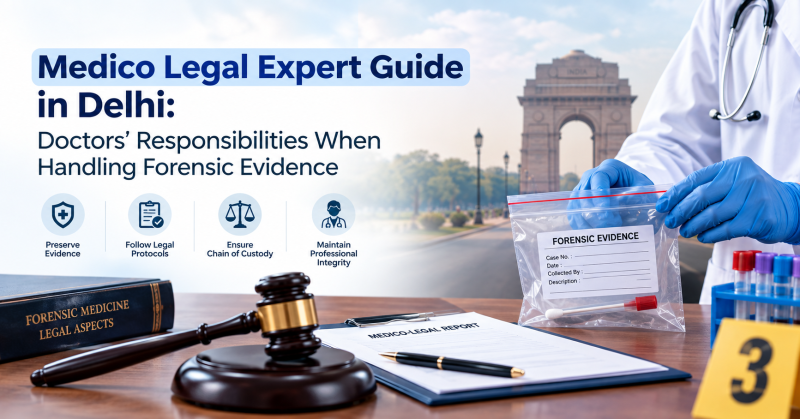
Medico Legal Expert Guide in Delhi: Doctors' Responsibilities When Handling Forensic Evidence
 Badal
Badal
A doctor examining an assault survivor, treating a road accident victim, or attending a patient with suspected poisoning is often handling evidence without realising it. Clothing, swabs, samples, photographs, and even the wording of a clinical note can later be examined in a police investigation or court. This medico legal expert guide in Delhi explains what doctors should understand about their responsibilities when clinical care and forensic evidence overlap.
The short answer: treat the patient first, preserve what may be evidence without compromising care, document objectively, maintain a clear record of who handled each item, and follow the procedures that apply to your institution and the case. This article is general information, not legal advice. Requirements depend on the facts and on the rules in force at the time.
Why Forensic Evidence Matters in Everyday Clinical Practice
Forensic evidence is not limited to postmortem work or specialist forensic units. Any doctor in an emergency department, clinic, or hospital ward may encounter a case with legal implications, including:
- Injuries from assault, accidents, or suspected abuse
- Suspected poisoning or substance intoxication
- Sexual offence examinations
- Burns, firearm injuries, or unexplained trauma
- Unnatural or suspicious deaths
In these cases, the medical record may become one of the most important documents in a proceeding. Errors in handling, gaps in documentation, or unclear opinions can weaken the value of otherwise sound clinical work. Affected parties include the patient, the treating doctor, nursing and support staff, and the hospital.
Doctors often seek medico legal advice for doctors in Delhi at exactly this point, when they are unsure what to preserve, what to record, and whom to inform.
Core Responsibilities of the Treating Doctor
Patient care comes first
Life-saving treatment is never delayed to protect evidence. Where possible, treatment can be delivered in a way that limits avoidable loss or contamination of material, but clinical need decides the priority.
Objective, accurate documentation
The doctor's role is to observe, record, and, where appropriate, give a reasoned medical opinion. It is not to decide guilt or investigate the case. Write what you found, not what you assume.
Consent and dignity
Informed consent remains central. Patients should understand what examination or sampling is proposed and why, including its evidentiary purpose. Where a patient cannot consent, the reasons should be recorded and the hospital's policy and applicable rules followed. Sensitive examinations require privacy, a chaperone where appropriate, and respectful communication.
Confidentiality and lawful disclosure
Patient information stays confidential unless disclosure is permitted or required under applicable law. If you are unsure whether to release information to police or another authority, seek guidance before doing so.
Handling and Preserving Evidence: A Practical Sequence
Institutions differ, and specific cases follow specific procedures. As a general approach:
- Stabilise and treat the patient according to clinical need.
- Record the arrival details: time, who brought the patient, and the condition on arrival.
- Document injuries carefully: site, size, shape, colour, and pattern, using neutral descriptive language. Photographs may help where policy and consent allow.
- Preserve clothing and personal items that may be relevant, handling them as little as possible.
- Collect samples only as required and permitted, using appropriate containers, with labelling done at the time.
- Seal and label items with patient identifier, date, time, and the collector's name and signature.
- Maintain a chain of custody: note who received each item, when, and where it was stored or handed over.
- Inform the appropriate authorities and hospital management as required by your institution's procedure and the type of case.
- Complete the records promptly, and keep copies according to hospital policy.
Documentation Doctors Should Maintain
Good forensic documentation is factual, contemporaneous, and complete.
- History as given by the patient or attendant, in their own words where possible, with the source noted
- Time and date of examination, and who was present
- Detailed description of injuries, including relevant negative findings
- Investigations ordered and results
- Items collected, how they were packed, and to whom they were handed
- Consent discussions, or the reasons consent could not be obtained
- Communication with police, senior clinicians, or hospital administration
- Opinion on the possible cause or age of injuries, if asked and within your competence, with reasoning
Avoid speculation. If something is unclear, write that it is unclear. Do not backdate, overwrite, or quietly add to a record after events. If a genuine correction is needed, mark it as a late entry with the actual date and time.
Common Mistakes to Avoid
- Vague injury descriptions such as "multiple injuries" without detail
- Giving opinions beyond your expertise, or stating conclusions the findings do not support
- Unlabelled or poorly sealed samples, which raise questions about identity and integrity
- Breaks in the chain of custody, where nobody can say who held an item and when
- Discarding clothing or items without thinking about their possible relevance
- Informal disclosure of details to relatives, media, or colleagues not involved
- Delaying documentation until memory has faded
- Skipping escalation in complex or sensitive cases instead of involving senior clinicians or management
When to Seek Guidance From a Medico Legal Expert
You do not have to manage every uncertain situation alone. Guidance from a medico legal expert in Delhi may be appropriate when you are unsure how to document or preserve evidence in a particular case, when you receive a police request, summons, or legal notice, when you are asked to give a written opinion or appear in court, or when a patient or family disputes your findings.
A practical medico-legal guide can help doctors understand common scenarios and questions before they arise. The medico-legal guide by Dr Vimal Kant Goyal is one resource of this kind, and doctors should combine such general material with institutional policy and, where needed, individual legal advice.
Building Institutional Systems
Individual doctors cannot carry forensic responsibility alone. Hospitals and clinics reduce risk through clinical governance and consistent processes:
- Written protocols for medico-legal cases, evidence handling, and chain of custody
- Standard forms and body diagrams for injury documentation
- Designated storage for sealed items and clear handover procedures
- Training for doctors, nurses, and security staff
- A named contact for medico-legal queries and police coordination
- Periodic audits of medico-legal records
- A clear route for patient complaints and incident reporting
These steps support patient safety, healthcare compliance, and professional responsibility, and they help ensure that staff act consistently under pressure.
Frequently Asked Questions
1. What is a doctor's main responsibility when a case may involve forensic evidence?To treat the patient first, then document findings objectively and preserve potential evidence carefully, following institutional procedure and applicable rules. The doctor records facts and gives opinions only within their competence.
2. Should I collect samples or evidence myself?That depends on the type of case, your role, and hospital policy. Where sampling is part of your duties, follow the established procedure for labelling, sealing, and handover. If unsure, ask a senior colleague or the designated medico-legal contact before acting.
3. Can I refuse to share records with police?Disclosure depends on the circumstances and applicable law, so do not decide informally. Follow hospital procedure, involve management, and seek advice on what may or must be released and in what form.
4. Who is a medico legal expert in Delhi, and how do I choose one?There is no official ranking, so be cautious of claims of being "the best." Look for relevant experience, clear communication, ethical practice, and honesty about what advice can and cannot achieve.
5. What if I realise I made a mistake in the record after the event?Do not alter or overwrite the original entry. Add a clearly marked late entry with the actual date and time, explaining the correction, and consider seeking guidance before doing so if a complaint or proceeding is underway.
Conclusion
When clinical care and legal process meet, careful habits make the difference: treat first, observe objectively, document contemporaneously, label and seal items properly, keep a clear chain of custody, and escalate uncertain situations early. A reliable medico legal expert guide in Delhi should help doctors turn these principles into routine practice, alongside hospital protocols and individual advice where needed.
No approach can guarantee any legal outcome, but clear records and consistent procedures make your work easier to understand and defend.
This article is for general information only and does not constitute legal advice. Laws, regulations, and procedures change, so doctors should verify current requirements and seek advice specific to their situation.
Source:
Click for the: Full Story
You might like