


 Close Menu
 World
 Biography
 Health
 Education
 Business
 Lifestyle
 Sports
 Technology
 Animals
 History
 Food
 Religious
 Startups
 Movies
 Politics
 Fashion
 Covid
 Diet
 Fitness
 Marketing
 Travel
 Science
 Reviews
 Social media
 Stories
 Facts
 Art
 Entertainment
Rajan

Health
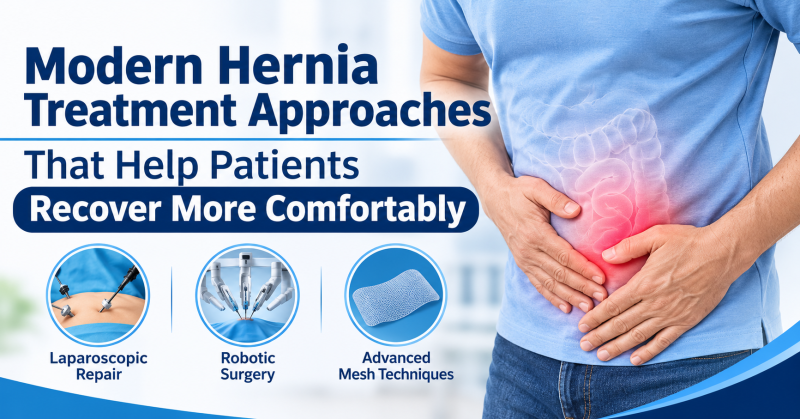
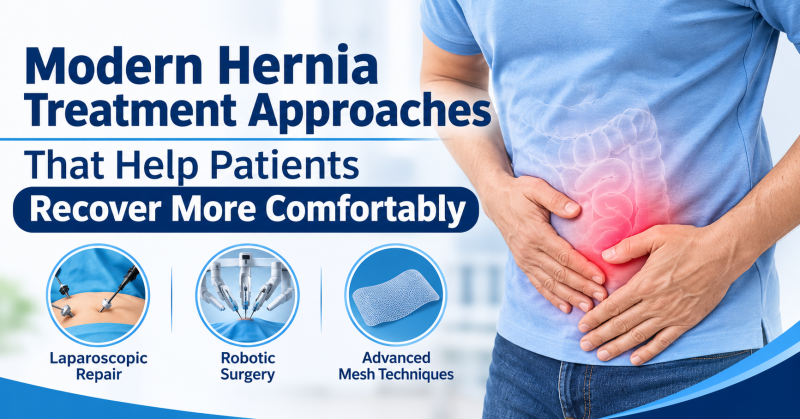
Modern Hernia Treatment Approaches That Help Patients Recover More Comfortably
 Rajan
A hernia rarely fixes itself. It starts as a small bulge in the groin, near the navel, or along an old surgical scar, and it often grows slowly. Many people put off treatment because they remember older surgeries with long hospital stays and painful recovery.
That picture is outdated. Surgical techniques, mesh materials, and anaesthesia care have all improved, and most patients now go home within a day. If you are searching for the best hernia doctors in Sir Ganga Ram Hospital or elsewhere in Delhi, it helps to understand the options first, so you can ask better questions and choose with confidence.
What Is a Hernia, and Why Does It Need Attention?
A hernia occurs when an organ or fatty tissue pushes through a weak spot in the muscle wall that normally holds it in place. Common types include:
- Inguinal hernia: in the groin, the most common type, especially in men
- Umbilical hernia: around the belly button
- Incisional hernia: at the site of a previous abdominal operation
- Hiatal hernia: where part of the stomach moves up into the chest
- Femoral hernia: just below the groin, more common in women
Medicines cannot repair a hernia, and the opening does not close without surgery. The main risks of waiting are growing pain and, occasionally, strangulation, where the blood supply to trapped tissue is cut off. That is a surgical emergency.
Seek urgent care if you notice:
- A hernia bulge that turns hard, red, or dark and cannot be pushed back
- Sudden severe pain at the site
- Nausea, vomiting, or inability to pass gas or stool along with the bulge
Modern Hernia Treatment Approaches
Open Repair
The surgeon makes one incision over the hernia, returns the tissue to its place, and reinforces the wall, usually with mesh. It remains a good choice for some large, complicated, or recurrent hernias, and it can be done under regional anaesthesia.
Laparoscopic (Keyhole) Repair
Here the surgeon works through a few tiny cuts using a camera and fine instruments. Patients generally report less pain, smaller scars, and an earlier return to routine activity. It also allows the surgeon to inspect both groins in one sitting and check for a second hernia.
Robotic-Assisted Repair
Robotic platforms give the surgeon a magnified 3D view and highly precise instrument control. This can be useful in complex cases such as incisional hernias, where careful tissue handling matters. It is a refinement of minimal access surgery, not a requirement for every patient.
Modern Mesh Technology
Most adult repairs use a surgical mesh to reinforce the weak area, which lowers the chance of the hernia returning. Today’s meshes are lighter, softer, and better tolerated than older versions. Your surgeon will choose the type and placement based on your hernia and body.
Watchful Waiting
Some small, painless inguinal hernias in men can be monitored under medical guidance. This only suits carefully selected patients and needs regular review.
Why Recovery Is More Comfortable Today
The improvement comes from several changes working together:
- Smaller incisions mean less tissue trauma and less pain.
- Multimodal pain control combines local nerve blocks with non-opioid medicines, so patients need fewer strong painkillers.
- Day-care or short-stay surgery is now routine for many hernias.
- Early mobility is encouraged, which lowers the risk of clots and stiffness.
Most people with uncomplicated repairs walk the same day. Many return to desk work within a week or two. Heavy lifting usually has to wait several weeks, and your surgeon will give you a timeline suited to your procedure.
How to Choose the Right Hernia Surgeon
Searching for the best hernia doctors in Sir Ganga Ram Hospital or the best hernia doctor in Central Delhi can turn up a long list, and “best” is never one-size-fits-all. Rather than relying on rankings or advertising, look at these factors:
- Qualifications: a recognised MS in General Surgery, ideally with training in laparoscopic or advanced minimal access surgery
- Volume and experience: how many hernia repairs the surgeon performs regularly, including complex and recurrent cases
- Range of techniques: a surgeon comfortable with open, laparoscopic, and robotic methods can match the technique to you
- Clear communication: the doctor should explain why a particular approach suits you and discuss risks honestly
- Hospital infrastructure: a good ICU backup, imaging, and anaesthesia team matter if a case turns complicated
- Follow-up care: a plan for wound checks, activity guidance, and what to do if problems arise
Sir Ganga Ram Hospital in Rajinder Nagar is a well-established multi-speciality centre, and many patients looking for hernia doctors in Rajinder Nagar consider it for that reason. Within its Department of Laparoscopic, Laser & General Surgery, Dr. Tarun Mittal, a senior consultant laparoscopic surgeon, treats hernias alongside other gastrointestinal and minimal access procedures. His consultation address is Sir Ganga Ram Hospital Marg, Old Rajinder Nagar, New Delhi, Delhi 110060. As with any specialist, a first consultation is the best way to judge whether the doctor’s approach and communication suit you.
Preparing for Hernia Surgery
A little preparation makes recovery smoother:
- Share your full medical history, including diabetes, blood pressure, and any blood thinners
- Stop smoking, since it slows wound healing and raises recurrence risk
- Follow fasting instructions exactly
- Arrange for someone to accompany you home
- Prepare a comfortable resting space with easy access to the bathroom
Tips for a Smoother Recovery
- Walk gently every day, building up gradually
- Support the wound with a pillow when coughing or sneezing
- Eat fibre-rich food and drink plenty of water to avoid straining
- Avoid heavy lifting until your surgeon clears you
- Attend all follow-up visits
Call your surgeon if you develop fever, increasing redness or swelling, discharge from the wound, or pain that worsens instead of easing.
Conclusion
Hernia care has moved well beyond long hospital stays and slow recoveries. With keyhole and robotic techniques, better meshes, and smarter pain control, most patients now return to normal life far sooner than they expect. The best step is an early evaluation, because smaller hernias are generally simpler to repair. When comparing the best hernia doctors in Sir Ganga Ram Hospital or other Delhi centres, focus on experience, communication, and a treatment plan built around your needs.
Disclaimer: This article is for general information only and is not a substitute for professional medical advice. Please consult a qualified surgeon for diagnosis and treatment.
Frequently Asked Questions
1. Can a hernia go away without surgery?
No. A hernia does not heal by itself. Support belts may ease symptoms temporarily, but surgery is the only definitive repair.
2. Is laparoscopic hernia surgery better than open surgery?
Neither is better for everyone. Keyhole surgery often means less pain and a quicker return to activity, but open repair can be the safer choice in some cases. The right option depends on the hernia’s type, size, and your overall health.
3. How long does recovery take?
Light activity is usually possible within days, and many people return to desk work in one to two weeks. Strenuous exercise and heavy lifting typically need four to six weeks or longer.
4. Can a hernia come back after surgery?
Recurrence is possible, but modern mesh repair has lowered the risk considerably. Avoiding smoking, managing weight, and preventing constipation reduce it further.
5. What should I look for in the best hernia doctor in Central Delhi?
Look for strong surgical training, regular experience with hernia repair, comfort with multiple techniques, and a surgeon who explains your options clearly without pressure.
Source:
Click for the: Full Story
You might like







You Might Like this