



 Close Menu
 World
World
 Biography
 Health
 Education
 Business
 Lifestyle
 Sports
 Technology
 Animals
 History
 Food
Food
 Religious
 Startups
 Movies
 Politics
 Fashion
 Covid
Covid
 Diet
Diet
 Fitness
 Marketing
 Travel
 Science
 Reviews
 Social media
 Stories
 Facts
Facts
 Art
Art
 Entertainment
Sakshi Padiyar

Education
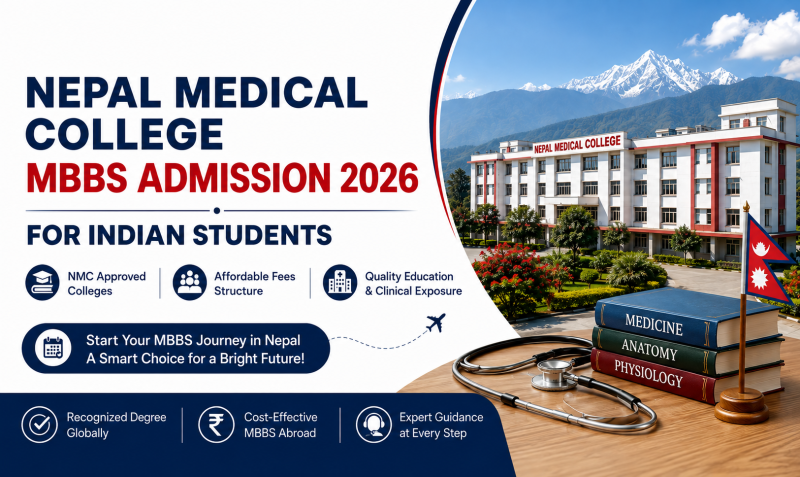
Nepal Medical College MBBS Admission 2026 for Indian Students
 Sakshi Padiyar
For Indian students looking for an affordable and accessible medical education option outside India, Nepal Medical College is one of the medical institutions worth considering. Its location in Kathmandu, proximity to India, similar academic environment, and medical training opportunities make it relevant for students exploring MBBS in Nepal after NEET.
For the 2026 admission cycle, Indian students should understand the eligibility requirements, NEET criteria, admission process, documents, fees, and other important considerations before applying.
This guide explains the major aspects of Nepal Medical College MBBS admission 2026 for Indian students in a simple and practical way.
Why Consider Nepal Medical College for MBBS?
Nepal is a popular destination among Indian students seeking medical education because of its geographical proximity and relatively familiar cultural environment.
Nepal Medical College is located in Kathmandu and provides medical education along with clinical exposure through its associated teaching hospital. For Indian students, studying in Nepal can also offer the advantage of being relatively close to home compared with destinations outside South Asia.
Some factors students generally consider include:
- Proximity to India
- English-medium medical education
- Clinical training opportunities
- Familiar South Asian environment
- Availability of MBBS education for eligible international students
- Opportunity to study medicine without relocating to a distant country
However, students should always verify the latest admission regulations, recognition status, seat availability, and fee details before making a final decision.
Nepal Medical College MBBS Admission 2026: Eligibility
Indian students planning MBBS Admission in Nepal must satisfy the applicable academic and regulatory requirements.
Generally, an applicant should have completed Class 12 or an equivalent qualification with Physics, Chemistry and Biology as the core subjects. The student must also satisfy the minimum percentage and age requirements prescribed for the relevant admission cycle.
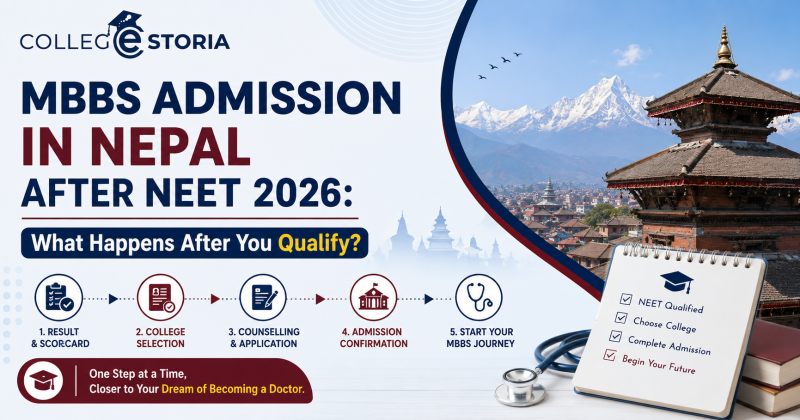
For Indian students, NEET-UG qualification is an important requirement for pursuing MBBS abroad, including Nepal, subject to the prevailing rules applicable in the admission year.
Basic eligibility generally includes:
- Completion of 10+2/Class 12 or equivalent education
- Physics, Chemistry and Biology as required subjects
- Meeting the prescribed minimum academic criteria
- Qualifying NEET-UG
- Meeting the age requirement applicable to MBBS admission
- Possessing the required academic and identity documents
Because admission regulations can change, students should check the current requirements before submitting an application.
NEET Requirement for Indian Students
Indian students planning to pursue MBBS in Nepal should qualify for NEET-UG as per the rules applicable to Indian citizens seeking medical education abroad.
NEET qualification alone, however, does not automatically guarantee admission to Nepal Medical College. Students may still need to satisfy the college, university, and applicable regulatory admission requirements.
Therefore, students should consider three things separately:
- NEET qualification
- Academic eligibility
- Availability of an eligible MBBS seat
This distinction is important because qualifying NEET and securing a medical seat are two different stages of the admission process.
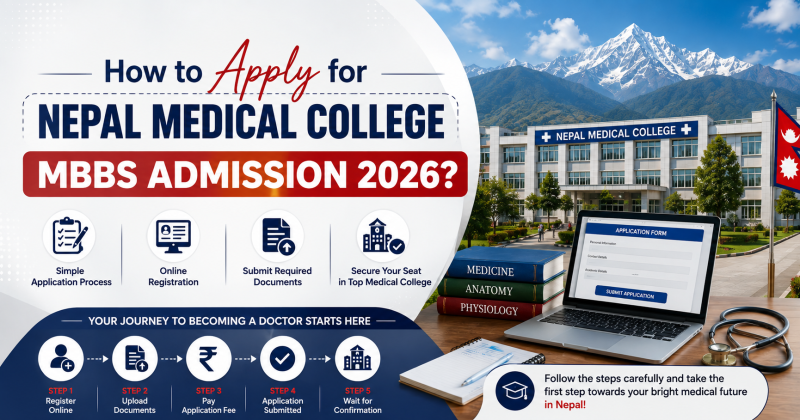
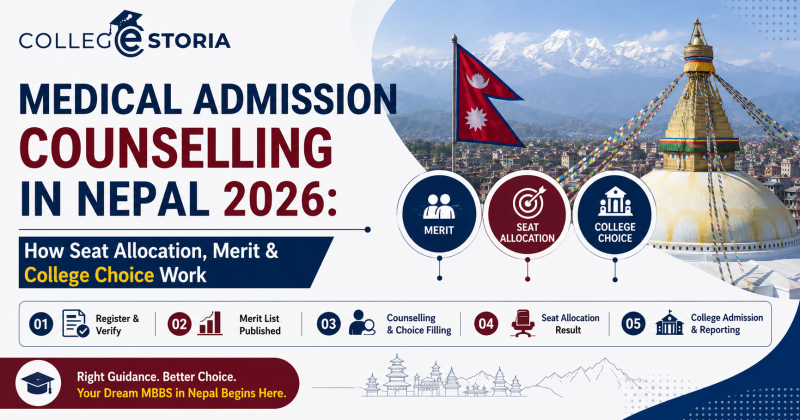
Nepal Medical College MBBS Admission Process 2026
The admission process for Indian students generally involves several stages. Students should carefully follow the admission authority's instructions for the relevant academic session.
Step 1: Check Eligibility
Before applying, confirm that you meet the academic, NEET and other eligibility requirements applicable to international students.
Step 2: Check Admission Notifications
Look for the latest admission notification, application dates, seat information and instructions issued by the relevant authorities or institution.
Step 3: Prepare Documents
Keep academic certificates, NEET documents, passport/identity documents, photographs and other required paperwork ready.
Step 4: Submit the Application
Complete the application through the applicable admission channel and provide accurate academic and personal information.
Step 5: Participate in the Selection Process
Admission may depend on the applicable merit, entrance or counselling procedure for the particular category and academic year.
Step 6: Seat Confirmation and Admission
After selection, students need to complete the required admission formalities, submit original documents where required and pay the applicable fees within the specified deadline.
Documents Required
Indian students should prepare their documents in advance to avoid delays during admission.
Commonly required documents may include:
- Class 10 certificate and mark sheet
- Class 12 certificate and mark sheet
- NEET-UG scorecard
- NEET admit card
- Valid passport or identity document
- Passport-size photographs
- Migration/transfer certificate, where applicable
- Character certificate, where required
- Medical fitness certificate, if applicable
- Other documents specified by the admission authority
The exact document list can vary, so applicants should follow the latest official instructions.
Nepal Medical College MBBS Fees
Fees are one of the most important factors for students comparing MBBS in Nepal with other options.
The total cost can include tuition fees as well as hostel, food, examination, registration and other institutional charges. The applicable fee for Indian students may also differ from fees applicable to other categories.
Instead of relying on old fee figures found online, students should confirm the 2026 fee structure directly from the latest admission notification or college authorities before making financial arrangements.
When comparing colleges, look at the complete cost of education, not just the tuition fee.
Duration of MBBS
The MBBS programme follows the medical education structure prescribed by the relevant Nepalese medical education and regulatory authorities.
Students should consider both the academic component and the required clinical/internship training while planning their medical education.
The practical aspect of the course is particularly important because medical education involves extensive clinical exposure in addition to classroom learning.
You may also like:
Clinical Training at Nepal Medical College
Medical students need regular exposure to real clinical environments to develop practical skills.
Nepal Medical College is associated with a teaching hospital where students can receive clinical exposure as part of their medical education. Clinical postings allow students to observe and learn about different departments, patient care and practical aspects of medicine under supervision.
For prospective students, it is useful to check the current hospital facilities, patient flow, clinical departments and internship arrangements before taking admission.
Is Nepal Medical College Suitable for Indian Students?
The suitability of Nepal Medical College depends on a student's academic goals, budget, preferred location and expectations from medical education.
Students considering the college should evaluate:
- Recognition and regulatory status
- MBBS curriculum
- Clinical exposure
- Total fees
- Hostel and living expenses
- Admission requirements
- Internship structure
- Future licensing requirements in India
Indian students should also understand the applicable NMC rules for foreign medical graduates before enrolling in any medical college outside India.
What Should Indian Students Check Before Admission?
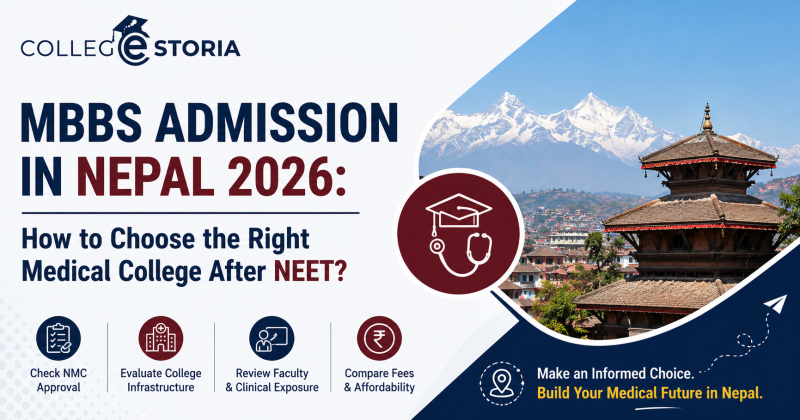
Choosing a medical college is a long-term decision. Before paying any admission amount, students should verify:
1. Recognition: Check the current recognition and regulatory status.
2. Fees: Obtain the latest official fee structure and understand additional charges.
3. Admission route: Confirm the correct admission process for Indian students.
4. Clinical exposure: Understand where clinical training takes place.
5. Internship: Check the internship structure and applicable requirements.
6. Indian licensing requirements: Make sure the programme satisfies the rules applicable to Indian students planning to practise medicine in India.
7. Written documentation: Keep copies of admission letters, fee receipts and other official documents.
Final Takeaway
Nepal Medical College MBBS admission 2026 can be considered by Indian students who meet the required academic and NEET criteria and are looking for an MBBS option in Nepal. Its Kathmandu location, medical education environment and clinical training opportunities make it a college worth researching.
However, students should not choose a medical college based only on location or fee estimates. Before applying, verify the latest eligibility, admission procedure, fees, recognition, clinical training and NMC requirements for the 2026 session.
For students comparing different options for MBBS Admission in Nepal, a detailed comparison of colleges, fees and admission requirements can help in making a more informed decision.
Source:
Click for the: Full Story
You might like


You Might Like this