



 Close Menu
 World
World
 Biography
 Health
 Education
 Business
 Lifestyle
 Sports
 Technology
 Animals
 History
 Food
Food
 Religious
 Startups
 Movies
 Politics
 Fashion
 Covid
Covid
 Diet
Diet
 Fitness
 Marketing
 Travel
 Science
 Reviews
 Social media
 Stories
 Facts
Facts
 Art
Art
 Entertainment
Sakshi Padiyar

Education
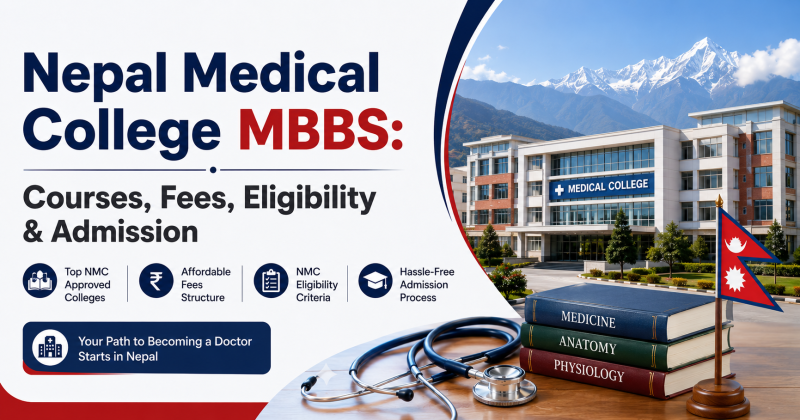
Nepal Medical College MBBS: Courses, Fees, Eligibility & Admission
 Sakshi Padiyar
Choosing the right medical college is an important decision for students planning to pursue an MBBS degree abroad. Among the institutions considered by Indian students, Nepal Medical College is a notable option for those exploring MBBS in Nepal.
Located in Kathmandu, the college offers medical education with classroom learning, practical training and clinical exposure. Its proximity to India also makes Nepal a convenient destination for students who want to study medicine in a neighbouring country.
This guide covers the key information students should know about Nepal Medical College, including its MBBS course, eligibility, fees, admission process and important considerations for Indian students.
About Nepal Medical College
Nepal Medical College is a medical institution located in Kathmandu, Nepal. The institution provides undergraduate medical education along with clinical training through its teaching hospital.
For prospective Indian students, the college can be considered as part of a broader search for medical colleges offering MBBS Admission in Nepal.
However, students should verify the latest recognition, admission rules, seat availability and regulatory requirements applicable to the 2026 academic session before applying.
Courses Offered at Nepal Medical College
The principal undergraduate medical programme associated with the college is the MBBS programme.
The course combines theoretical subjects with practical laboratory work and clinical training. During the programme, students are introduced to basic medical sciences before progressing to clinical subjects and hands-on hospital exposure.
MBBS Course
The MBBS curriculum generally covers areas such as:
- Anatomy
- Physiology
- Biochemistry
- Pathology
- Pharmacology
- Microbiology
- Community Medicine
- Forensic Medicine
- General Medicine
- General Surgery
- Obstetrics and Gynaecology
- Paediatrics
- Other clinical and allied subjects
The exact curriculum and training structure should be checked against the latest academic regulations applicable to the admission year.
Nepal Medical College MBBS Eligibility
Indian students applying for MBBS in Nepal need to meet the eligibility conditions prescribed by the relevant authorities and admission regulations.
Generally, students are expected to have completed their higher secondary education with the required science subjects, including Physics, Chemistry and Biology.
For Indian applicants, qualifying NEET-UG is an important requirement for pursuing medical education abroad, subject to the rules applicable to the relevant admission year.
Basic eligibility considerations
Applicants should generally:
- Complete Class 12 or an equivalent qualification.
- Study the required science subjects.
- Meet the prescribed minimum academic requirements.
- Qualify NEET-UG as applicable to Indian students.
- Fulfil the applicable age requirement.
- Submit the required academic and identification documents.
Students should check the current admission notification because eligibility requirements can be revised.
Nepal Medical College MBBS Fees
The cost of studying medicine is one of the first things Indian students compare when considering MBBS Admission in Nepal.
The total expense is not limited to tuition. Students should also consider hostel charges, food, examination fees, registration charges, university-related expenses and personal living costs.
The 2026 fee structure should be confirmed from the latest official admission information before making any payment, as fees and applicable charges can change between admission cycles.
What should students include when calculating the total cost?
Consider:
- Tuition fees
- Admission and registration charges
- Examination fees
- Hostel fees
- Food expenses
- Books and study materials
- Travel expenses
- Personal and living expenses
A complete cost comparison gives students a more realistic idea of the financial commitment involved in studying medicine in Nepal.
You may also like:
Nepal Medical College Admission Process
The admission process for Indian students can involve eligibility verification, application, selection and completion of admission formalities.
A typical process can be understood through the following stages:
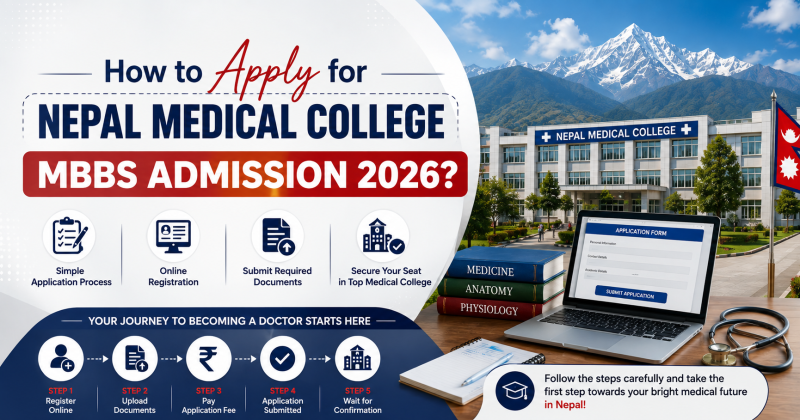
1. Check Eligibility
First, determine whether you satisfy the academic and NEET requirements for the relevant admission category.
2. Check the Latest Admission Notification
Review the current admission dates, seat information, application requirements and selection procedure.
3. Prepare Your Documents
Keep your Class 10 and 12 certificates, NEET documents, identity proof, photographs and other required documents ready.
4. Submit the Application
Complete the required application process using the applicable admission channel and provide accurate information.
5. Selection and Seat Allocation
Eligible candidates may have to participate in the applicable merit, entrance or counselling process depending on the admission category.
6. Complete Admission Formalities
After receiving a seat, students must complete document verification, fee payment and other formalities within the prescribed deadline.
NEET Requirement for Indian Students
NEET is an important consideration for Indian students planning to study medicine outside India.
A student should not assume that admission to a foreign medical college automatically eliminates the requirement to qualify NEET. Indian students must follow the rules applicable to Indian citizens seeking medical education abroad.
It is also important to understand that NEET qualification and admission are not the same thing. A student may qualify NEET but still need to meet the college's academic, admission and seat-allocation requirements.
Clinical Training and Hospital Exposure
Clinical exposure is an essential part of medical education. Students need opportunities to observe patients, understand clinical procedures and apply theoretical knowledge in a hospital environment.
Nepal Medical College provides medical education in association with its teaching hospital, allowing students to gain clinical exposure during their training.
Before taking admission, prospective students should enquire about:
- Clinical departments available
- Hospital facilities
- Patient exposure
- Clinical posting structure
- Internship requirements
- Faculty supervision
- Practical training opportunities
These factors can significantly influence the quality of an MBBS student's learning experience.
Why Indian Students Consider MBBS in Nepal
Nepal attracts Indian medical aspirants for several practical reasons.
Geographic Proximity
Nepal shares a border with India, making travel relatively convenient compared with many other international destinations.
Familiar Environment
The cultural and geographical similarities can make the transition easier for some Indian students.
Medical Education
Students can pursue an established medical curriculum with classroom, laboratory and clinical components.
Alternative to Studying Medicine Abroad
For students who are exploring alternatives outside India, Nepal may be one of the countries they consider for medical education.
However, students should compare colleges individually rather than assuming that every medical college in Nepal offers the same academic or clinical experience.
What Indian Students Should Verify Before Admission
Before finalising Nepal Medical College, Indian students should verify the following:
- Current recognition and accreditation
- 2026 admission requirements
- NEET eligibility requirements
- Latest tuition and other fees
- Seat availability
- Clinical training arrangements
- Internship requirements
- Hostel and living costs
- Documentation requirements
- Applicable NMC regulations for foreign medical graduates
This verification is particularly important because regulatory requirements can change.
Is Nepal Medical College a Good Choice for MBBS?
There is no single answer for every student. The right choice depends on academic preferences, budget, clinical exposure, location and long-term career plans.
Students considering Nepal Medical College should compare it with other recognised medical colleges in Nepal on factors such as total cost, clinical exposure, infrastructure, academic environment and applicable regulations.
For Indian students who plan to return to India after graduation, understanding the requirements for practising medicine in India should be part of the decision-making process from the beginning.
Final Takeaway
Nepal Medical College can be an option for Indian students exploring MBBS in Nepal, provided they meet the applicable eligibility and admission requirements.
Before applying for the 2026 session, students should verify the latest information related to MBBS fees, eligibility, NEET requirements, admission procedure, recognition and clinical training. A college should be selected based on verified information rather than outdated fee figures or promotional claims.
For students comparing MBBS Admission in Nepal, researching multiple colleges and understanding the complete cost and regulatory requirements can help them make a more informed decision.
Source:
Click for the: Full Story
You might like


You Might Like this