Close Menu
 World
World
 Biography
 Health
 Education
 Business
 Lifestyle
 Sports
 Technology
 Animals
 History
 Food
Food
 Religious
 Startups
 Movies
 Politics
 Fashion
 Covid
Covid
 Diet
Diet
 Fitness
 Marketing
 Travel
 Science
 Reviews
 Social media
 Stories
 Facts
Facts
 Art
Art
 Entertainment
Rajan

Health
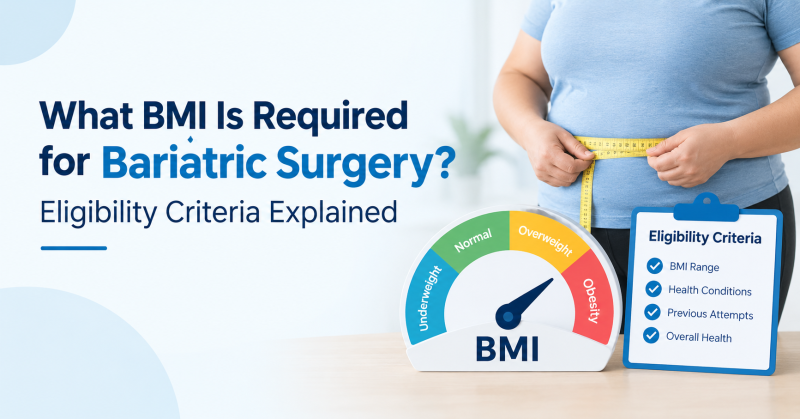
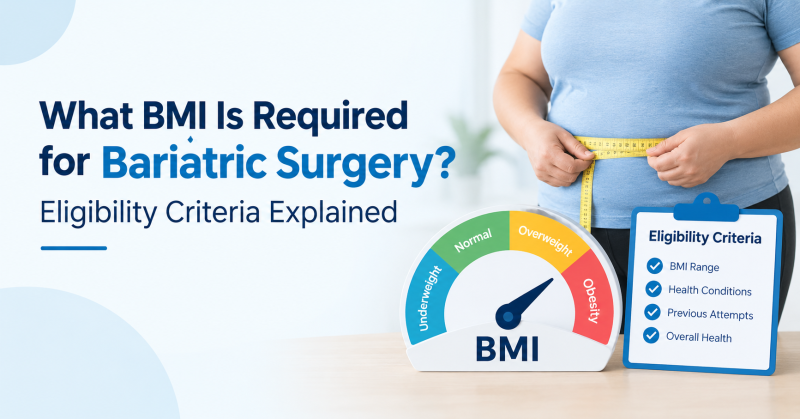
What BMI Is Required for Bariatric Surgery? Eligibility Criteria Explained
 Rajan
Rajan
If diet and exercise haven’t produced lasting results, you may be asking whether you qualify for weight loss surgery. BMI is the first number doctors look at, but it isn’t the only one. This guide explains the BMI requirements, the other eligibility factors, and what to look for when choosing the best bariatric surgeon in Delhi.
What Is BMI and Why Does It Matter?
Body Mass Index (BMI) is your weight in kilograms divided by your height in metres squared. For example, someone weighing 100 kg and standing 1.65 m tall has a BMI of about 36.7.
BMI is a screening tool. It doesn’t measure body fat directly or show where fat is stored. Even so, it remains the standard starting point for deciding whether surgery is medically justified.
BMI Requirements for Bariatric Surgery
Under international guidelines (the 2022 ASMBS/IFSO update), the general thresholds are:
- BMI of 35 or above: surgery is recommended, regardless of other health conditions.
- BMI of 30 to 34.9 with metabolic disease: surgery may be considered, especially for conditions such as type 2 diabetes.
Lower Cut-offs for Indians and Asians
South Asians tend to develop diabetes, high blood pressure and heart disease at lower BMI levels, and carry more visceral (abdominal) fat. For this reason, Asian guidelines lower the thresholds by about 2.5 points:
- BMI of 32.5 or above: generally eligible.
- BMI of 27.5 to 32.4 with obesity-related conditions (such as uncontrolled type 2 diabetes): may be considered.
Many Indian surgeons therefore see patients with a BMI of 32.5 or higher, or 27.5 or higher when serious health conditions are present.
BMI RangeEligibilityBelow 27.5Generally not eligible27.5 – 32.4Possible, only with significant comorbidities32.5 and aboveUsually eligible, after evaluation37.5 and aboveStrong candidate, regardless of other conditions
Other Eligibility Criteria
BMI alone doesn’t qualify you. Surgeons also assess:
- Age: typically 18 to 65 years. Adolescents and older adults may be considered case by case.
- Failed attempts at weight loss: documented efforts with diet, exercise or medical management.
- Obesity-related conditions: type 2 diabetes, hypertension, sleep apnoea, fatty liver, PCOS, joint pain or high cholesterol.
- General fitness for surgery: your heart, lungs and overall health should allow safe anaesthesia.
- Mental readiness: you should understand the surgery and be committed to lifelong lifestyle changes.
Who Should Not Have Bariatric Surgery?
Surgery may be unsuitable if you have:
- Active substance or alcohol dependence
- Untreated severe psychiatric illness
- Unstable heart or lung disease
- A condition that makes anaesthesia unsafe
- Pregnancy, or plans to conceive within the next 12 to 18 months
Common Types of Bariatric Surgery
The right procedure depends on your BMI, health conditions and eating patterns. The most common options are:
- Sleeve gastrectomy: about 75 to 80 percent of the stomach is removed, leaving a narrow tube.
- Gastric bypass (Roux-en-Y): the stomach is made smaller and part of the intestine is bypassed, which also helps control diabetes.
- Mini gastric bypass (OAGB): a simpler bypass with a single connection.
Most procedures are done laparoscopically or with robotic assistance, using small incisions. This usually means less pain and a faster recovery.
What Does the Pre-Surgery Evaluation Involve?
Before approving surgery, a team typically carries out:
- A detailed medical history and physical examination
- Blood tests, including blood sugar, HbA1c, lipids, liver and thyroid function
- An ECG, chest X-ray and often an upper GI endoscopy
- A nutritional assessment
- A psychological evaluation
This preparation helps lower risks and set realistic expectations.
How to Choose the Right Bariatric Surgeon
Surgical skill and follow-up care strongly influence your results, so these are the factors to check:
- Training: a surgeon with fellowships in minimal access, bariatric or robotic surgery.
- Experience: a high volume of bariatric procedures, plus experience managing complications.
- Hospital infrastructure: ICU backup, an experienced anaesthesia team and modern laparoscopic or robotic equipment.
- Multidisciplinary care: dietitians, physicians and counsellors who support you before and after surgery.
- Long-term follow-up: structured reviews for the first one to two years.
For example, Dr. Tarun Mittal, a bariatric surgeon in Central Delhi, practises at Sir Ganga Ram Hospital. He is a laparoscopic, bariatric and robotic surgeon with fellowships in minimal access, bariatric and robotic surgery. The hospital is located at Old Rajinder Nagar, New Delhi, 110060.
Whoever you choose, meet the surgeon, ask about their outcomes and complication rates, and consider a second opinion before deciding.
What Results Can You Expect?
Most patients lose 60 to 70 percent of their excess weight within 12 to 18 months. Many see improvements in blood sugar, blood pressure, sleep apnoea and fatty liver. Surgery is a tool, not a cure. Long-term success depends on healthy eating, regular activity, vitamin supplements and follow-up visits.
Conclusion
A BMI of 35 or above (32.5 or above for most Indians) is the usual benchmark for bariatric surgery, and a lower BMI may qualify if you have serious obesity-related conditions. Meeting the number is only the first step. Your overall health, past weight loss attempts and readiness for lifestyle change also matter. A thorough evaluation with the best bariatric surgeon in Delhi for your needs will help you decide whether surgery is right for you and which procedure suits you.
This article is for educational purposes and isn’t a substitute for professional medical advice. Consult a qualified bariatric surgeon for personalised guidance.
Frequently Asked Questions
1. Can I get bariatric surgery with a BMI of 30?Possibly, if you are of Asian origin and have a serious obesity-related condition such as uncontrolled type 2 diabetes. A BMI of 30 without such conditions usually doesn’t qualify, and your surgeon will assess your case individually.
2. Is bariatric surgery safe?Modern laparoscopic bariatric surgery is considered safe when done by an experienced team in a well-equipped hospital. Every surgery carries risks, such as infection, leaks or nutritional deficiencies, so a thorough evaluation matters.
3. How do I find the best bariatric surgeon in Central Delhi?Look for formal bariatric training, a strong track record, hospital-based ICU support and a team that provides long-term nutritional follow-up. Meeting more than one surgeon helps you compare approaches.
4. Will insurance cover bariatric surgery?Many Indian insurers cover it if you meet medical criteria, typically a BMI of 35 or above, or 30 or above with comorbidities. Policies vary, so check your terms and ask the hospital to help with pre-authorisation.
5. How soon can I return to work after surgery?Most patients return to desk work within one to two weeks. Strenuous exercise is usually restricted for four to six weeks, depending on your surgeon’s advice.
Source:
Click for the: Full Story
You might like