Close Menu
 World
World
 Biography
 Health
 Education
 Business
 Lifestyle
 Sports
 Technology
 Animals
 History
 Food
Food
 Religious
 Startups
 Movies
 Politics
 Fashion
 Covid
Covid
 Diet
Diet
 Fitness
 Marketing
 Travel
 Science
 Reviews
 Social media
 Stories
 Facts
Facts
 Art
Art
 Entertainment
Deepak

Health
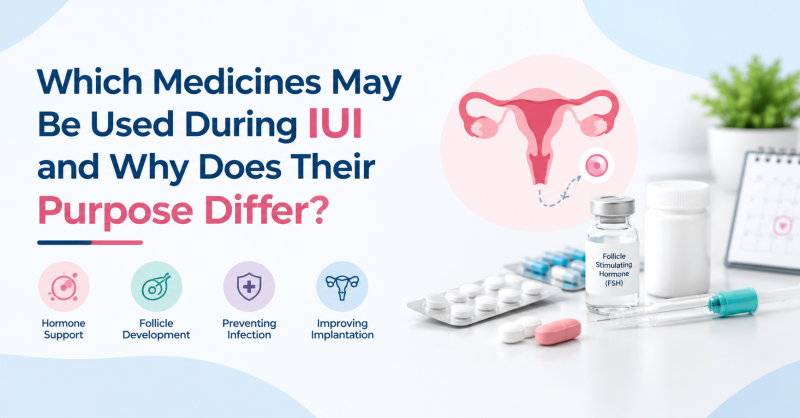
Which Medicines May Be Used During IUI and Why Does Their Purpose Differ?
 Deepak
If your doctor has advised intrauterine insemination (IUI), you may be wondering about the medicines involved. Why are tablets prescribed in one cycle and injections in another? Why does a friend’s prescription look so different from yours?
The reason is simple: IUI medicines are not a fixed package. Each one has a specific job, and the right choice depends on your body, your reports, and how you respond during the cycle. Couples exploring IUI Treatment in Delhi often find that understanding the purpose of each medicine makes the process far less stressful.
A Quick Look at IUI
In IUI, prepared sperm is placed directly into the uterus around the time of ovulation. The aim is to bring healthy sperm closer to the egg. Depending on the woman’s ovulation pattern, medicines may be used to support egg development, time the release of the egg, or prepare the uterine lining. Some women need only one medicine, and some need none, as in a natural-cycle IUI.
Why Do IUI Medicines Differ From One Woman to Another?
Fertility is individual. A woman with PCOS, another with unexplained infertility, and a third with mildly reduced ovarian reserve will rarely need the same plan. Doctors consider:
- Age and ovarian reserve
- Whether she ovulates regularly on her own
- Ultrasound and hormone findings
- Thyroid and prolactin status
- Response in any earlier cycles
- Partner’s semen quality
- Tubal health
This is why a plan copied from someone else’s prescription can be ineffective or even unsafe.
Common Medicines Used in IUI and What They Do
Oral Ovulation-Inducing Medicines
Letrozole and clomiphene citrate are commonly used tablets. They work by altering hormone signals so the ovary develops one or a few mature follicles.
Purpose: to start or improve ovulation, particularly in women with irregular cycles, or to encourage the growth of one or two follicles in selected women.
Gonadotropin Injections
These are injectable forms of FSH, sometimes with LH activity, that act directly on the ovaries.
Purpose: used when tablets have not worked or when a stronger, more controlled response is needed. Because the response can vary, regular ultrasound monitoring is essential. A higher number of mature follicles increases the chance of multiple pregnancy, so doses are adjusted carefully.
Trigger Injection
When follicles reach a suitable size, a trigger injection, usually hCG or in some cases a GnRH agonist, may be given.
Purpose: to prompt the final maturation and release of the egg at a predictable time, so that insemination can be timed accurately.
Progesterone Support
After IUI, some women are prescribed progesterone as vaginal tablets, gel, or capsules.
Purpose: to support the uterine lining during the second half of the cycle. Whether it is needed depends on the type of stimulation and the doctor’s assessment.
Supportive Medicines
Depending on test results, your doctor may also recommend:
- Thyroid medicines to correct hormonal imbalance
- Prolactin-lowering medicines if levels are high
- Metformin in selected women with PCOS and insulin resistance
- Folic acid and other supplements to support early pregnancy health
- Treatment for infection or other conditions if found during evaluation
These may not trigger ovulation directly, but they help the body respond better to treatment.
Why Purpose Matters More Than QuantityIt is natural to assume that stronger or more medicines mean better chances. That is not how IUI works. Each medicine addresses one step of the process:
StepPossible MedicineGoalGrowing folliclesLetrozole, clomiphene, gonadotropinsSupport egg developmentTiming ovulationTrigger injectionRelease the egg predictablyPreparing the liningProgesteroneSupport the uterine environmentCorrecting imbalancesThyroid or prolactin medicinesImprove hormonal health
A medicine without a clear purpose adds side effects and cost without adding benefit.
Possible Side Effects
Responses vary, but some women experience:
- Hot flushes, headaches, or mood changes
- Bloating or breast tenderness
- Mild abdominal discomfort
- A thinner uterine lining with certain tablets
- A higher chance of twins or multiples
- Rarely, ovarian hyperstimulation with injectable medicines
Monitoring through ultrasound, and sometimes blood tests, helps catch these concerns early. Contact your doctor promptly if you have severe pain, rapid abdominal swelling, vomiting, or breathing difficulty.
Why Self-Medication Is Risky
Ovulation tablets and injections are sometimes bought without a prescription. This can lead to poor timing, overstimulation, or missing an underlying problem such as blocked tubes or a male-factor issue. Medicines should be started only after proper evaluation, including a tubal assessment and semen analysis.
What to Look for in an IUI Centre
When comparing options, many couples search for the Best iui centre in Delhi. Instead of focusing on a label, consider practical factors:
- Is a complete evaluation done before IUI is advised?
- Is the plan individualised rather than the same for everyone?
- Is follicle monitoring carried out during the cycle?
- Are risks, costs, and realistic expectations explained clearly?
- Is there flexibility to change the approach if the response is not as expected?
When Should You Seek Guidance?
Consider consulting a specialist if:
- You have been trying for a year without success, or six months if you are 35 or older
- Your periods are irregular or absent
- You have PCOS, endometriosis, or a history of pelvic infection
- Your partner’s semen analysis shows mild abnormalities
- You have been advised IUI and want to understand your treatment plan
Meeting the Best Gynaecologist in Delhi for your situation should leave you clear about why each medicine is prescribed, how long it will be needed, and what to watch for.
A Personalised Approach
Dr. Poonam Goyal, a gynecologist and fertility specialist, reviews each patient’s history, hormonal profile, ultrasound findings, and the partner’s reports before deciding whether IUI is suitable and which medicines, if any, are appropriate. No doctor can guarantee a pregnancy, but a clear and individualised plan helps couples make informed decisions.
Final Thoughts
IUI medicines differ because every couple’s situation is different. Some support ovulation, some time the release of the egg, and some prepare the uterus or correct underlying imbalances. When you understand what each one does, the treatment feels less confusing and you can ask better questions at every step.
If you want consultation regarding IUI treatment, you can visit Dr Poonam Goyal at:
- C-3/63A, 64A, opp. Gokulpuri police station, Block C, Panchsheel Hospital, Yamuna Vihar, Shahdara, Delhi, 110053
- HOD IVF & Infertility, Max Superspeciality Hospital, Vaishali
Frequently Asked Questions
1. Are medicines always needed for IUI?
No. Women who ovulate regularly may undergo IUI in a natural cycle. Medicines are added when ovulation needs support, when more than one follicle is desirable, or when the doctor feels they would help.
2. What is the difference between letrozole and gonadotropin injections?
Letrozole is an oral medicine that works indirectly to encourage follicle growth. Gonadotropins are injections that act directly on the ovaries and are generally used when tablets have not worked or a stronger response is needed.
3. Why is a trigger injection given before IUI?
It prompts the mature follicle to release the egg at a predictable time, so insemination can be scheduled accurately.
4. Can IUI medicines cause multiple pregnancy?
Yes, the chance of twins or more is higher when more than one follicle matures. Careful ultrasound monitoring and dose adjustment help reduce this risk.
5. Is progesterone always needed after IUI?
Not always. The decision depends on the type of cycle, the medicines used, and the doctor’s assessment of the individual patient.
Source:
Click for the: Full Story
You might like