Close Menu
 World
World
 Biography
 Health
 Education
 Business
 Lifestyle
 Sports
 Technology
 Animals
 History
 Food
Food
 Religious
 Startups
 Movies
 Politics
 Fashion
 Covid
Covid
 Diet
Diet
 Fitness
 Marketing
 Travel
 Science
 Reviews
 Social media
 Stories
 Facts
Facts
 Art
Art
 Entertainment
Deepak

Health
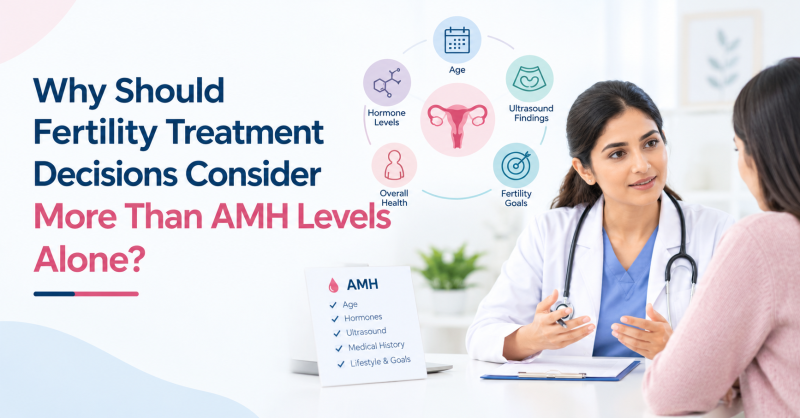
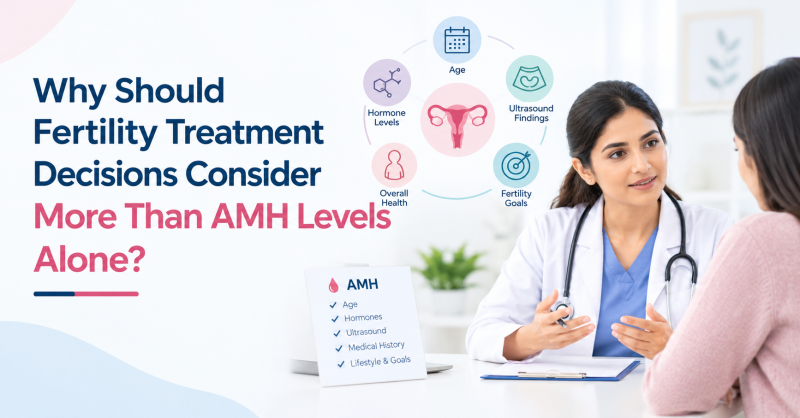
Why Should Fertility Treatment Decisions Consider More Than AMH Levels Alone?
 Deepak
Many women first hear about AMH when a fertility report arrives with a number on it. A low value can feel alarming, and a high one can feel reassuring. In reality, AMH is only one piece of a larger picture.
Understanding what AMH can and cannot tell you helps you ask better questions and make calmer decisions. This is also why many women searching for the Best female fertility in Delhi care look for a doctor who reads the whole picture rather than a single result.
What Is AMH?
Anti-Mullerian hormone (AMH) is produced by small follicles in the ovaries. A blood test measuring it gives an estimate of ovarian reserve, meaning roughly how many eggs remain in the ovaries.
Doctors use AMH to:
- Estimate how the ovaries may respond to stimulation medicines
- Help plan the starting dose in treatments such as IUI or IVF
- Spot a possible low or very high response in advance
- Support conversations about the timing of fertility planning
It is a useful tool. But it is a measure of quantity, not a verdict on fertility.
What AMH Cannot Tell You
AMH does not directly measure:
- Egg quality. Egg quality is closely linked to age and affects how likely an egg is to fertilise and develop into a healthy embryo.
- Whether you ovulate regularly. A woman can have a good AMH and still ovulate irregularly.
- Whether the fallopian tubes are open. Blocked tubes can prevent conception regardless of egg numbers.
- The health of the uterus. Fibroids, polyps, adhesions, or a thin lining can affect implantation.
- Your partner’s fertility. Semen quality plays a major role in conception.
- Your chance of a natural pregnancy in a given month. Studies have found that AMH alone is not a reliable predictor of natural conception in women without other known problems.
A woman with a low AMH may conceive naturally. A woman with a high AMH may still struggle because of another factor. The number alone cannot decide that.
Why AMH Can Be Misleading in Both Directions
Low AMH does not always mean “no chance.” It suggests fewer eggs, which may shorten the time available for treatment. But many women with low values still ovulate and conceive, especially when evaluated early.
High AMH does not always mean “good fertility.” In conditions such as PCOS, AMH is often elevated because of many small follicles, yet ovulation may be infrequent. High values can also point to a higher risk of overstimulation during IVF, which affects how a treatment plan is designed.
AMH can also vary with the lab, the testing method, and certain situations such as hormonal contraception, recent ovarian surgery, or vitamin D deficiency. This is why a single report should be interpreted carefully.
What Else Should Doctors Consider?
A thoughtful fertility plan looks at the whole picture, including:
Age
Age remains one of the strongest factors in fertility, because it influences both egg numbers and egg quality.
Other Ovarian Reserve Markers
An antral follicle count on ultrasound, along with day 2 or day 3 hormone tests such as FSH and estradiol, gives a fuller view alongside AMH.
Cycle Pattern and Ovulation
Regular, irregular, or absent periods can reveal hormonal or ovulatory problems that need separate attention.
Uterine and Tubal Health
Ultrasound, and sometimes a hysterosalpingography (HSG) or hysteroscopy, checks the uterus and tubes.
Medical and Reproductive History
Previous pregnancies, miscarriages, pelvic infections, endometriosis, ovarian surgery, thyroid disease, and chemotherapy or radiation exposure can all change the approach.
Partner Evaluation
A semen analysis is a basic step in nearly every fertility workup.
Duration of Trying
How long you have been trying often matters as much as any single test result.
How This Changes Treatment Decisions
Two women with the same AMH may need very different plans. For example:
- A 28-year-old with low AMH, regular cycles, and healthy tubes may be advised to try for a short time with close monitoring.
- A 38-year-old with the same AMH may need a quicker, more active approach.
- A woman with high AMH and PCOS may need ovulation support and careful dosing to avoid overstimulation.
- A woman with normal AMH but blocked tubes may need IVF rather than IUI.
The decision depends on the complete evaluation, not a single threshold.
When Should You Seek Professional Advice?
Consider consulting a specialist if:
- You are under 35 and have been trying for a year, or 35 or older and have been trying for six months
- Your periods are irregular or absent
- You have received a low or very high AMH result and want to understand it
- You have endometriosis, PCOS, fibroids, or a history of pelvic infection
- You are planning to delay pregnancy and want to understand your options
- You have had repeated pregnancy loss
Meeting the Best Gynaecologist in Delhi for your needs should feel like a conversation, not just a review of lab numbers. A good consultation explains what each result means for you and what the realistic options are.
The Value of an Individualised Approach
Access to experienced Female fertility in Delhi care helps ensure that tests are interpreted in context. Dr. Poonam Goyal, a gynecologist and fertility specialist, evaluates AMH alongside age, ultrasound findings, hormonal status, tubal and uterine health, and the partner’s reports. The goal is to build a plan around your situation, without promising outcomes that no doctor can guarantee.
Final Thoughts
AMH is a helpful guide, but it is not a measure of your worth as a future parent or a final prediction of your fertility. It works best when combined with age, ultrasound, ovulation patterns, and a complete medical history. If you have received an AMH report and feel uncertain, a timely and unhurried consultation can bring clarity.
If you want consultation regarding fertility evaluation or treatment planning, you can visit Dr Poonam Goyal at:
- C-3/63A, 64A, opp. Gokulpuri police station, Block C, Panchsheel Hospital, Yamuna Vihar, Shahdara, Delhi, 110053
- HOD IVF & Infertility, Max Superspeciality Hospital, Vaishali
Frequently Asked Questions
1. Can I get pregnant naturally with a low AMH?
Yes, it is possible. AMH reflects egg quantity, not whether ovulation is occurring or whether the eggs are healthy. Age, cycle regularity, and tubal and uterine health all matter. A doctor can guide you on how long it is reasonable to try.
2. Does a high AMH mean I am very fertile?
Not necessarily. High AMH can be seen in PCOS, where ovulation may be irregular. It can also raise the risk of overstimulation during IVF, so treatment needs careful planning.
3. Which tests are done along with AMH?
Doctors commonly use an antral follicle count on ultrasound, FSH and estradiol levels, thyroid and prolactin tests, a check of the uterus and tubes, and a semen analysis for the partner.
4. Can AMH levels change over time?
AMH generally declines with age, and it can vary between labs and with factors such as hormonal medicines or vitamin D status. Your doctor may suggest repeating the test if a result does not fit the rest of your picture.
5. Should I start IVF if my AMH is low?
Not automatically. The decision depends on your age, duration of infertility, other test results, and your partner’s evaluation. Some women may be advised a different treatment, while others may need to move forward sooner.
Source:
Click for the: Full Story
You might like