Close Menu
 World
 Biography
 Health
 Education
 Business
 Lifestyle
 Sports
 Technology
 Animals
 History
 Food
 Religious
 Startups
 Movies
 Politics
 Fashion
 Covid
 Diet
 Fitness
 Marketing
 Travel
 Science
 Reviews
 Social media
 Stories
 Facts
 Art
 Entertainment
Rajan

Health
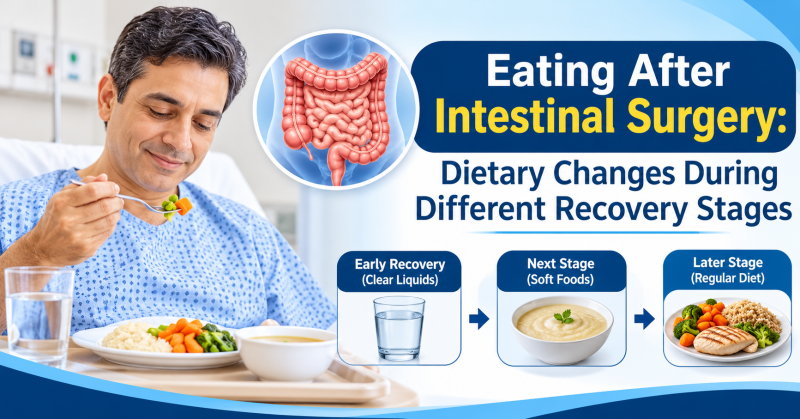
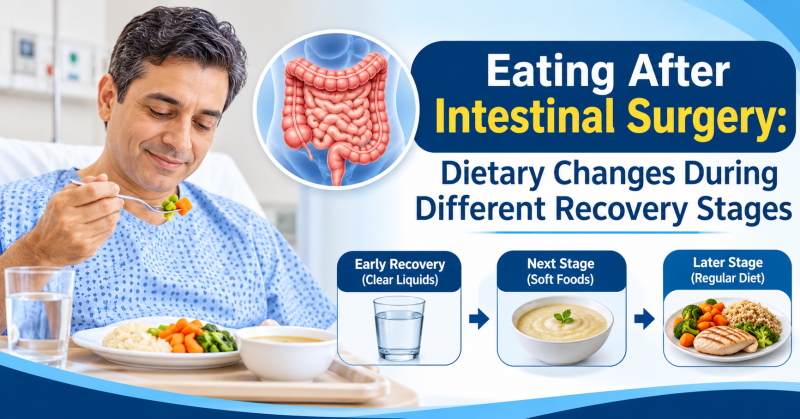
Eating After Intestinal Surgery: Dietary Changes During Different Recovery Stages
 Rajan
"When can I eat normally again?" is probably the most common question patients ask after bowel surgery. The honest answer is that it depends on the operation, your general health and how your gut responds. Food is not just comfort during recovery. It supplies the protein and energy your body needs to heal, and it helps your bowel start working again. This guide explains how eating usually progresses and which warning signs deserve a call to your gastrointestinal surgeon in Central Delhi or your own city.
Why Diet Changes After Intestinal Surgery
Intestinal surgery, whether a resection, colectomy, stoma formation or reversal, temporarily disrupts the normal movement of the gut. The bowel can be sluggish for a few days, a condition called postoperative ileus. Swelling at the join between two bowel ends (the anastomosis) also needs time to settle.
Modern surgical practice, including Enhanced Recovery After Surgery (ERAS) pathways, generally favours starting oral intake early rather than keeping patients fasting for long, provided the patient is stable. Early feeding is usually well tolerated and supports recovery, but your surgical team decides the pace based on your situation. Never advance your diet faster than advised.
The Recovery Stages at a Glance
StageTypical timingWhat is usually offered1. Sips and clear liquidsDay 0 to 2Water, clear soup, diluted juice, oral rehydration solution2. Full liquids and soft foodsDays 2 to 7Buttermilk, thin dal, khichdi, curd, porridge3. Low-residue, easily digested dietWeeks 1 to 6Rice, soft chapati, idli, eggs, well-cooked vegetables without skin4. Gradual return to normal dietAfter 6 weeks, as advisedReintroduce fibre, salads and fried or spicy foods slowly
These timings are typical, not guaranteed. Surgery type, complications and your surgeon's instructions can lengthen or shorten each stage.
Stage 1: Clear Liquids and Sips
Once the team confirms your bowel is waking up, you begin with small sips. Signs that help the team decide include passing gas, absence of persistent vomiting and a soft abdomen. Good choices include water, coconut water, clear broth and oral rehydration solution. Avoid fizzy drinks, which can cause bloating, and avoid large gulps.
Stage 2: Full Liquids and Soft Foods
If clear liquids stay down, the diet widens. Options include thin dal water, strained soups, plain curd, buttermilk, milk-based porridge and mashed banana. Small portions every two to three hours work better than three large meals, because a recovering gut copes poorly with a heavy load.
Stage 3: Low-Residue Eating at Home
"Low-residue" means foods that leave little undigested material in the bowel, which reduces strain on the healing area. Many patients go home during this stage.
Usually well tolerated:
- Soft-cooked rice, khichdi, plain dal, idli
- Refined flour chapati or white bread
- Eggs, soft paneer, well-cooked or minced chicken and fish
- Peeled, boiled or mashed vegetables such as bottle gourd, pumpkin and carrot
- Ripe banana, stewed apple, papaya
Usually avoided for the first weeks:
- Raw salads, whole grains, nuts, seeds and skins
- Very spicy, oily or fried foods
- Gas-forming items such as raw cabbage, large amounts of rajma or chana
- Alcohol and fizzy drinks
Protein deserves special attention. Wound and bowel healing depend on it. Include a protein source at each meal, and ask your surgeon or dietitian about oral nutrition supplements if your appetite is poor.
Stage 4: Returning to Your Normal Diet
Reintroduce one new food at a time, in small amounts, and watch how you feel over the next day. If a food causes cramps, bloating or loose stools, step back and try it again after a week or two. Most people eventually return to a varied diet, although some patients, especially after large bowel resections, find that certain foods stay troublesome.
Special Situations That Change the Rules
- Ileostomy or colostomy: Output and the risk of blockage guide the diet. Patients with an ileostomy are often told to chew thoroughly and take care with fibrous foods such as sweet corn, mushrooms and citrus peel, and to keep up fluids and salt because they can dehydrate quickly.
- Short bowel after extensive resection: Absorption may be limited, and patients may need specialised dietary plans or supplements under close supervision.
- Crohn's disease or diverticular disease: Diet is tailored to the underlying condition and whether it is active.
- Diabetes or kidney disease: Calorie, sugar, potassium or fluid limits may apply on top of the surgical diet.
Common Problems and What They Mean
- Bloating and gas are common early on. Eat slowly, avoid talking while eating and take smaller portions.
- Loose stools are common after colon surgery and often settle over weeks. Keep drinking fluids.
- Constipation can follow pain medicines and low activity. Gentle walking and fluids help, but do not use laxatives unless your surgeon agrees.
- Poor appetite is normal initially. Small, frequent, protein-rich meals are better than forcing large portions.
When to call your surgeon: persistent vomiting, worsening abdominal pain or swelling, fever, inability to pass gas or stool, blood in stool, signs of dehydration such as dizziness and very little urine, or redness or discharge from the wound. These can signal a leak, blockage or infection and need prompt assessment.
Why Follow-Up Matters
Dietary advice is most useful when it is matched to the exact operation performed. Patients seeking a gastrointestinal surgeon in Central Delhi for planned or follow-up care can ask for a written, stage-wise diet plan before leaving hospital, along with clear instructions on warning symptoms and review dates. Dr. Tarun Mittal, a surgeon with over 20 years of experience, practises at Sir Ganga Ram Hospital, Old Rajendra Nagar, New Delhi – 110060, and is among the options for patients looking for a gastrointestinal surgeon in Rajinder Nagar.
Conclusion
Eating well after intestinal surgery is a gradual process of small steps: liquids first, then soft foods, then slowly widening your plate. Listen to your body, stay hydrated, prioritise protein and never skip follow-up visits. If something feels wrong, do not wait it out. Contact your surgical team or a qualified gastrointestinal surgeon in Central Delhi early. This article is for general education and does not replace personal medical or dietitian advice.
Frequently Asked Questions
1. How soon can I eat after intestinal surgery?
Many patients start sips of clear fluids within a day or two, sometimes sooner under enhanced recovery pathways. Your surgeon decides based on your operation and how your bowel is functioning.
2. What foods should I avoid after bowel surgery?
In the early weeks, most patients are advised to avoid raw vegetables, nuts, seeds, whole grains, fried or very spicy foods, alcohol and fizzy drinks, because they are harder to digest or can cause gas and discomfort.
3. Is a high-fibre diet bad after intestinal surgery?
Not permanently. Fibre is limited early on to reduce strain on the healing bowel, then reintroduced gradually. Long-term, fibre supports bowel health for most people unless your surgeon advises otherwise.
4. Can I take protein supplements during recovery?
Often yes, especially if your appetite is low, as protein supports healing. Check the product and quantity with your surgeon or dietitian, particularly if you have kidney disease or a stoma.
5. How long does it take to eat normally again?
Many patients return to a near-normal diet within about six weeks, but this varies widely. Extensive surgery, complications, a stoma or an underlying condition can extend the process.
Source:
Click for the: Full Story
You might like