Close Menu
 World
 Biography
 Health
 Education
 Business
 Lifestyle
 Sports
 Technology
 Animals
 History
 Food
 Religious
 Startups
 Movies
 Politics
 Fashion
 Covid
 Diet
 Fitness
 Marketing
 Travel
 Science
 Reviews
 Social media
 Stories
 Facts
 Art
 Entertainment
Badal

Health
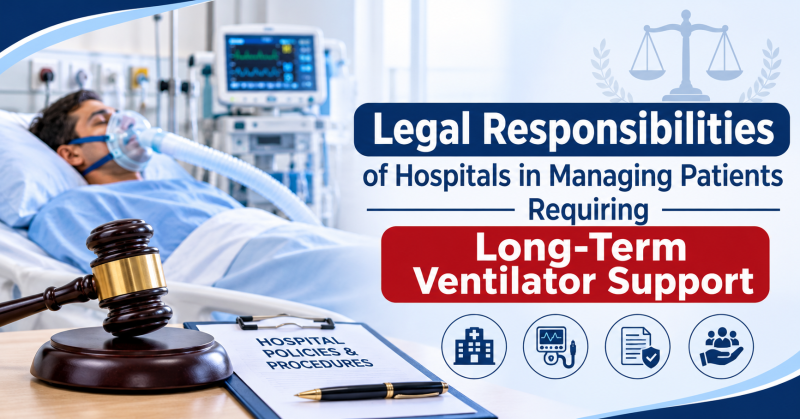
Legal Responsibilities of Hospitals in Managing Patients Requiring Long-Term Ventilator Support
 Badal
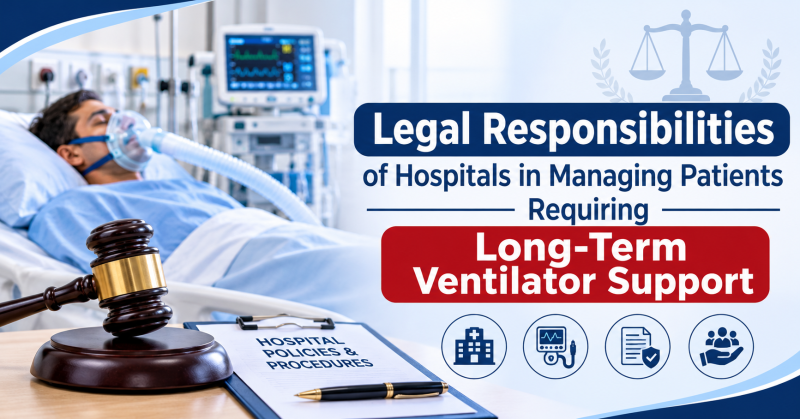
A hospital that places a patient on prolonged ventilation takes on duties that go well beyond the initial clinical decision: valid consent, a documented plan of care, regular review, honest communication with the family and a lawful process for any later decision to limit treatment. Many disputes in this area arise from gaps in these steps rather than from the ventilation itself. Hospitals that look for a medico legal consultant in Delhi often do so after a dispute has started, when the record is already fixed. This article sets out the responsibilities to build into the process earlier.
Why Long-Term Ventilation Creates Distinct Legal Exposure
Short-term ventilation after surgery or an acute event is usually straightforward. Long-term ventilation is different because the situation keeps changing. Weeks in, the patient's prognosis, decision-making capacity, costs and family expectations may all look very different from day one.
The legal standard has not changed. In Jacob Mathew v. State of Punjab (2005), the Supreme Court held that criminal liability requires gross negligence, not an error of judgment or an unfavourable outcome. Civil and consumer proceedings apply a lower threshold, and medical services fall within the Consumer Protection Act, 2019, following Indian Medical Association v. V.P. Shantha (1995). Complaints can also reach the Delhi Medical Council, which looks at professional conduct rather than compensation.
Because a single prolonged admission can generate all three kinds of proceedings, the records matter as much as the care.
Consent and Capacity
Most ventilated patients cannot consent on their own behalf, so consent usually comes from a family member or legally authorised representative. The Supreme Court's decision in Samira Kohli v. Dr. Prabha Manchanda (2008) emphasises that consent must be informed, with the nature of treatment, alternatives and material risks explained.
For long-term ventilation, material information includes:
- The likelihood and expected timeline of weaning.
- Risks such as ventilator-associated pneumonia, tracheostomy complications and pressure injuries.
- The realistic prognosis, stated as uncertainty where it exists.
- An estimate of cost, or at least how costs will be communicated.
Consent should be revisited, not obtained once. A change of plan, such as moving to tracheostomy, calls for a fresh and documented conversation. Where a patient regains capacity, the patient's own decisions take over.
Documentation Across a Long Admission
The longer the stay, the more likely it is that the record will have inconsistencies. Common problems include copied-forward notes, missing ventilator settings, undocumented weaning trials and unsigned family meeting entries.
A defensible record usually shows:
- Daily consultant-level review with a clear assessment and plan.
- Ventilator parameters, sedation scores and alarm responses charted at defined intervals.
- Infection-control measures and bundle compliance.
- Dated, signed notes for every family discussion, including who was present.
- Documented reasons whenever the plan changes.
Hospitals should also remember that retention requirements vary by framework. The Indian Medical Council (Professional Conduct, Etiquette and Ethics) Regulations, 2002 contain a retention period for indoor records, but the status of newer National Medical Commission regulations has been uncertain, so each hospital should confirm the version currently in force. If a complaint is likely, records should be kept well beyond the minimum.
Withholding and Withdrawing Life Support
This is the most legally sensitive area. In Common Cause v. Union of India (2018), the Supreme Court recognised passive euthanasia and the validity of advance medical directives under defined safeguards, and the procedure was later modified in 2023 to simplify the process. The framework involves medical boards and verification steps, so hospitals should not treat a verbal family request as enough.
In practice, this means:
- A hospital should have a written policy on limitation of treatment that reflects the current Supreme Court guidance.
- Decisions should go through the prescribed medical board process, with clear documentation.
- Palliative and comfort care must continue regardless of the decision.
The detailed procedure has been refined over time, so administrators should read the current text of the judgments and any official guidance rather than rely on summaries.
A Realistic Scenario: The Unrecorded Conversation
This is an illustrative example, not a reported case.
A patient with chronic lung disease is ventilated in a private hospital's ICU. By week three, the treating team believes recovery is unlikely and tells the patient's son informally that "things look bad." No meeting is recorded. The son later says he was never told the prognosis and that the family spent savings believing recovery was likely. After the patient dies, the family files a consumer complaint alleging deficiency in service and inadequate communication.
The clinical care may have been entirely appropriate. The weakness lies in the absence of a documented prognosis discussion, no record of cost conversations and no structured review. A hospital that had held a recorded family meeting at a defined interval, with the consultant present, would be in a much stronger position.
Facility Obligations, Staffing and Equipment
The regulatory framework depends on the hospital's location and type. In Delhi, nursing homes are governed by the Delhi Nursing Homes Registration Act, 1953, whereas the Clinical Establishments (Registration and Regulation) Act, 2010 applies only in states that have adopted it. Administrators should confirm which rules apply to their facility rather than assume a single national standard.
Beyond statutory compliance, accepted good practice includes:
- Trained intensivists or critical-care physicians, and nursing ratios appropriate to ventilated patients.
- Documented equipment maintenance, calibration and backup power arrangements.
- Clear escalation protocols for ventilator alarms and failures.
- Written infection-control and weaning protocols.
A distinction matters here. A missing register is an administrative lapse. A power failure with no functioning backup that harms a ventilated patient is a potential negligence issue. Treating them as equivalent leads to poor risk prioritisation.
Informed medico-legal awareness among clinicians and administrators is increasingly seen as part of good governance, and professionals such as Dr. Vimal Kant Goyal have highlighted why these frameworks should be understood before a dispute rather than after one. Teams wanting further reading can consult this resource on hospital medico-legal responsibilities. Hospitals seeking structured medico legal support in Delhi typically find it most useful when it is built into policy and training, not engaged only at the point of a legal notice.
Conclusion
Long-term ventilation tests a hospital's systems as much as its clinical skill. Specific and repeated consent, consultant-level documentation, structured family communication, a written treatment-limitation policy and knowledge of the framework applicable to the facility are the foundations of a defensible practice. None of these guarantees protection from a complaint, but together they make care easier to explain and defend. Laws and judicial guidance in this area have evolved, so verify the current position and seek qualified legal advice for case-specific questions.
Frequently Asked Questions
1. Can a hospital discontinue ventilation if the family cannot afford it?Not unilaterally. Financial difficulty alone does not authorise withdrawal. The hospital should communicate early, explore options such as transfer to a suitable facility with proper handover, and follow the lawful process for any limitation of treatment.
2. Who can give consent for a ventilated, unconscious patient?Generally, the legally authorised representative, usually a close family member, or a person named in an advance directive. Hospitals should record the relationship and the discussion.
3. Is a "Do Not Resuscitate" note enough on its own?No. It should reflect a documented decision-making process consistent with current Supreme Court guidance and hospital policy, not a casual instruction.
4. Should the hospital inform its insurer about a likely dispute?Usually yes. Professional indemnity policies often require prompt notice, and late notification can complicate cover. Check the policy wording.
5. When should a hospital seek legal advice during a long ventilator admission?Early, especially when a conflict with the family emerges, a limitation-of-treatment question arises or a significant adverse event occurs. A hospital choosing among advisers should look for practical experience with clinical records and the relevant forums rather than rely on rankings or claims such as "best medicolegal consultant in Delhi."
Source:
Click for the: Full Story
You might like