Close Menu
 World
 Biography
 Health
 Education
 Business
 Lifestyle
 Sports
 Technology
 Animals
 History
 Food
 Religious
 Startups
 Movies
 Politics
 Fashion
 Covid
 Diet
 Fitness
 Marketing
 Travel
 Science
 Reviews
 Social media
 Stories
 Facts
 Art
 Entertainment
Deepak

Health
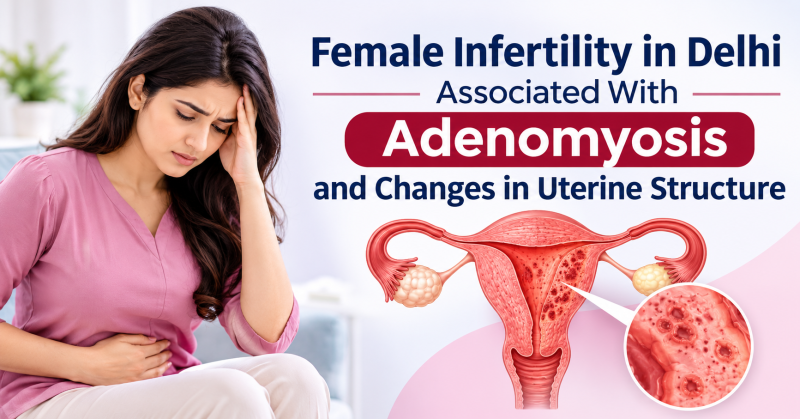
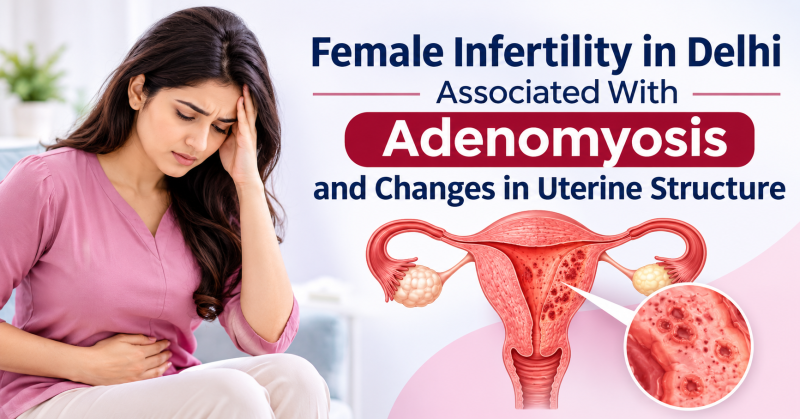
Female Infertility in Delhi Associated With Adenomyosis and Changes in Uterine Structure
 Deepak
Painful, heavy periods are often dismissed as something women simply have to tolerate. Sometimes, though, they point to a condition inside the uterine wall that can also make conception harder. Adenomyosis is one such condition, and it is being recognised more often as imaging techniques improve.
Women looking for the best female infertility in Delhi guidance after an adenomyosis diagnosis usually have the same core questions: How does this affect pregnancy? Is treatment needed before trying? And what are the realistic options? The answers depend on how extensive the condition is and how it fits into the wider fertility picture.
What Happens to the Uterus in Adenomyosis
The uterus has an inner lining, the endometrium, which thickens and sheds each month, and a thick muscular wall called the myometrium. In adenomyosis, tissue similar to the endometrium grows into the muscle wall.
This misplaced tissue responds to hormonal changes during the cycle, causing inflammation, swelling, and thickening of the uterine muscle. Over time, the uterus may become enlarged and its structure less uniform.
Diffuse and Focal Forms
Adenomyosis can appear in different patterns:
- Diffuse adenomyosis spreads through large areas of the uterine wall
- Focal adenomyosis is concentrated in one region
- Adenomyoma forms a more defined lump that can resemble a fibroid on scans
The pattern and extent influence both symptoms and fertility planning.
Symptoms Women May Notice, or Not Notice
Common symptoms include:
- Heavy menstrual bleeding
- Severe period pain that worsens over the years
- Pelvic pressure or a feeling of fullness
- Pain during intercourse
- An enlarged, tender uterus on examination
Some women, however, have no symptoms at all, and the condition is discovered only during a fertility evaluation. Adenomyosis also frequently coexists with endometriosis or fibroids, which can make the overall picture more complex.
How Adenomyosis May Interfere With Conception
Researchers are still clarifying exactly how adenomyosis affects fertility, but several mechanisms have been proposed.
Disturbed Uterine Muscle Activity
The uterine muscle contracts in coordinated waves that help move sperm towards the fallopian tubes. In adenomyosis, these contractions may become irregular, potentially affecting sperm transport.
Changes in the Implantation Environment
Inflammation within the uterine wall may alter the endometrium's ability to accept an embryo. Changes in local hormones, immune signalling, and blood flow have all been studied as possible factors.
Pregnancy-Related Concerns
Studies have associated adenomyosis with a higher risk of miscarriage, and with certain pregnancy complications such as preterm birth. These associations do not mean every woman will experience them, but they shape how pregnancies are monitored.
Confirming the Diagnosis
Adenomyosis was once confirmed only after surgery. Today, imaging can identify it with reasonable accuracy.
- Transvaginal ultrasound may show asymmetric thickening of the uterine walls, small cysts within the muscle, streaky shadowing, or an unclear boundary between the lining and muscle.
- MRI offers a more detailed view, particularly of the junctional zone, the area where the endometrium meets the myometrium.
Scan findings are interpreted alongside symptoms, age, ovarian reserve, and the partner's semen analysis, because adenomyosis is rarely evaluated in isolation when a couple is trying to conceive.
Treatment Approaches When Pregnancy Is the Goal
There is no single treatment for adenomyosis-related infertility. Plans are tailored to the severity of the condition, the woman's age, and any other fertility factors.
Hormonal Suppression
Medicines such as GnRH agonists may temporarily shrink adenomyotic tissue and calm inflammation. In some women undergoing IVF, a period of suppression before a frozen embryo transfer is considered. The evidence supporting this is still evolving, and the decision is made case by case.
Assisted Reproduction
Depending on individual findings, options may include IUI in mild cases with otherwise favourable factors, or IVF when adenomyosis is more extensive or coexists with other problems. Freezing embryos and transferring them in a later, hormonally prepared cycle is one strategy sometimes used.
The Role of Surgery
Surgical removal of focal adenomyosis is possible in selected cases, but it is technically demanding. Because it can weaken the uterine wall, it raises concerns about uterine rupture in a future pregnancy. Surgery is therefore generally reserved for specific situations after detailed discussion.
Balancing Time and Treatment
Hormonal treatments usually prevent pregnancy while they are being taken. For women with reduced ovarian reserve or advancing age, long delays may not be ideal, so timing is weighed carefully.
Seeking Coordinated Fertility Care
Understanding female infertility in Delhi cases involving adenomyosis requires both gynaecological and fertility expertise, since the condition affects symptoms, conception, and pregnancy. Coordinated care helps avoid treating the pain while overlooking the fertility goal, or vice versa.
A consultation with an experienced infertility specialist in Delhi typically involves reviewing scans, assessing ovarian reserve, evaluating the male partner, and discussing whether symptom control, assisted reproduction, or a combination is most suitable.
Dr. Poonam Goyal, a Gynecologist and Fertility Specialist in Delhi, evaluates women with adenomyosis by correlating imaging findings with symptoms and overall fertility status. She discusses treatment options, their limitations, and timing considerations so couples can choose a plan that suits their individual circumstances.
Reading the Diagnosis in Context
Adenomyosis can make the path to pregnancy more complicated, but its impact varies widely from one woman to another. A careful diagnosis, realistic counselling, and an individualised plan help women move forward with a clear understanding of their options rather than uncertainty.
If you want consultation regarding female infertility, you can visit Dr Poonam Goyal at:
- C-3/63A, 64A, opp. Gokulpuri Police Station, Block C, Panchsheel Hospital, Yamuna Vihar, Shahdara, Delhi – 110053
- HOD IVF & Infertility, Max Superspeciality Hospital, Vaishali
Frequently Asked Questions
1. Can I get pregnant naturally if I have adenomyosis?
Many women with adenomyosis do conceive naturally, but the condition may reduce fertility in some. The chances depend on its extent, age, ovarian reserve, and other fertility factors.
2. How is adenomyosis different from fibroids?
Fibroids are distinct growths of muscle tissue, while adenomyosis involves endometrial-like tissue spread within the uterine wall. They can look similar on scans and may occur together.
3. Does adenomyosis increase the risk of miscarriage?
Studies have linked adenomyosis with a higher miscarriage risk. Careful monitoring in early pregnancy is usually advised for women with this condition.
4. Is surgery needed for adenomyosis before IVF?
Surgery is not routinely needed. It may be considered in selected cases with focal disease, but because it can weaken the uterine wall, most women are managed with medical treatment and assisted reproduction.
5. Can an ultrasound detect adenomyosis?
A transvaginal ultrasound can often detect signs of adenomyosis. MRI may be recommended when findings are unclear or more detail is needed.
Source:
Click for the: Full Story
You might like