Close Menu
 World
 Biography
 Health
 Education
 Business
 Lifestyle
 Sports
 Technology
 Animals
 History
 Food
 Religious
 Startups
 Movies
 Politics
 Fashion
 Covid
 Diet
 Fitness
 Marketing
 Travel
 Science
 Reviews
 Social media
 Stories
 Facts
 Art
 Entertainment
Deepak

Health
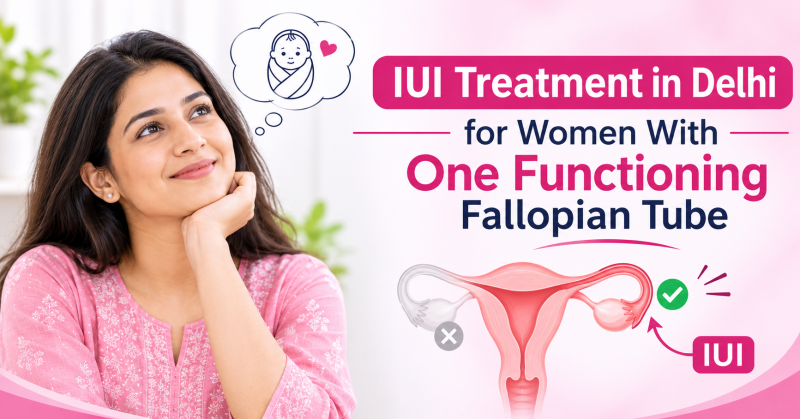
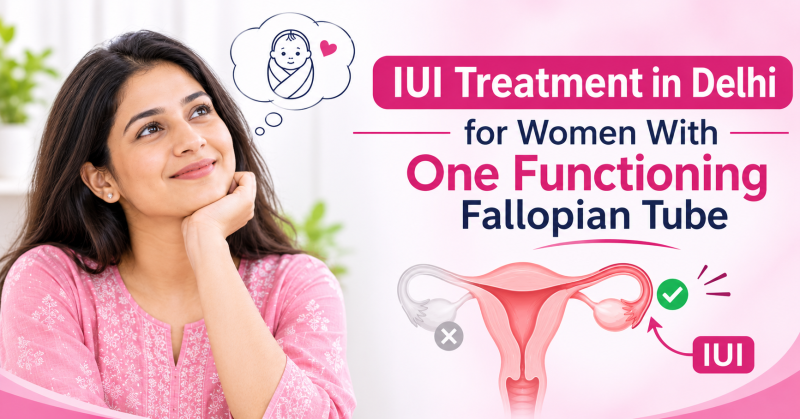
IUI Treatment in Delhi for Women With One Functioning Fallopian Tube
 Deepak
Hearing that one of your fallopian tubes is blocked or damaged often sounds like your chances have been cut in half. For many women, that isn't how fertility actually works. The body has more flexibility than the diagnosis suggests, and for a carefully selected group of women, IUI Treatment in Delhi can be a practical option even when only one tube is functioning.
Whether IUI makes sense depends less on the number of healthy tubes and more on the details: which tube works, how healthy it is, what happened to the other one, and how the rest of the fertility picture looks.
Why One Healthy Tube Can Still Be Enough
Each month, usually one ovary releases an egg. The fallopian tube's fringed end, called the fimbria, sweeps over the ovary to capture that egg, and fertilisation normally happens inside the tube.
A common assumption is that the egg can only be picked up by the tube on the same side. In reality, a healthy tube can sometimes capture an egg released from the opposite ovary, a process known as transperitoneal migration. This means pregnancy is possible even in months when ovulation happens on the side of the blocked tube, though such months may be less favourable.
Patent Is Not Always the Same as Healthy
A tube that allows dye to pass during a test is called "patent". Patency is important, but it does not confirm the tube's inner lining, muscle movement, or fimbrial function are normal. A tube that was affected by the same infection or condition that damaged the other side may be open but still work less efficiently.
What Usually Causes Damage to One Tube
Understanding the cause helps predict how the remaining tube is likely to function. Common reasons include:
- A previous ectopic pregnancy, sometimes treated by removing the affected tube
- Pelvic infections, including sexually transmitted infections
- Genital tuberculosis, which remains a relevant cause of tubal disease in India
- Endometriosis causing adhesions around one tube
- Earlier abdominal or pelvic surgery, such as for appendicitis or ovarian cysts
Damage from a localised event, like a surgically removed ectopic pregnancy, often leaves the other tube unaffected. Infection-related damage is more likely to affect both sides to some degree.
How Tubal Status Is Confirmed
Before planning IUI, the tubes need reliable assessment. Options include:
- Hysterosalpingography (HSG) – an X-ray dye test
- Sono-HSG or HyCoSy – an ultrasound-based alternative
- Laparoscopy with dye test – a surgical evaluation that also allows direct inspection
An HSG can occasionally show a tube as blocked near the uterus when it has only gone into temporary spasm. If results seem unclear, a repeat or confirmatory test may be advised before treatment decisions are made.
When the Damaged Tube Is Filled With Fluid
If the blocked tube has become swollen with fluid, a condition called hydrosalpinx, this needs particular attention. The fluid may leak into the uterus and may affect the chances of implantation. Depending on the situation, a specialist may discuss treating or removing that tube before proceeding with fertility treatment.
How IUI Is Planned With One Working Tube
The goal is to give the functioning tube the best possible opportunity each cycle. A typical plan includes:
- Follicle tracking with ultrasound to see which ovary is producing the leading follicle
- Mild ovarian stimulation in some women, which may encourage follicle growth on the side of the healthy tube
- Precise timing of a trigger injection and insemination
- Washed sperm placed directly into the uterus to improve the number reaching the tube
Some specialists may consider cancelling or adjusting a cycle when the only mature follicle is on the side of the blocked tube, though this decision varies with individual circumstances and is discussed with the patient.
When IUI May Not Be the Right Choice
IUI is generally reserved for women whose remaining tube is healthy and whose other fertility factors are favourable. It may be less suitable when:
- The functioning tube also shows signs of disease
- There is a history of more than one ectopic pregnancy
- The woman is older or has reduced ovarian reserve
- Semen parameters are significantly low
- Several monitored IUI cycles have not resulted in pregnancy
In these situations, IVF bypasses the tubes completely and is often discussed as a more suitable option.
Ectopic Pregnancy Risk After Tubal Damage
Women with existing tubal damage carry a higher risk of ectopic pregnancy. For this reason, any positive pregnancy test after IUI should be followed by early ultrasound to confirm the pregnancy is inside the uterus.
Choosing the Right Place for Evaluation
When looking for the best IUI centre in Delhi, women with a single working tube should look for a team that reviews tubal reports carefully rather than simply proceeding with insemination. Ultrasound-based cycle monitoring, proper sperm preparation, and a clear plan for moving to IVF if needed are all important.
Meeting an experienced infertility specialist in Delhi helps put the tubal finding into context alongside age, ovarian reserve, and the partner's semen analysis.
Dr. Poonam Goyal, a Gynecologist and Fertility Specialist in Delhi, evaluates women with one functioning tube by reviewing their surgical and medical history, confirming tubal health through appropriate tests, and planning monitored IUI cycles when they are suitable. She also counsels couples on when IVF may offer a more practical route, so decisions are based on the full clinical picture.
A Diagnosis That Calls for Planning, Not Panic
One damaged tube changes the fertility plan, but it rarely closes every door. With accurate tubal assessment, careful cycle monitoring, and timely review, many women can make a confident choice between IUI and other options.
If you want consultation regarding IUI treatment, you can visit Dr Poonam Goyal at:
- C-3/63A, 64A, opp. Gokulpuri Police Station, Block C, Panchsheel Hospital, Yamuna Vihar, Shahdara, Delhi – 110053
- HOD IVF & Infertility, Max Superspeciality Hospital, Vaishali
Frequently Asked Questions
1. Can I get pregnant through IUI with only one fallopian tube?
Yes, pregnancy through IUI is possible if the remaining tube is healthy and other fertility factors such as ovarian reserve and semen quality are favourable. A specialist will assess these before recommending treatment.
2. Does ovulation need to happen on the side of the open tube?
It is generally more favourable, but not always essential. A healthy tube can sometimes pick up an egg from the opposite ovary. Ultrasound monitoring helps the specialist plan each cycle accordingly.
3. Should a blocked tube with fluid be removed before IUI?
A fluid-filled tube (hydrosalpinx) may affect implantation, so a specialist may discuss treating or removing it. The decision depends on individual findings and overall treatment plans.
4. How many IUI cycles are advisable with one working tube?
Many specialists review the plan after around three monitored cycles. Age, ovarian response, and other factors influence whether to continue IUI or move to IVF.
5. Is the risk of ectopic pregnancy higher after IUI with tubal damage?
Women with tubal damage do have a higher ectopic risk. An early ultrasound after a positive pregnancy test helps confirm that the pregnancy is in the uterus.
Source:
Click for the: Full Story
You might like