Close Menu
 World
 Biography
 Health
 Education
 Business
 Lifestyle
 Sports
 Technology
 Animals
 History
 Food
 Religious
 Startups
 Movies
 Politics
 Fashion
 Covid
 Diet
 Fitness
 Marketing
 Travel
 Science
 Reviews
 Social media
 Stories
 Facts
 Art
 Entertainment
Rajan

Health
How Does Robotic Surgery Help Surgeons Operate in Difficult-to-Reach Areas of the Abdomen?
 Rajan
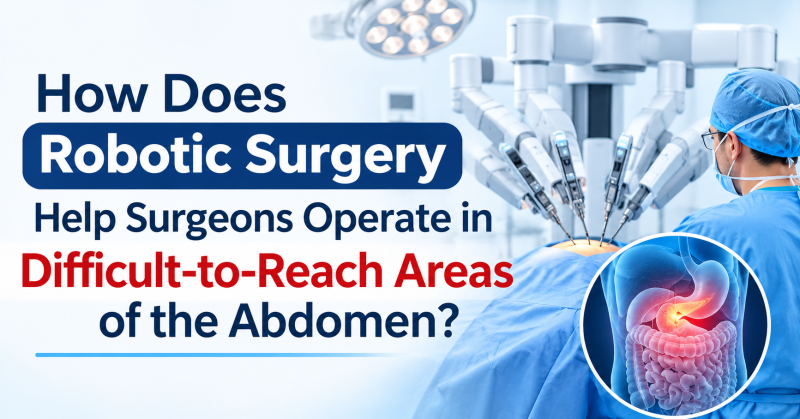
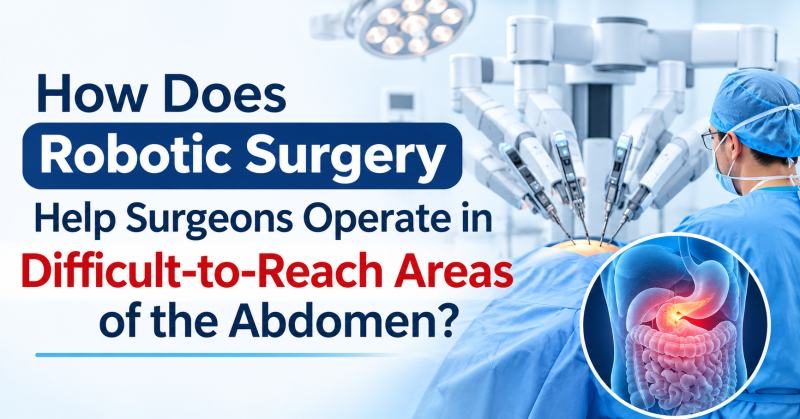
Some parts of the abdomen are simply hard to get to. The upper stomach sits beneath the ribs, the rectum lies deep within the narrow bony pelvis, and the pancreas and bile duct are surrounded by major blood vessels. Operating in these areas through a large incision causes significant trauma, while operating through tiny keyhole cuts can be technically demanding. Robotic-assisted surgery was developed to bridge this gap. If you are researching the best robotic surgeon in Rajinder Nagar or elsewhere in Delhi, it helps to first understand what the technology actually does, and what it does not.
First, a Common Misunderstanding: The Robot Does Not Operate
A surgical robot does not make decisions or move by itself. In systems such as the da Vinci platform, the surgeon sits at a console a few feet from the patient and controls the instruments directly. The robot translates the surgeon's hand movements into precise movements of tiny instruments inside the body. The surgeon remains in full control throughout, and a trained team stays at the bedside.
Robotic surgery is therefore best described as an advanced form of minimally invasive surgery. The surgeon's skill and judgement still determine the outcome.
What Makes Deep Abdominal Areas Difficult?
- Limited space: The pelvis, for example, is narrow, and organs are packed closely together.
- Fixed angles: Instruments passed through the abdominal wall pivot at one point, which restricts movement in tight spaces.
- Critical structures nearby: Nerves, blood vessels, ureters, and the bile duct sit very close to many organs that need surgery.
- Body build: Obesity or a heavy abdominal wall can make conventional keyhole instruments harder to control.
- Scar tissue: Previous operations can distort the anatomy.
How Robotic Technology Addresses These Challenges
FeatureWhat it doesWhy it matters in difficult areas3D high-definition magnified visionGives the surgeon a detailed, depth-perceiving viewHelps identify small nerves, vessels, and tissue planesWristed instrumentsInstrument tips bend and rotate much like a human wristAllows delicate cutting and stitching in tight, deep spacesTremor filteringSmooths out natural hand tremorSupports steadier movements during fine dissectionMotion scalingConverts larger hand motions into smaller instrument motionsEnables precise work in confined areasErgonomic consoleLets the surgeon sit comfortablyMay reduce surgeon fatigue during long, complex procedures
Together, these features can make it easier to perform careful dissection and suturing in places where standard laparoscopic instruments feel restricted. Some systems also offer fluorescence imaging, which uses a special dye to help visualise blood supply or bile ducts during surgery, although availability varies by centre.
Abdominal Conditions Where Robotic Surgery Is Commonly Used
Robotic assistance is used across several specialities. In abdominal and gastrointestinal surgery, common applications include:
- Rectal and colon surgery: Operating deep in the pelvis is one of the most frequently cited advantages of the robotic approach.
- Hernia repair: Particularly complex or recurrent abdominal wall hernias, where careful suturing is needed.
- Upper GI surgery: Including anti-reflux surgery, hiatal hernia repair, and certain stomach procedures.
- Bariatric and revision surgery: Where altered anatomy and scar tissue can make conventional approaches harder.
- Gallbladder and bile duct surgery: Especially in complicated cases.
- Liver and pancreatic procedures: In carefully selected patients and experienced centres.
Not every patient or every condition needs a robot. For many routine operations, standard laparoscopic surgery works equally well. Current evidence suggests the benefit of robotic surgery is clearest in technically demanding operations, particularly deep pelvic surgery, and it varies by procedure.
Potential Benefits for Patients
Compared with open surgery, minimally invasive robotic procedures generally involve smaller incisions, which can mean:
- Less post-operative pain
- Lower risk of wound infection
- Shorter hospital stay for many patients
- Faster return to routine activities
- Smaller scars
These benefits depend on the operation, the patient's health, and the surgeon's experience. They are not guaranteed for every individual.
Risks and Limitations to Discuss Openly
Robotic surgery carries the general risks of any abdominal operation, including bleeding, infection, injury to nearby organs, and anaesthesia-related complications. Other points to consider:
- Conversion to open surgery: Occasionally, a surgeon may need to switch to an open approach for safety. This is a judgement call, not a failure.
- Longer operating time: Setup can add time in some cases.
- Cost: Robotic procedures are often more expensive than conventional laparoscopy, and insurance coverage varies.
- No tactile feedback: Most systems do not transmit the sense of touch, so surgeons rely on visual cues.
- Learning curve: Outcomes are strongly linked to the surgeon's training and the volume of robotic cases handled by the team.
What Recovery Usually Looks Like
Recovery depends on the procedure. Many patients are encouraged to walk within hours of surgery, resume light activity within days, and return to office-type work within one to three weeks, though major cancer or pelvic operations take longer. Your surgeon will give personalised instructions on diet, wound care, lifting restrictions, and follow-up visits. Contact your doctor promptly for fever, worsening pain, persistent vomiting, wound redness or discharge, or breathlessness.
How to Choose a Robotic Surgeon
The technology matters, but the surgeon matters more. Consider asking:
- How many robotic procedures of this type does the surgeon perform?
- Will the same surgeon perform the entire operation at the console?
- Is robotic surgery truly better for my condition, or is laparoscopy equally suitable?
- What is the conversion rate, and how are complications managed?
- What does the total cost include, and what follow-up is provided?
Patients looking for the best robotic surgeon in Delhi NCR should use these questions to compare surgeons on experience and transparency rather than advertising. In Central Delhi, Dr. Tarun Mittal, a surgeon with over 20 years of experience, practises at Sir Ganga Ram Hospital, Old Rajendra Nagar, New Delhi – 110060, and can evaluate whether a robotic, laparoscopic, or open approach suits a particular abdominal condition. Those specifically searching for the best robotic surgeon in Sir Ganga Ram Hospital should likewise ask for a clear explanation of why a robotic approach is being recommended for their case, along with its realistic benefits and limits.
Conclusion
Robotic surgery does not replace the surgeon's skill. It extends it, offering magnified 3D vision and flexible instruments that can make delicate work easier in tight, difficult corners of the abdomen. It is not necessary for every patient, and its value depends on the condition being treated and the experience of the operating team. If you are exploring the best robotic surgeon in Rajinder Nagar, focus on clear communication, relevant experience, and an honest discussion of all treatment options, including non-robotic ones.
Disclaimer: This article is for general information only and does not replace professional medical advice. Please consult a qualified surgeon for guidance specific to your condition.
Frequently Asked Questions
1. Is robotic surgery safer than laparoscopic or open surgery?
Not automatically. Robotic surgery is a tool that can improve precision in certain complex operations. Safety depends mainly on the surgeon's experience, the patient's condition, and the type of procedure.
2. Does a robot perform the surgery on its own?
No. The surgeon controls every movement from a console. The robot has no independent decision-making ability.
3. Which abdominal operations benefit most from a robotic approach?
Operations in tight, deep or anatomically complex spaces, such as rectal surgery, complex hernia repairs, hiatal hernia and anti-reflux surgery, and revision bariatric surgery, are commonly cited examples. Your surgeon can advise whether it applies to you.
4. Will I have scars after robotic surgery?
Yes, but they are usually small, typically a few short incisions rather than one long cut. The number and size depend on the procedure.
5. How do I know if I am a suitable candidate?
Suitability depends on your diagnosis, previous surgeries, overall health, and imaging findings. A consultation with an experienced surgeon, along with relevant tests, is the only reliable way to decide.
Source:
Click for the: Full Story
You might like