Close Menu
 World
 Biography
 Health
 Education
 Business
 Lifestyle
 Sports
 Technology
 Animals
 History
 Food
 Religious
 Startups
 Movies
 Politics
 Fashion
 Covid
 Diet
 Fitness
 Marketing
 Travel
 Science
 Reviews
 Social media
 Stories
 Facts
 Art
 Entertainment
Badal

Health
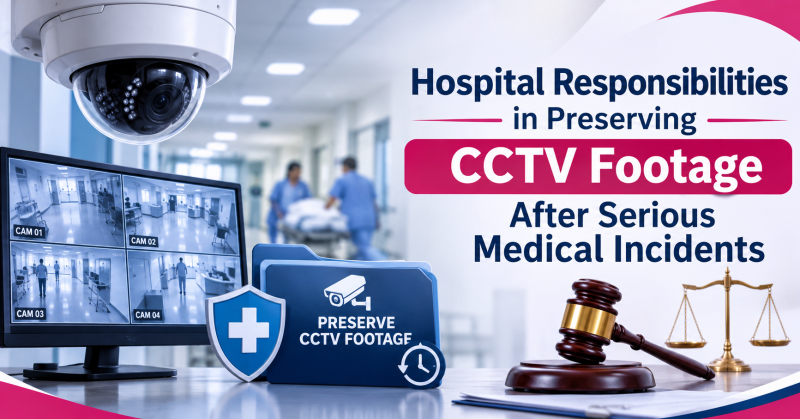
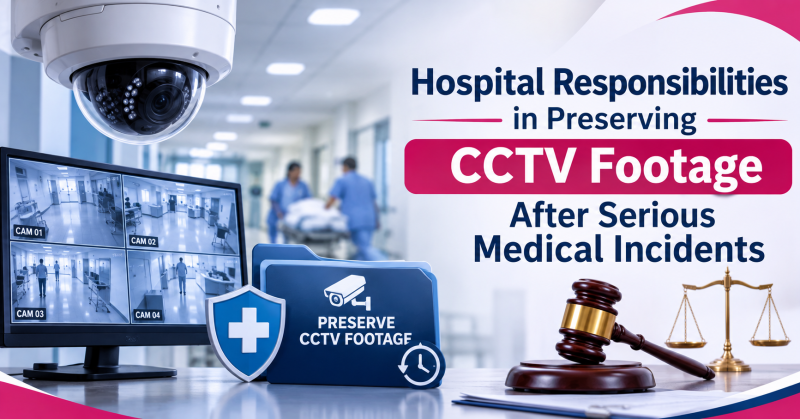
Hospital Responsibilities in Preserving CCTV Footage After Serious Medical Incidents
 Badal
After a serious medical incident, a hospital should secure the relevant CCTV footage immediately, stop automatic overwriting, make verified copies, record who handled them, and take advice before responding to any request. Footage can show who was present, how quickly staff responded, and what happened at the bedside or entrance. A medico legal consultant in Delhi can help hospitals decide what to preserve, how to document custody, and how to reply to families, police, or forums without making the situation worse.
Why CCTV Footage Becomes Important
CCTV is often the only neutral record of events that notes and charts do not capture: the time a patient arrived, how long a call bell went unanswered, a confrontation in a corridor, or a fall in a ward. In a dispute, footage can support the hospital’s account or contradict it.
Footage is also fragile. Many systems overwrite recordings automatically after a fixed number of days. If a complaint arrives weeks later, the relevant period may already be gone. That loss can be explained innocently, but it can also be read as concealment, particularly if other records are incomplete.
What the Law Generally Expects
There is no single rule that tells every hospital exactly how long to keep CCTV footage. Obligations can arise from several sources, including the conduct regulations for medical practitioners, directions in a particular case, requirements of the investigating authority, and the hospital’s own policy. Confirm which provisions apply to your facility.
What is clear is the wider legal setting. Indian courts judge medical negligence against the standard of a reasonably competent practitioner. In Jacob Mathew v. State of Punjab (2005), the Supreme Court held that criminal liability against doctors requires a high degree of negligence, and that an unfavourable outcome alone does not establish it. Medical services may be examined under consumer law, as recognised in Indian Medical Association v. V.P. Shantha (1995), and doctors may face council inquiries. In any of these, a hospital that cannot produce relevant evidence may find its position weaker. Footage also records patients and staff, so handle it in line with applicable data protection and privacy requirements, and take advice on current obligations.
Common Mistakes Hospitals Make
- Letting the system overwrite footage after an incident has been reported
- Saving only a short clip chosen by one person, instead of the full relevant period
- Keeping no record of who viewed, copied, or exported the footage
- Storing copies on personal phones, shared drives, or unsecured devices
- Allowing the footage to be shown informally to families or staff without a policy
- Failing to note camera locations, time settings, or whether the clock was accurate
- Deleting footage because “nothing wrong happened”
- Sharing footage with the media or on social media
A Realistic Example
A patient falls in a corridor outside a ward at night and suffers a fracture. The family alleges that staff ignored repeated calls for help. The hospital’s system overwrites after fifteen days, and the complaint arrives in the fourth week. The nursing notes record the fall but not the preceding minutes.
If the incident had been reported to a designated officer on the day, who then secured the footage of the ward, corridor, and nursing station for the relevant hours, the hospital could show exactly how staff responded. Without it, the family’s account may be difficult to answer, even if the staff acted properly. The care may be the same either way. The preserved evidence decides what can be shown.
A Practical Protocol for Preserving Footage
- Name a responsible officer, such as the security head or quality lead, for each incident
- Trigger preservation early. A serious adverse event, death, assault, fall, or complaint should start the process
- Stop overwriting for the relevant cameras, and export the footage in its original format
- Capture a wide window, covering the time before, during, and after the incident, and all relevant camera angles
- Create verified copies, keep the original secure, and note file names, dates, and checksums where your system allows
- Keep a custody log of who accessed, copied, or moved each file, and when
- Record system details, such as camera locations and any difference between the system clock and actual time
- Control viewing. Allow access only to authorised persons, and do not edit or enhance the footage
- Link it to the file. Note in the incident report what footage exists and where it is stored
- Review retention settings so the system’s default cycle is a conscious, documented decision
A good Hospital Quality Guide would treat this as part of incident management, with periodic checks that cameras work, clocks are accurate, and storage is secure.
When to Seek Specialist Advice
Seek advice when a serious incident occurs, when police or a court asks for footage, when a family requests to view it, or when you discover that relevant footage no longer exists. Those searching for the best medicolegal consultant in Delhi should look for experience with negligence, consumer, and council matters, and clear explanations of limits, not promises. Practitioners can also refer to Dr. Vimal Kant Goyal, whose medico-legal guidance for hospitals and doctors explains how to approach records, notices, and complaints. Reliable medico legal support in Delhi is most useful before any reply is sent or any footage is shared.
Conclusion
CCTV footage helps most when it is secured early, copied carefully, and tracked from the first hour. Name an owner, pause overwriting, capture a wide window, keep a custody log, and review your system settings regularly. A medico legal consultant in Delhi can help you apply these steps to a particular incident and respond accurately if a dispute follows. This article offers general information and is not legal advice for any specific case. If a complaint or notice arrives, consult a qualified medico-legal professional.
Frequently Asked Questions
1. How long should a hospital keep CCTV footage?No single period fits every case. Follow applicable rules, directions from authorities, and your policy, and keep footage related to a serious incident until the matter is resolved, subject to legal advice.
2. Can a family demand to see CCTV footage?Not automatically. Access depends on law, privacy of others in the footage, and any proceedings. Take advice before showing or handing over any recording.
3. What if the footage was overwritten before the complaint arrived?Do not hide it or try to recreate it. Record the system’s retention setting and the date of overwriting, preserve other evidence, and seek advice on how to explain it accurately.
4. Should we give the original recording to the police?Provide what is lawfully requested, keep the original secure, retain a verified copy, and record what was handed over, to whom, and when. Take advice if the request is unclear.
5. Can footage be edited to remove other patients?Do not alter original footage. If redaction is required for disclosure, do it on a copy under advice, and keep the unedited original intact.
Source:
Click for the: Full Story
You might like