Close Menu
 World
 Biography
 Health
 Education
 Business
 Lifestyle
 Sports
 Technology
 Animals
 History
 Food
 Religious
 Startups
 Movies
 Politics
 Fashion
 Covid
 Diet
 Fitness
 Marketing
 Travel
 Science
 Reviews
 Social media
 Stories
 Facts
 Art
 Entertainment
Badal

Health
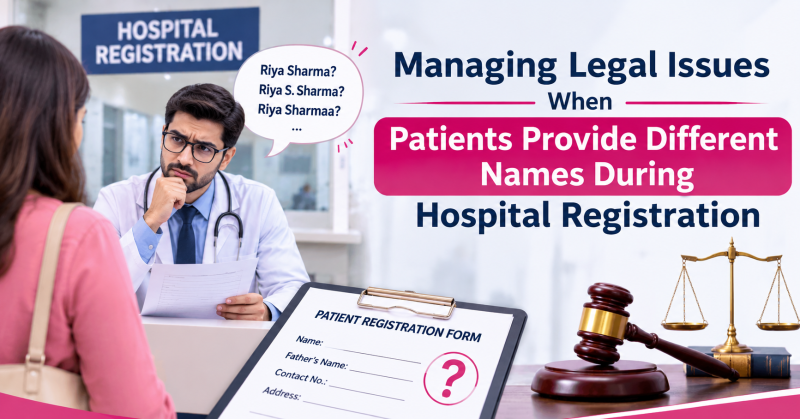
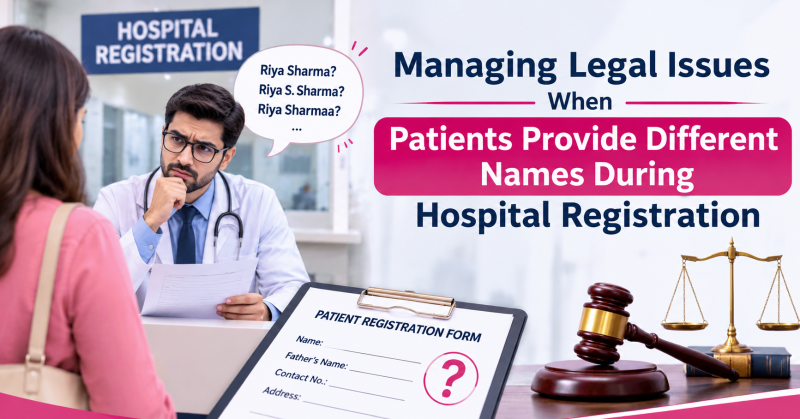
Managing Legal Issues When Patients Provide Different Names During Hospital Registration
 Badal
When a patient gives different names at registration, the hospital should treat treatment as the priority, record exactly what was stated and by whom, verify identity as far as reasonably possible, and never overwrite the original entry. Corrections should be made by a dated, signed amendment. Medico legal support in Delhi often becomes relevant when a name mismatch later affects a medico-legal case, an insurance claim, a death certificate, or a request for records. This article explains why mismatches happen, where the legal risks lie, and how hospitals can handle them.
Why Patients Give Different Names
Name discrepancies are common and are not always a sign of wrongdoing. Typical reasons include:
- Spelling variations, nicknames, or transliteration differences between scripts
- Name changes after marriage, or a different name on different identity documents
- A relative giving the name from memory while the patient is unconscious or in distress
- Fear of police involvement, stigma, or social consequences
- Intentional use of another person’s identity to obtain treatment or insurance benefits
- Unidentified patients brought in by bystanders or ambulance staff
The hospital’s first task is not to judge the reason. It is to treat the patient and record the facts accurately.
Where the Legal Risks Arise
A wrong or inconsistent name can create problems long after discharge:
- Misidentification: Reports, medicines, or blood products linked to the wrong person can cause patient harm.
- Medico-legal cases: Injury, assault, poisoning, or accident cases may later need to be matched with police records.
- Insurance and claims: Mismatched names can lead to rejected claims or allegations of fraud.
- Records requests: A hospital may be unsure who is entitled to a file when names differ.
- Birth and death documentation: Errors in registration can be difficult to correct afterwards.
- Allegations of tampering: If a name is altered without a trace, a family or authority may question the integrity of the whole file.
In Jacob Mathew v. State of Punjab (2005), the Supreme Court held that criminal liability against doctors requires a high degree of negligence, and that an unfavourable outcome alone does not establish it. Identification errors that lead to treatment errors, however, can be examined under negligence standards, and medical services may also come before consumer forums, as recognised in Indian Medical Association v. V.P. Shantha (1995). Doctors may also face council inquiries. Confirm the current provisions that apply to your facility before relying on any of this.
Common Mistakes Hospitals Make
- Overwriting or scoring out a name instead of adding a dated, signed correction
- Creating a new patient record when the person already has one, splitting the history
- Accepting a verbal name without noting who supplied it
- Failing to flag that the identity is unverified or provisional
- Delaying emergency care while waiting for identity documents
- Using different names in the case sheet, laboratory system, and billing
- Not informing the police in a case that appears medico-legal
- Releasing records to a person whose relationship to the patient is unclear
A Realistic Example
A man is brought to the emergency department after a road accident. A bystander gives one name, and a relative who arrives later gives a different spelling and surname. The patient is drowsy and cannot confirm. Staff register him under the first name, and the laboratory and billing systems later use the second.
Weeks later, the insurer questions the claim, and the family asks for the file. If the hospital had recorded who gave each name, marked the identity as provisional, linked both entries to one record number, and added a dated correction once an identity document was seen, the issue is easy to explain. If the names were simply replaced, it may look like tampering. The care given is the same, but the record decides how it is read.
A Practical Protocol for Registration Mismatches
- Treat first. Do not delay urgent care for paperwork.
- Record the source. Note who gave each name, when, and in what capacity.
- Mark provisional identity. Use a clear flag until verified, with a temporary unique ID for unidentified patients.
- Verify when possible. Ask for a photo identity document and record which one was seen, avoiding unnecessary copies of sensitive data.
- Link, do not duplicate. Keep one record number, with alternate names noted as aliases.
- Correct transparently. Use dated, signed amendments and keep the original entry visible. Electronic systems should log edits.
- Align all departments. Laboratory, pharmacy, imaging, and billing should show the same verified identity.
- Check medico-legal status. If the case may be medico-legal, follow your hospital’s procedure and inform the appropriate authority.
- Release records carefully. Confirm the identity and entitlement of the person asking, and take advice if in doubt.
Handle personal data in line with applicable data protection law, and confirm current requirements for your setup.
When to Seek Specialist Advice
Seek advice when a name mismatch affects a police case, an insurance dispute, a death certificate, or a complaint, and before sending any written reply. Doctors and administrators searching for medico legal help for medical professionals in Delhi can consult specialists such as Dr. Vimal Kant Goyal, whose medico-legal resources for doctors and hospitals explain how to approach records, notices, and complaints. A reliable medico legal guide in Delhi should also be clear about its limits and never promise a particular outcome.
Conclusion
Name mismatches are manageable when handled openly: treat first, record the source, flag provisional identity, verify when possible, and correct only through transparent amendments. Review your registration forms and software so that every department uses one verified identity. Reliable medico legal support in Delhi can help you assess a specific situation and respond accurately if a mismatch turns into a dispute. This article offers general information and is not legal advice for any specific case. If a dispute arises, consult a qualified medico-legal professional.
Frequently Asked Questions
1. Should we delay treatment until a patient’s name is confirmed?No. Urgent treatment should not wait for identity paperwork. Register a provisional identity, record the source of the information, and verify later.
2. Can staff correct a wrongly registered name?Yes, but not by overwriting. Use a dated, signed amendment, keep the original visible, and ensure electronic edits are logged.
3. What if the patient deliberately gave a false name?Record what was stated and what was later verified, without making accusations in the file. Take advice before involving other parties, especially where insurance or police matters are involved.
4. How should unidentified patients be registered?Use a temporary unique identifier with a clear provisional flag, record the circumstances of arrival, and update the record through a documented process once identity is established.
5. Who should receive records when names do not match?Release records only after confirming the identity of the patient and the entitlement of the requester. If the situation is unclear, take advice before responding.
Source:
Click for the: Full Story
You might like