Close Menu
 World
 Biography
 Health
 Education
 Business
 Lifestyle
 Sports
 Technology
 Animals
 History
 Food
 Religious
 Startups
 Movies
 Politics
 Fashion
 Covid
 Diet
 Fitness
 Marketing
 Travel
 Science
 Reviews
 Social media
 Stories
 Facts
 Art
 Entertainment
Deepak

Health
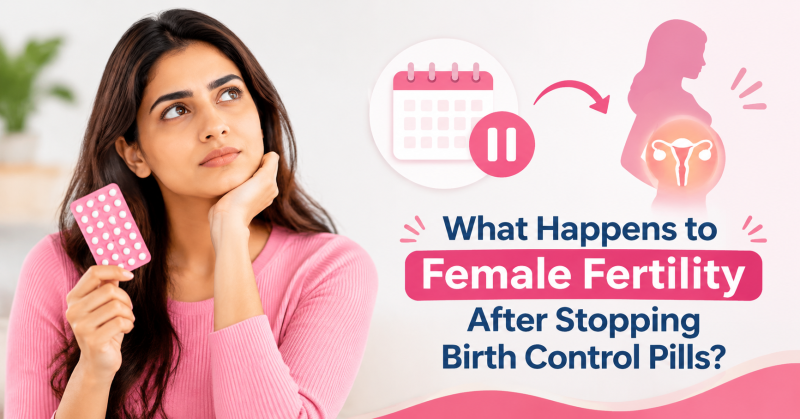
What Happens to Female Fertility After Stopping Birth Control Pills?
 Deepak
Many women stop taking birth control pills when they feel ready to start a family, and the first question is usually the same: how long will it take for my body to get back to normal? This is a common concern for women seeking guidance on female fertility in Delhi, and the reassuring answer is that for most women, fertility returns without lasting damage.
Here is what typically happens, what can vary from woman to woman, and when it makes sense to speak to a doctor.
Do Birth Control Pills Cause Infertility?
No. Current medical evidence does not show that oral contraceptive pills cause permanent infertility. The pill works by suppressing ovulation and altering cervical mucus and the uterine lining. Once you stop, these effects wear off and your natural hormonal cycle gradually resumes.
Ovulation is the key event. Until your ovaries start releasing an egg again, pregnancy is not possible. Pregnancy is also possible in the very first cycle after stopping, so the pill should not be treated as a long-term “fertility pause” if you are not ready to conceive.
How Long Does It Take for Fertility to Return?
There is no single timeline. Most women ovulate again within a few weeks to a few months of stopping the pill, and many conceive within the first year, similar to women who have never used hormonal contraception.
Factors that influence this include:
- Age: Natural fertility declines gradually with age, especially after the mid-30s.
- Your cycle before the pill: Women who had irregular periods before starting the pill may notice the same pattern returning.
- Underlying conditions: PCOS, thyroid disorders, endometriosis or raised prolactin can affect ovulation regardless of pill use.
- Weight, stress and lifestyle: Significant weight changes, intense exercise, poor sleep and chronic stress can all disrupt ovulation.
What Is “Post-Pill” Cycle Irregularity?
After stopping the pill, some women see changes in their periods for a few months. This is often the body readjusting, not a sign that something is wrong.
Common experiences include:
- Delayed first period after stopping
- Lighter or heavier bleeding than before
- Cycles that vary in length
- Temporary acne, mood changes or breast tenderness
It is important to understand that the pill often masks an underlying condition. The bleeding women have on the pill is a withdrawal bleed, not a true period. So when the pill stops, problems like PCOS, which cause irregular ovulation, may become visible for the first time. The pill did not cause the condition; it was hiding it.
How to Tell Whether You Are Ovulating
Once off the pill, tracking your cycle can give useful information. You can look for:
- A regular cycle roughly every 24 to 35 days
- Clear, stretchy cervical mucus around mid-cycle
- A mild one-sided pelvic twinge in some women
- A positive ovulation predictor kit (OPK)
- A basal body temperature rise after ovulation
These signs are helpful but not definitive. Ultrasound monitoring and blood tests give a far more reliable picture when there is doubt.
Should You Wait Before Trying to Conceive?
Most doctors do not require a waiting period after stopping the pill. However, some women prefer to allow one or two natural cycles first. This helps in estimating dates more accurately, since a regular cycle makes it easier to calculate your due date.
A better use of this time is preconception preparation:
- Start folic acid, as advised by your doctor, ideally before conception
- Review vaccinations such as rubella and chickenpox immunity
- Check thyroid function and blood sugar if you have risk factors
- Maintain a healthy weight and balanced diet
- Avoid smoking and limit alcohol
When Should You See a Doctor?
Fertility advice is time-sensitive, so it helps not to wait too long. Consider a consultation if:
- You are under 35 and have not conceived after 12 months of regular, unprotected intercourse
- You are 35 or above and have not conceived after 6 months
- Your periods have not returned within three months of stopping the pill
- Your cycles are very irregular, very painful or unusually heavy
- You have a known history of PCOS, endometriosis, fibroids, pelvic infection or thyroid disease
- You have had previous pregnancy loss
Women in these situations often find it helpful to consult an experienced gynaecologist early, rather than waiting for a full year of uncertainty.
What Does a Fertility Evaluation Involve?
An initial assessment is usually simple and non-invasive. Depending on your history, it may include:
- A detailed menstrual and medical history
- Pelvic ultrasound to examine the uterus and ovaries
- Hormone tests such as AMH, FSH, LH, TSH and prolactin
- Checking ovulation through cycle tracking or follow-up scans
- Semen analysis for the partner, since fertility involves both partners
Based on the results, the plan may range from lifestyle guidance and ovulation tracking to ovulation-inducing medication or assisted treatments such as IUI or IVF where appropriate. Treatment is always individualised, and no outcome can be guaranteed.
Choosing the Right Doctor in Delhi
Women researching the best female fertility in Delhi should look beyond promotional claims. A good fertility doctor will take time to listen, explain test results clearly, avoid unnecessary procedures and be honest about realistic chances. Whether you start with a general consultation with the Best Gynaecologist in Delhi or move directly to a fertility specialist, what matters most is a clear diagnosis and a plan that suits your age, health and goals.
Dr. Poonam Goyal is a Gynecologist and Fertility Specialist in Delhi who works with women at every stage of the fertility journey, from understanding irregular cycles after stopping contraception to advanced fertility care. Her approach focuses on careful evaluation and transparent counselling, so that you understand every step before deciding on treatment.
Key Takeaways
- The pill does not cause permanent infertility.
- Ovulation usually returns within weeks to a few months.
- Temporary cycle changes are common and often settle by themselves.
- Irregular periods after the pill may reveal an existing condition, not a new one.
- Age matters. Seek advice earlier if you are 35 or older.
- A timely evaluation brings clarity and avoids needless worry.
If you want consultation regarding female fertility concerns, you can visit Dr Poonam Goyal at:
- C-3/63A, 64A, opp. Gokulpuri Police Station, Block C, Panchsheel Hospital, Yamuna Vihar, Shahdara, Delhi, 110053
- HOD IVF & Infertility, Max Superspeciality Hospital, Vaishali
This article is for general education and does not replace personal medical advice. Please consult a qualified doctor for guidance specific to your health.
Frequently Asked Questions
1. How soon can I get pregnant after stopping birth control pills?
Some women ovulate within the first cycle, so pregnancy can happen quickly. For others, ovulation returns after a few weeks or months. Most women conceive within a year, much like those who have not used hormonal contraception.
2. Is it normal to have irregular periods after stopping the pill?
Yes, temporary irregularity for up to three to six months is common as your natural hormonal cycle re-establishes itself. If your periods do not return within three months, or remain very irregular, a medical evaluation is advisable.
3. Do I need to wait a few months after stopping the pill before trying for a baby?
Generally, no medical waiting period is required. Some women choose to wait one or two cycles to establish a regular pattern and to complete preconception health checks.
4. Can birth control pills hide fertility problems like PCOS?
They can. The pill regulates bleeding artificially, so conditions that affect ovulation may only become noticeable after stopping it. This is why a check-up is helpful if your cycles are irregular once you are off the pill.
5. When should I consult a fertility specialist after stopping the pill?
See a specialist if you have not conceived after 12 months (or 6 months if you are 35 or older), if your periods have not returned within three months, or if you have a known condition such as PCOS, endometriosis or thyroid disease.
Source:
Click for the: Full Story
You might like