Close Menu
 World
 Biography
 Health
 Education
 Business
 Lifestyle
 Sports
 Technology
 Animals
 History
 Food
 Religious
 Startups
 Movies
 Politics
 Fashion
 Covid
 Diet
 Fitness
 Marketing
 Travel
 Science
 Reviews
 Social media
 Stories
 Facts
 Art
 Entertainment
Deepak

Health
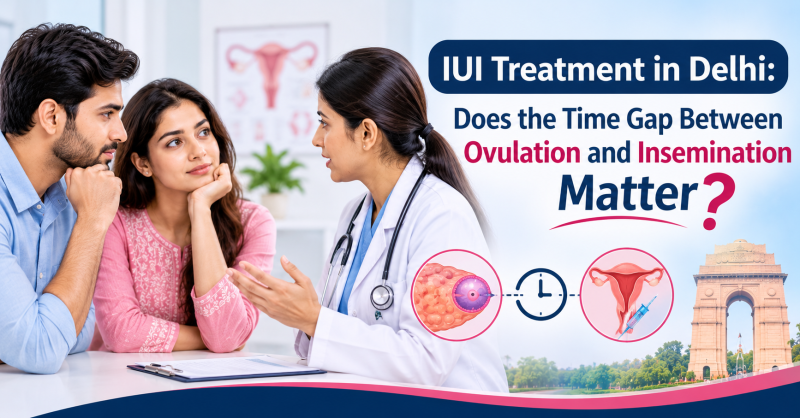
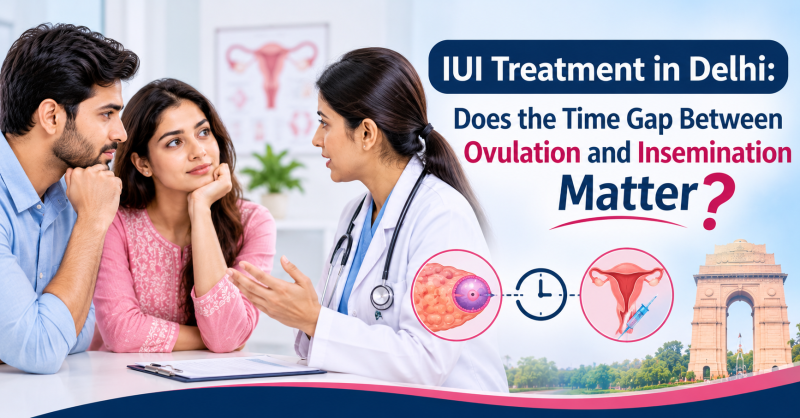
IUI Treatment in Delhi: Does the Time Gap Between Ovulation and Insemination Matter?
 Deepak
Couples preparing for intrauterine insemination (IUI) often hear one instruction repeated by their doctor: timing is everything. It is natural to wonder how strict that really is. If the procedure happens a few hours earlier or later than planned, does it change anything?
For couples exploring IUI treatment in Delhi, understanding why timing matters helps explain the repeated scans, trigger injections and specific appointment slots that are part of a cycle.
Why Timing Is Central to IUI
IUI works by placing washed, concentrated sperm directly into the uterus close to the time an egg is released. The aim is to bring healthy sperm and a mature egg together at the right moment.
Two biological facts explain why timing is so important:
- The egg has a short window. After ovulation, an egg generally remains able to be fertilised for roughly 12 to 24 hours.
- Sperm survive longer. Healthy sperm can live in the female reproductive tract for a few days, but prepared sperm used in IUI are best placed close to ovulation.
Because the egg’s window is brief, even a modest mismatch between ovulation and insemination can influence the chance of fertilisation.
What Is the Ideal Gap Between Ovulation and Insemination?
There is no single universal answer. Most clinics aim to inseminate shortly before or around the time of ovulation. In many protocols, this means performing IUI roughly 24 to 36 hours after a trigger injection (hCG), which is designed to prompt the follicle to release its egg in that period. In natural-cycle IUI, insemination is usually timed around the LH surge.
Some centres use a single insemination, while others may consider two, depending on the clinical situation. Research on whether a double insemination improves outcomes has been mixed, so this decision is made case by case.
The right approach depends on your cycle, the follicle size, hormone levels and your doctor’s protocol.
What If the Timing Is Too Early or Too Late?
When insemination is too early, sperm may be present before the egg is released. Since prepared sperm do not survive as long as one might hope, there may be fewer active sperm available when the egg appears.
When insemination is too late, the egg may already have passed its fertilisable window, which reduces the chance of fertilisation.
A small variation does not mean the cycle is wasted. Natural pregnancies also happen across a range of timings. The goal of careful scheduling is simply to give each cycle the best reasonable opportunity.
How Doctors Pinpoint the Right Moment
Timing is not guesswork. It is built from several pieces of information:
- Follicular monitoring: Serial ultrasound scans track the size of the leading follicle, often looking for a mature size before triggering.
- Hormone measurements: LH or estradiol levels may be checked in some cycles.
- Trigger injection: An hCG trigger can be given when follicles are ready, so that ovulation occurs at a predictable time.
- Ovulation predictor kits: In some natural cycles, an LH surge detected at home or in clinic helps schedule the procedure.
- Semen preparation: The semen sample is processed in the laboratory shortly before insemination.
This is why a well-organised cycle usually involves several short visits instead of a single appointment.
Can Ovulation Be Confirmed After IUI?
Sometimes. A follow-up scan may show that the follicle has ruptured, and certain hormonal changes later in the cycle can support that ovulation occurred. These checks are informative but not always necessary, and your doctor will advise what suits your situation.
Other Factors That Work Alongside Timing
Even perfect timing is only one piece of the picture. The outcome of an IUI cycle also depends on:
- The woman’s age and ovarian reserve
- Whether the fallopian tubes are open
- Sperm count, motility and morphology after processing
- The number and quality of mature follicles
- The health of the uterine lining
- Underlying conditions such as PCOS or endometriosis
Because of this, success rates differ from couple to couple, and no clinic can responsibly promise a particular result.
Choosing the Right Care in Delhi
Couples searching for the best IUI centre in Delhi often focus on convenience and reputation, but a few practical questions are more useful:
- Does the centre perform individualised follicle monitoring instead of fixed-day insemination?
- Are your tubes, semen quality and ovulation assessed before starting?
- Is the treatment plan explained clearly, including when to consider moving on to other options?
- Are expectations discussed honestly?
A consultation with the Best Gynaecologist in Delhi for your needs can help determine whether IUI is suitable at all, since not every couple benefits from it.
Dr. Poonam Goyal, Gynecologist and Fertility Specialist in Delhi, guides couples through personalised IUI planning, including cycle monitoring, timing decisions and counselling about next steps, with clear explanations at each stage.
Key Takeaways
- The egg survives only a short time after ovulation, so timing influences fertilisation.
- IUI is usually scheduled around ovulation, often 24 to 36 hours after a trigger injection, though protocols differ.
- Timing is guided by scans, hormone checks and the trigger injection.
- A slight deviation does not automatically ruin a cycle.
- Age, tubal health and semen quality matter as much as timing.
If you want consultation regarding IUI treatment, you can visit Dr Poonam Goyal at:
- C-3/63A, 64A, opp. Gokulpuri Police Station, Block C, Panchsheel Hospital, Yamuna Vihar, Shahdara, Delhi, 110053
- HOD IVF & Infertility, Max Superspeciality Hospital, Vaishali
This article is for general education and does not replace personal medical advice. Please consult a qualified doctor for guidance specific to your health.
Frequently Asked Questions
1. How long after ovulation should IUI be done?
IUI is generally best performed close to ovulation, ideally just before or around the time the egg is released. In many cycles with a trigger injection, it is done about 24 to 36 hours later, but your doctor will set the exact timing.
2. Does a delay of a few hours reduce the chance of success?
A small delay is not usually a cause for alarm, but the egg’s fertilisable window is short, so doctors try to schedule as precisely as possible.
3. Is one IUI better than two in the same cycle?
Evidence is mixed. Some doctors consider two inseminations in selected cases, while others prefer one well-timed procedure. The choice depends on your individual situation.
4. How do doctors know when I am about to ovulate?
Through follicle tracking scans, hormone levels and, in some cycles, an LH surge test or a trigger injection to control the timing of ovulation.
5. Can IUI still work if ovulation timing is uncertain?
It can, but accurate monitoring improves planning. If timing remains difficult to predict, your doctor may adjust medication or the monitoring schedule.
Source:
Click for the: Full Story
You might like