



 Close Menu
 World
World
 Biography
 Health
 Education
 Business
 Lifestyle
 Sports
 Technology
 Animals
 History
 Food
Food
 Religious
 Startups
 Movies
 Politics
 Fashion
 Covid
Covid
 Diet
Diet
 Fitness
 Marketing
 Travel
 Science
 Reviews
 Social media
 Stories
 Facts
Facts
 Art
Art
 Entertainment
Deepak

Health
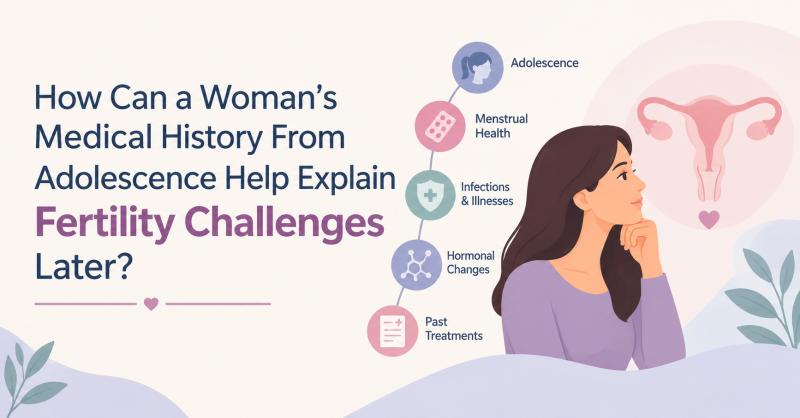
How Can a Woman’s Medical History From Adolescence Help Explain Fertility Challenges Later?
 Deepak
When a woman struggles to conceive, the first questions are usually about the present: her age, her cycles, her recent tests. But the story often starts much earlier. Events from the teenage years, such as how periods began, infections, surgeries, or long-standing hormonal symptoms, can offer important clues.
This is why a careful fertility consultation includes a long look back. If you are seeking evaluation for female infertility in Delhi, understanding how your early health history fits into the picture can help you prepare and feel more in control.
Why Adolescent Health Matters for Fertility
The reproductive system develops through the teenage years. Hormonal signals between the brain and the ovaries are established, menstrual cycles settle into a pattern, and the uterus and fallopian tubes mature. Conditions that disturb this process, or that damage reproductive organs, may not cause obvious problems at the time but can become relevant years later.
That does not mean every early symptom leads to infertility. Many women with irregular teenage cycles or past infections conceive without difficulty. A history is a set of clues for the doctor, not a prediction.
Menstrual Patterns in the Teenage Years
Cycles can be irregular in the first year or two after the first period, which is common. But some patterns deserve attention when they persist:
- Late first period: periods that have not started by around 15 years may point to a hormonal, nutritional, or structural cause.
- Very irregular or infrequent cycles: these can be linked to ovulation problems, including polycystic ovary syndrome (PCOS) and thyroid disorders.
- Absent periods for several months: this may relate to weight changes, stress, intense exercise, or hormonal conditions.
- Very painful or heavy periods: severe pain may be associated with endometriosis, while heavy bleeding can have several underlying causes.
If these patterns were present in your teens and never evaluated, mentioning them to your doctor can help explain current findings.
Conditions That May Begin in Adolescence
PCOS and Hormonal Imbalances
PCOS often shows up as irregular cycles, acne, or excess hair growth during the teenage years. It can affect ovulation, which in turn affects the ability to conceive naturally. Thyroid and prolactin disorders can also begin early and influence cycles.
Endometriosis
Endometriosis is often diagnosed late, sometimes after years of painful periods that were dismissed as normal. Because it can affect the ovaries and fallopian tubes, a history of significant period pain is worth discussing during a fertility evaluation.
Infections and Pelvic Inflammatory Disease
Pelvic infections, including those that go untreated, can sometimes damage the fallopian tubes. Tubal damage may be silent for years and only discovered when conception is delayed. Past tuberculosis involving the pelvic organs is also considered in some patients.
Surgeries, Cysts and Medical Treatments
Previous surgery on the ovaries or abdomen, ovarian cysts, and treatments such as chemotherapy or pelvic radiation can influence ovarian reserve or cause scar tissue. Even if the event happened long ago, it helps the specialist plan appropriate tests.
Eating Patterns, Weight and Lifestyle
Significant weight loss, restrictive eating, or very high levels of physical training during adolescence can disrupt hormonal signals and cycles. While cycles often recover, a doctor may still ask about this period to understand your overall hormonal history.
Family and Genetic Background
Adolescent history is often reviewed together with family history. Early menopause in close relatives, a family pattern of PCOS, thyroid disease, or endometriosis may be relevant. Some women also have congenital differences in the uterus or reproductive tract that only come to light later.
How Doctors Use This Information
A fertility specialist does not treat the history on its own. It guides which tests are needed and how to interpret them. Depending on your story, the evaluation may include:
- Hormone tests, including those for ovarian reserve and thyroid function
- A pelvic ultrasound to assess the uterus and ovaries
- Tests to check whether the fallopian tubes are open
- A semen analysis for the male partner, since fertility challenges can involve both partners
The more complete the history, the more targeted the investigation can be, which can save time, cost, and unnecessary worry.
How to Prepare Your History for a Consultation
You do not need perfect records, but these steps help:
- Note the age at your first period and how regular your cycles have been since.
- List any past infections, surgeries, hospital stays, or long-term medications.
- Collect old reports, prescriptions, and ultrasound scans if available.
- Ask relatives about family history of early menopause, PCOS, or thyroid problems.
- Write down symptoms such as severe pain, heavy bleeding, or unwanted hair growth, even if they seem minor.
When to Seek Professional Guidance
Consider consulting a gynaecologist or fertility specialist if:
- You have been trying to conceive for 12 months without success (or 6 months if you are over 35)
- You have a known history of irregular cycles, endometriosis, pelvic infection, or pelvic surgery
- Your periods are very painful, very irregular, or absent
- You have had previous miscarriages
Choosing an infertility specialist in Delhi who takes a thorough history, listens without rushing, and explains each recommendation clearly makes a real difference. Many women searching for the best female infertility in Delhi are really looking for this kind of attentive, evidence-based approach rather than a standard checklist.
Dr. Poonam Goyal, Gynecologist and Fertility Specialist in Delhi, evaluates each patient’s history, examination findings, and test results together so that the plan is tailored to her individual situation.
The Takeaway
Your adolescent health story is not a reason to feel anxious or to blame yourself. It is simply useful information. A past irregular cycle, infection, or surgery may help explain why conception is taking longer, and in many cases, it points toward a clear evaluation path and appropriate treatment options.
If you want consultation regarding fertility evaluation and treatment, you can visit Dr Poonam Goyal at:
- C-3/63A, 64A, opp. Gokulpuri police station, Block C, Panchsheel Hospital, Yamuna Vihar, Shahdara, Delhi, 110053
- HOD IVF & Infertility, Max Superspeciality Hospital, Vaishali
Frequently Asked Questions
1. Can irregular periods in teenage years affect fertility later?
They can, but not always. Irregular cycles in the first year or two after periods begin are common. When irregularity continues, it may reflect conditions such as PCOS or thyroid imbalance, which can affect ovulation. A doctor can assess whether it is relevant for you.
2. Should I tell my fertility doctor about illnesses or surgeries from my teenage years?
Yes. Past infections, abdominal or pelvic surgeries, ovarian cysts, and long-term treatments can all influence fertility evaluation, even if they happened many years ago.
3. Can painful periods in adolescence be linked to infertility?
Severe period pain can sometimes be associated with endometriosis, which may affect fertility in some women. Not all painful periods indicate a problem, but persistent or severe pain deserves medical evaluation.
4. What if I do not have old medical records?
Old records are helpful but not essential. A detailed conversation, a physical examination, and current tests can still give your doctor a clear picture of your reproductive health.
5. When should I see an infertility specialist?
Consider an evaluation after 12 months of trying without success, or after 6 months if you are over 35. Seek earlier advice if you have irregular cycles, known reproductive conditions, or a history of pelvic infection or surgery.
Source:
Click for the: Full Story
You might like





You Might Like this