



 Close Menu
 World
World
 Biography
 Health
 Education
 Business
 Lifestyle
 Sports
 Technology
 Animals
 History
 Food
Food
 Religious
 Startups
 Movies
 Politics
 Fashion
 Covid
Covid
 Diet
Diet
 Fitness
 Marketing
 Travel
 Science
 Reviews
 Social media
 Stories
 Facts
Facts
 Art
Art
 Entertainment
Deepak

Health
What Is the Difference Between Poor Egg Quality and Low Ovarian Reserve?
 Deepak
Women who struggle to conceive often hear two phrases that sound similar: “poor egg quality” and “low ovarian reserve.” They are frequently used interchangeably, but they describe two different aspects of ovarian health. Knowing the difference can help you make sense of your test results, ask better questions, and understand why treatment plans vary from one woman to another.
If you are exploring female infertility in Delhi, this guide explains what each term means, how they are assessed, and when to seek specialist advice.
The Short Answer
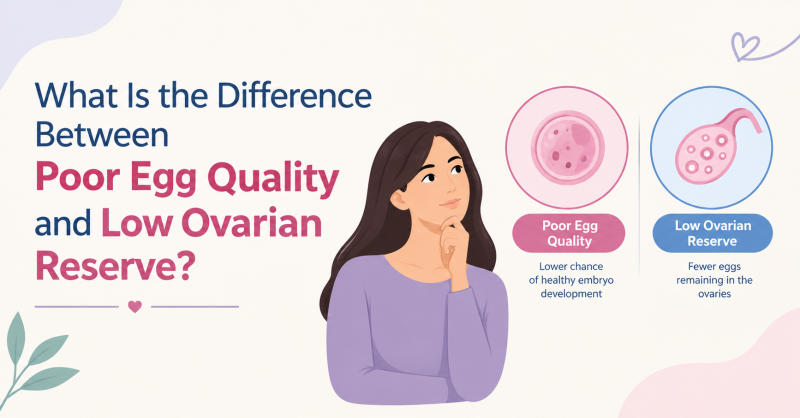
- Low ovarian reserve refers to the quantity of eggs remaining in the ovaries.
- Poor egg quality refers to the genetic and functional health of the eggs, meaning how likely an egg is to fertilize, develop into a healthy embryo, and implant.
A woman can have a good number of eggs with reduced quality, or fewer eggs that are of good quality. The two can also occur together, particularly with advancing age.
What Is Ovarian Reserve?
A woman is born with all the eggs she will ever have. This pool gradually declines over the years, and the decline is a natural process. Ovarian reserve describes how many eggs remain and how well the ovaries may respond to stimulation.
Low ovarian reserve, sometimes called diminished ovarian reserve, means that the number of eggs is lower than expected for a woman’s age. It can be related to age, family history of early menopause, previous ovarian surgery, certain medical treatments, endometriosis, or in some cases no identifiable cause.
How Ovarian Reserve Is Assessed
Doctors commonly use a combination of tests rather than relying on one result:
- Anti-Müllerian hormone (AMH): a blood test that reflects the size of the remaining egg pool
- Antral follicle count (AFC): an ultrasound count of small follicles in the ovaries
- FSH and estradiol: hormone tests, usually measured early in the menstrual cycle
These tests estimate quantity. They are useful for planning treatment, but they do not tell you whether an individual egg is healthy.
What Is Egg Quality?
Egg quality describes the egg’s ability to mature properly, fertilize normally, and form an embryo with the correct number of chromosomes. Eggs with chromosomal abnormalities may fail to fertilize, stop developing early, fail to implant, or lead to miscarriage.
Age is the most significant factor. As a woman gets older, the proportion of eggs with chromosomal errors tends to increase. Other factors that may influence egg health include smoking, certain medical conditions, and environmental exposures, though research on many of these is still developing.
Why Egg Quality Is Harder to Measure
There is no single blood test or scan that directly measures the quality of an egg. Doctors usually infer it indirectly through:
- The woman’s age
- How eggs respond during an IVF or IUI cycle
- Fertilization rates and embryo development in previous treatment cycles
- A history of recurrent miscarriage or repeated implantation failure
- Embryo genetic testing in selected cases
This is why a woman with a normal AMH level can still face difficulty conceiving, and why a woman with a low AMH may conceive naturally or with treatment. A number on a report is only part of the picture.
Key Differences at a Glance
FeatureLow Ovarian ReservePoor Egg QualityWhat it describesNumber of eggsHealth of the eggsMain markersAMH, AFC, FSHAge, embryo development, treatment historyCan be measured directlyEstimated by testsNo direct testTypical effectFewer eggs retrieved in stimulationLower fertilization, embryo, or implantation potential
Can You Have One Without the Other?
Yes. A 28-year-old woman with a low AMH may have fewer eggs but still produce good-quality ones. A 40-year-old woman may have an average egg count but a higher chance of chromosomal irregularities in those eggs. Both can overlap, especially after the mid-thirties, which is why age is such an important part of every fertility assessment.
Can Egg Quality or Ovarian Reserve Be Improved?
Ovarian reserve cannot be restored. Once eggs are lost, they do not regenerate. Egg quality also cannot be reversed, though a healthy lifestyle may support overall reproductive health.
Reasonable steps include:
- Avoiding smoking and limiting alcohol
- Maintaining a healthy weight
- Eating a balanced diet and managing stress
- Managing thyroid disorders, diabetes, or other medical conditions
- Taking supplements only under medical guidance, since evidence for many popular supplements is limited
Be cautious about any product or clinic claiming to dramatically improve egg quality or guarantee pregnancy. Honest guidance acknowledges what is and is not possible.
Why the Distinction Matters for Treatment
The pattern of your results shapes your plan. Low reserve may mean time is a priority, and doctors may discuss earlier evaluation and tailored stimulation protocols. Concerns about egg quality may lead to closer monitoring of embryo development or a discussion of additional testing or options. Your age, partner’s semen analysis, tubal health, and past treatment history all influence the recommendation.
When to Consult a Specialist
Consider seeing a gynaecologist or fertility specialist if:
- You are under 35 and have not conceived after 12 months, or over 35 and have not conceived after 6 months
- You have irregular or very short cycles
- You have a family history of early menopause
- You have had ovarian surgery, chemotherapy, or radiation
- You have experienced repeated miscarriages or failed fertility treatments
Women searching for the best female infertility in Delhi are often looking for a clear explanation of their results rather than just a list of tests. An experienced infertility specialist in Delhi can help you understand what your reports mean in the context of your age and history, and outline realistic next steps.
Dr. Poonam Goyal, Gynecologist and Fertility Specialist in Delhi, evaluates ovarian reserve and overall fertility health through detailed history, examination, and appropriate investigations, and discusses options in a clear and supportive way.
The Takeaway
Low ovarian reserve is about how many eggs remain. Poor egg quality is about how healthy those eggs are. They are related but distinct, and neither one alone defines your chances. A personalised evaluation is the best way to understand where you stand.
If you want consultation regarding fertility evaluation and treatment, you can visit Dr Poonam Goyal at:
- C-3/63A, 64A, opp. Gokulpuri police station, Block C, Panchsheel Hospital, Yamuna Vihar, Shahdara, Delhi, 110053
- HOD IVF & Infertility, Max Superspeciality Hospital, Vaishali
Frequently Asked Questions
1. Is low AMH the same as poor egg quality?
No. AMH reflects the number of eggs remaining, not their quality. A woman can have a low AMH and still have good-quality eggs, or a normal AMH with reduced egg quality.
2. Can poor egg quality be tested directly?
There is no direct test for egg quality. Doctors estimate it using age, treatment response, embryo development, and, in some cases, embryo genetic testing.
3. Can a woman with low ovarian reserve still get pregnant?
Some women do conceive, naturally or with fertility treatment. The chances depend on age, egg quality, and other factors, and cannot be guaranteed. A specialist can discuss what is realistic for your situation.
4. Does age affect egg quality and ovarian reserve equally?
Age affects both. The number of eggs declines over time, and the proportion of eggs with chromosomal abnormalities also tends to rise, especially after the mid-thirties.
5. When should I get my ovarian reserve checked?
Consider testing if you are over 35, have irregular cycles, a family history of early menopause, previous ovarian surgery, or have been trying to conceive without success. A fertility specialist can advise which tests are suitable.
Source:
Click for the: Full Story
You might like






You Might Like this