



 Close Menu
 World
World
 Biography
 Health
 Education
 Business
 Lifestyle
 Sports
 Technology
 Animals
 History
 Food
Food
 Religious
 Startups
 Movies
 Politics
 Fashion
 Covid
Covid
 Diet
Diet
 Fitness
 Marketing
 Travel
 Science
 Reviews
 Social media
 Stories
 Facts
Facts
 Art
Art
 Entertainment
Deepak

Health
How Should Couples Understand Fertilization Rates Mentioned in ICSI Treatment Reports?
 Deepak
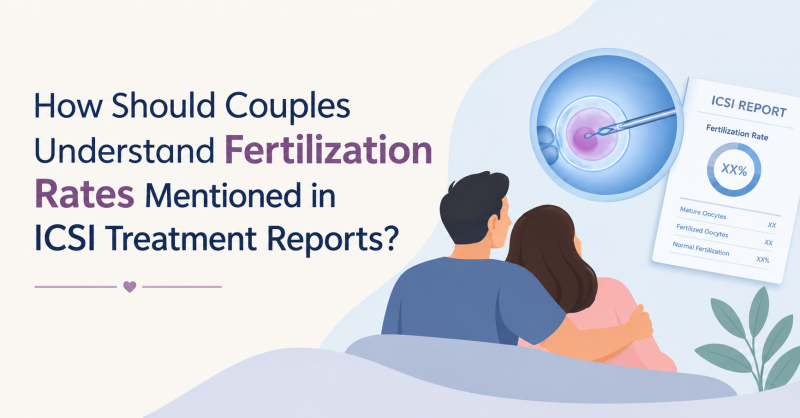
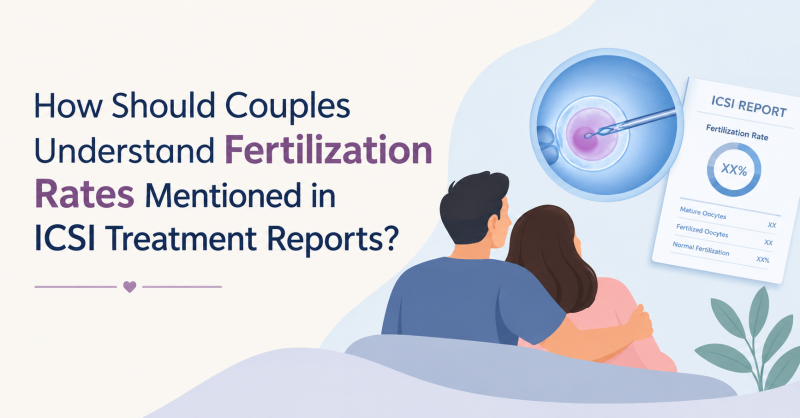
After an ICSI cycle, many couples receive a report with numbers they were never prepared for: eggs retrieved, eggs injected, eggs fertilized, and a “fertilization rate” shown as a percentage. Seeing a figure like 60% or 75% can bring relief or worry, even when you are not sure what it means.
This guide explains what a fertilization rate is, how it is calculated, and what it can and cannot tell you. If you are exploring ICSI treatment in Delhi, understanding your report helps you ask better questions and make calmer decisions.
What Is a Fertilization Rate in ICSI?
In ICSI (Intracytoplasmic Sperm Injection), an embryologist injects a single sperm directly into each mature egg. The next day, the lab checks which eggs show signs of normal fertilization.
The fertilization rate is the proportion of injected eggs that fertilized normally. A typical formula is:
Fertilization rate = (normally fertilized eggs ÷ mature eggs injected) × 100
For example, if 10 mature eggs were injected and 7 fertilized normally, the fertilization rate is 70%.
How Fertilization Is Checked
Around 16 to 18 hours after injection, the embryology team looks for two pronuclei, one from the egg and one from the sperm, along with two polar bodies. This pattern is generally taken as a sign of normal fertilization.
Eggs may fall into a few categories:
- Normally fertilized (2PN): the expected result, and the group that usually moves on to embryo culture.
- Abnormally fertilized (for example, 1PN or 3PN): these usually carry an irregular chromosome number and are generally not used for transfer.
- Not fertilized: the egg was injected but did not show fertilization.
- Degenerated: the egg did not survive the injection process.
Which Eggs Are Counted?
This is where reports often confuse couples. Not every retrieved egg is mature enough for ICSI. Only mature eggs (metaphase II) are injected.
Some clinics calculate the rate against all eggs retrieved, while others use only injected mature eggs. The same cycle can therefore show different percentages on different reports. Always check what the denominator is. If it is unclear, ask your doctor or embryologist to explain it.
What Is Considered a Good Fertilization Rate?
There is no single number that applies to every couple. Laboratories and fertility societies often describe benchmark ranges for ICSI, and fertilization in many cycles falls somewhere in a broad middle-to-high range. However, results vary with egg quality, sperm quality, age, and the number of eggs available.
A rate that looks lower on paper is not automatically a poor outcome. If only 4 mature eggs were injected and 3 fertilized, the percentage is 75%, but the number of embryos is small. In another cycle, 15 eggs may be injected with 9 fertilizing, a lower percentage but more embryos to work with. The percentage and the absolute number should be read together.
What a Fertilization Rate Can Tell You
A fertilization rate gives useful information about:
- Whether sperm injection and egg activation worked as expected in that cycle
- How many embryos are available to be cultured and monitored
- Whether the laboratory or protocol may need review if fertilization is unexpectedly low
What It Cannot Tell You
It is equally important to know the limits of this number.
- It does not predict embryo quality. A fertilized egg still has to divide, grow, and reach the blastocyst stage.
- It does not confirm pregnancy chances. Implantation depends on the embryo, the uterine lining, and several other factors.
- It does not describe your overall fertility. One cycle is a snapshot, not a verdict.
High fertilization does not guarantee a healthy embryo, and lower fertilization does not mean treatment cannot work. Outcomes of any fertility treatment vary from person to person.
Common Reasons for Lower Fertilization
If fertilization is lower than expected, doctors usually look at several possibilities rather than a single cause:
- A high proportion of immature or poor-quality eggs
- Sperm factors, including DNA fragmentation or structural issues
- Problems with egg activation after injection
- Stimulation protocol and trigger timing
- Laboratory conditions and technique
Identifying which of these applies often needs a detailed review of your history, hormone profile, semen analysis, and cycle details. A thoughtful fertility specialist will use that review to plan what, if anything, should change in the next cycle.
Questions to Ask About Your ICSI Report
Bring these to your next consultation:
- How many eggs were retrieved, and how many were mature?
- How is the fertilization rate calculated in this report?
- How many eggs fertilized normally, and how many were abnormal?
- How are the embryos developing, and what happens next?
- Does this result suggest any change in protocol or testing for a future cycle?
Clear answers to these questions matter more than the percentage itself. Many couples searching for the best ICSI treatment in Delhi are really looking for a team that explains results openly and individualises the plan, not just one that quotes numbers.
When to Seek Specialist Guidance
Consider speaking with a fertility specialist if:
- Fertilization was low or absent in a previous cycle
- You have had repeated ICSI cycles without the outcome you hoped for
- Your report contains terms or figures you do not understand
- You want a second opinion on your treatment plan
A qualified gynaecologist and fertility specialist can place your results in the context of your age, ovarian reserve, sperm parameters, and medical history. If you are looking for the best gynaecologist in Delhi to review your reports, choose someone who takes time to listen, explains the reasoning behind each decision, and is honest about both possibilities and limits.
Dr. Poonam Goyal, Gynecologist and Fertility Specialist in Delhi, works with couples on infertility evaluation and assisted reproduction, including ICSI, with an emphasis on patient education and individualised care.
The Takeaway
A fertilization rate is one useful data point in your ICSI journey, but it is not the whole story. Understanding how it is calculated, what it includes, and what it cannot predict helps you read your report with clarity instead of anxiety.
If you want consultation regarding ICSI treatment, you can visit Dr Poonam Goyal at:
- C-3/63A, 64A, opp. Gokulpuri police station, Block C, Panchsheel Hospital, Yamuna Vihar, Shahdara, Delhi, 110053
- HOD IVF & Infertility, Max Superspeciality Hospital, Vaishali
Frequently Asked Questions
1. What is a normal fertilization rate in ICSI?
There is no single normal figure for every couple. Many laboratories use benchmark ranges, and results depend on egg maturity, sperm quality, and age. Your doctor will interpret the rate alongside the number of mature eggs injected and the embryos that develop.
2. Does a low fertilization rate mean ICSI has failed?
Not necessarily. A lower percentage can still produce healthy embryos, especially if many eggs were injected. What matters is the number and quality of embryos available. If fertilization is very low or absent, a specialist can review possible causes and adjust the plan.
3. Why were some of my eggs not fertilized after ICSI?
Causes can include egg immaturity, sperm-related factors, problems with egg activation, or technical and biological variation in that cycle. Often, no single cause is found, and the report is used to guide decisions for the next step.
4. Does a high fertilization rate guarantee pregnancy?
No. Fertilization is only the first step. Embryo development, uterine receptivity, and individual health factors also influence implantation and pregnancy.
5. Can I ask my clinic to explain my ICSI report?
Yes. You are entitled to understand every figure in your report. Ask how the fertilization rate was calculated, how many eggs were mature, and what the next steps are.
Source:
Click for the: Full Story
You might like






You Might Like this