



 Close Menu
 World
World
 Biography
 Health
 Education
 Business
 Lifestyle
 Sports
 Technology
 Animals
 History
 Food
Food
 Religious
 Startups
 Movies
 Politics
 Fashion
 Covid
Covid
 Diet
Diet
 Fitness
 Marketing
 Travel
 Science
 Reviews
 Social media
 Stories
 Facts
Facts
 Art
Art
 Entertainment
Deepak

Health
What Happens When an IUI Cycle Produces More Follicles Than Expected? A 2026 Guide
 Deepak
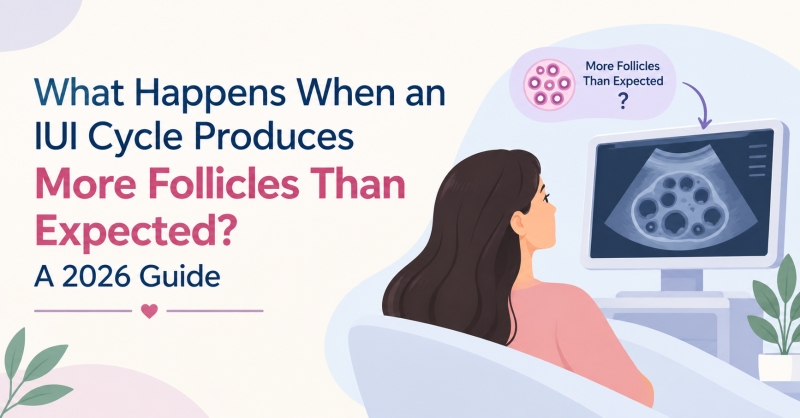
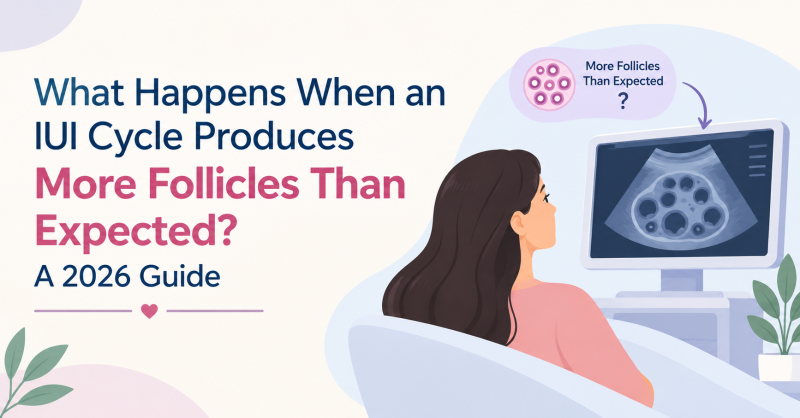
You begin an IUI cycle expecting one or two follicles. Then a monitoring scan shows four, five, or even more developing. Many couples feel a mix of excitement and worry at this point: does more mean better chances, or does it mean more risk?
The honest answer is that it can be both, and that is exactly why careful monitoring matters. If you are considering IUI treatment in Delhi, this guide explains why extra follicles develop, what doctors weigh up, and what options you may be offered.
Why Do Extra Follicles Develop?
Each follicle is a small fluid-filled sac in the ovary that may contain an egg. In a natural cycle, usually one follicle becomes dominant. In a stimulated IUI cycle, medication is used to encourage more than one to mature, which may improve the chance of ovulation.
Sometimes the ovaries respond more strongly than anticipated. Common reasons include:
- Polycystic ovary syndrome (PCOS) or polycystic-appearing ovaries, which often have a high number of small follicles
- A good ovarian reserve, commonly seen in younger women
- Sensitivity to ovulation-inducing medicines such as letrozole, clomiphene, or injectable gonadotropins
- Dose or protocol factors that turn out to be stronger than that particular woman needed
A strong response does not mean something has gone wrong. It simply means the cycle needs closer attention.
Why More Follicles Is Not Always Better
It seems logical that more follicles would mean higher chances, and in some situations a second mature follicle may slightly improve the likelihood of conception. But with IUI, there is no way to control how many eggs are released or fertilized inside the body.
The main concerns are:
Multiple Pregnancy
If several mature follicles release eggs and more than one is fertilized, the result can be twins, triplets, or higher-order pregnancies. These carry greater risks, including preterm birth, low birth weight, and complications for both mother and babies. Reducing the chance of multiple pregnancy is a central goal of IUI safety.
Ovarian Hyperstimulation Syndrome (OHSS)
OHSS is more commonly associated with IVF but can occasionally occur with strong stimulation in IUI cycles, particularly with injectable medications. Symptoms may include abdominal bloating, nausea, rapid weight gain, and discomfort. Most cases are mild, but it needs medical attention if symptoms are significant.
What Do Doctors Consider at This Point?
There is no single rule that applies to every patient. Your fertility specialist will usually weigh several factors:
- The number and size of mature follicles. Follicles of a certain size are considered ready to release an egg, while smaller ones may not mature in time.
- Your age and history. A younger woman with PCOS and a strong response may be at higher risk of multiples than an older woman with the same follicle count.
- Hormone levels, where blood tests are used alongside ultrasound.
- Previous cycle response and treatment history.
- Your preferences, after a clear discussion of the risks.
Options Your Doctor May Discuss
Depending on your situation, the plan may be adjusted in one of several ways:
- Proceeding with IUI as planned. If the number of mature follicles is within an acceptable range, the cycle may continue with careful counselling about the risk of multiples.
- Reducing or withholding the trigger. In some cases, the trigger injection is not given and the cycle is cancelled or converted.
- Cancelling the cycle. If many mature follicles are present, a doctor may advise stopping the cycle and restarting with a lower medication dose. This can feel disappointing, but it is often the safer decision.
- Converting to IVF. If the response is strong and you are suitable for it, some couples may be offered the option to convert to IVF, where the number of embryos transferred can be controlled.
- Advising abstinence or protected intercourse. This helps avoid an unplanned multiple conception in a cycle where several follicles are developing.
The right choice depends entirely on your individual circumstances, and it should be a shared decision.
Will the Next Cycle Be Different?
Usually, yes. A strong response gives your doctor valuable information. The next cycle may use a lower dose, a different medicine, or a modified monitoring schedule. This is one reason IUI should be personalised rather than repeated mechanically.
What You Can Do During Monitoring
- Attend every scheduled follicle scan, since timing matters.
- Report symptoms such as significant bloating, severe abdominal pain, or breathlessness promptly.
- Ask your doctor how many mature follicles are considered acceptable in your case.
- Discuss what the plan will be if the response is higher than expected, before the cycle even begins.
Choosing the Right Clinic and Doctor
Safe IUI depends heavily on experienced monitoring, clear communication, and a willingness to cancel or modify a cycle when needed. When looking for the best IUI centre in Delhi, couples may find it helpful to ask how follicle monitoring is done, what the clinic’s approach is when too many follicles develop, and how risks are explained.
Many patients also look for the best gynaecologist in Delhi to guide them through these decisions. Rather than the label, look for a doctor who listens, explains the reasoning behind each step, and puts safety ahead of speed.
Dr. Poonam Goyal, Gynecologist and Fertility Specialist in Delhi, follows an individualised approach to IUI, with attention to monitoring, medication response, and informed decision-making at each stage of the cycle.
The Takeaway
Having more follicles than expected is not a failure and not a guarantee. It is a signal that your cycle needs careful, personalised decisions. Good monitoring, honest counselling, and willingness to adjust the plan are what keep IUI both effective and safe.
If you want consultation regarding IUI treatment, you can visit Dr Poonam Goyal at:
- C-3/63A, 64A, opp. Gokulpuri police station, Block C, Panchsheel Hospital, Yamuna Vihar, Shahdara, Delhi, 110053
- HOD IVF & Infertility, Max Superspeciality Hospital, Vaishali
Frequently Asked Questions
1. Does having more follicles in an IUI cycle improve the chance of pregnancy?
Not necessarily. Additional mature follicles may slightly increase the chance of conception in some cases, but they also raise the risk of multiple pregnancy. Doctors balance both factors.
2. What happens if too many follicles develop during IUI?
Your doctor may proceed carefully, adjust the plan, cancel the cycle, or discuss converting to IVF. The decision depends on the number and size of follicles, your age, and your medical history.
3. Is a cancelled IUI cycle a failure?
No. Cancelling a cycle is often a safety decision that helps avoid risks such as high-order multiple pregnancy. The information from that cycle is used to plan a better-adjusted one.
4. How many follicles are too many for IUI?
There is no single number for everyone. Many specialists become cautious when several follicles reach maturity, but the threshold varies with age, history, and clinic protocol. Your doctor will explain what applies to you.
5. Can IUI with extra follicles lead to twins?
Yes, the risk of twins or more is higher when multiple eggs are released. This is why close monitoring and counselling are important during stimulated IUI cycles.
Source:
Click for the: Full Story
You might like






You Might Like this