Close Menu
 World
World
 Biography
 Health
 Education
 Business
 Lifestyle
 Sports
 Technology
 Animals
 History
 Food
Food
 Religious
 Startups
 Movies
 Politics
 Fashion
 Covid
Covid
 Diet
Diet
 Fitness
 Marketing
 Travel
 Science
 Reviews
 Social media
 Stories
 Facts
Facts
 Art
Art
 Entertainment
Deepak

Health
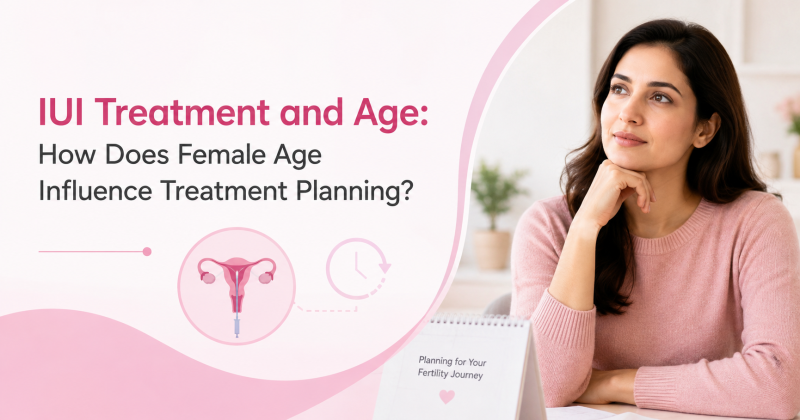
IUI Treatment and Age: How Does Female Age Influence Treatment Planning?
 Deepak
Many couples start looking for fertility help after months of trying to conceive without success. One of the first questions they ask is whether intrauterine insemination (IUI) is the right option, and whether the woman's age changes the answer. It does, and quite a lot. Age affects egg quantity, egg quality, and the odds of success in each cycle. Understanding that connection helps you set realistic expectations and choose the right clinic. That matters whether you are comparing options for IUI treatment in Delhi or anywhere else.
What Is IUI?
IUI is a fertility treatment in which washed and concentrated sperm is placed directly into the uterus around the time of ovulation. This shortens the distance sperm must travel and improves the chance of meeting the egg.
IUI is commonly considered for:
- Mild male factor infertility (slightly low count or motility)
- Unexplained infertility
- Cervical mucus problems
- Mild endometriosis
- Ovulation disorders, often combined with ovulation-inducing medication
It requires at least one open fallopian tube and a reasonably healthy uterus, which is why a proper evaluation always comes first.
Why Female Age Matters in Fertility
A woman is born with all the eggs she will ever have. Both the number and the genetic quality of those eggs decline over time, gradually through the early thirties and more noticeably after 35. Older eggs are more likely to have chromosomal abnormalities. This can lower the chance of fertilisation and implantation, and raise the risk of miscarriage.
Age does not affect every woman identically. Some women in their late thirties have excellent ovarian reserve, while some in their twenties have reduced reserve due to medical conditions. This is why doctors look at age alongside test results rather than age alone.
How Age Influences IUI Success Rates
Success rates per IUI cycle are generally modest compared with IVF, and they fall as age increases. As a broad guide:
- Under 35: the best chance per cycle, often cited in the range of roughly 10% to 20%
- 35 to 37: a noticeable decline
- 38 to 40: success rates drop further, often to single digits per cycle
- Over 40: per-cycle chances are low, and doctors often discuss alternatives early
These are general figures from published fertility literature, and individual results vary with the underlying cause of infertility, sperm quality, and the protocol used. Your own doctor can give you numbers specific to your case.
How Age Shapes Treatment Planning
Under 35
Younger women with no major fertility issues are usually good candidates for IUI. A common plan involves up to three to four cycles, often with mild ovarian stimulation. If pregnancy has not occurred within that window, the team typically reassesses and may move to IVF.
Between 35 and 38
Time becomes a bigger factor. Doctors often recommend a shorter trial of IUI, commonly two to three cycles, before reviewing the plan. Testing is usually done promptly so no cycles are wasted.
38 to 40 and Above
Here, the approach is more individualised. If ovarian reserve is still reasonable and the tubes are open, one or two IUI cycles may be reasonable. Many specialists advise considering IVF sooner, since it offers higher per-cycle success and allows embryo selection.
Tests That Guide the Decision
Before starting, expect an assessment that may include:
- AMH (Anti-Müllerian Hormone): a blood test indicating ovarian reserve
- Antral follicle count: measured by transvaginal ultrasound
- Tubal patency test: such as HSG, to confirm at least one open tube
- Semen analysis: to confirm the sperm quality suits IUI
- Thyroid, prolactin, and other hormone tests, where indicated
Practical Tips to Improve Your Chances
- Seek evaluation early. The advice to try for a year before seeing a doctor is usually shortened to six months for women over 35.
- Track ovulation accurately, or use ultrasound monitoring.
- Maintain a healthy weight, avoid smoking, and limit alcohol and caffeine.
- Manage stress and sleep, since both influence hormonal balance.
- Review medications and supplements with your doctor before starting.
What to Look for in the Best IUI Centre in Delhi
Searching for the best IUI centre in Delhi can be overwhelming, since many clinics make similar claims. Instead of relying on advertising, look at the things that actually affect outcomes:
- Qualified specialists with documented experience in fertility treatment
- Thorough diagnostics before any cycle begins, rather than a one-size-fits-all protocol
- Clear communication about success rates, costs, and how many cycles are advisable for your age
- Proper ultrasound monitoring and in-house or reliable semen processing facilities
- Honest guidance on when to move to IVF, rather than repeating cycles unnecessarily
- Convenient location, because IUI needs several visits in one cycle
Convenience is a genuine factor. Many couples prefer a clinic nearby, so those searching for IUI treatment in Yamuna Vihar Delhi often prioritise easy access for repeated monitoring scans. Some fertility specialists in East and North-East Delhi, such as Dr Poonam Goyal, offer evaluation and IUI services locally, which can reduce travel during the treatment window. Whichever clinic you consider, a transparent, age-appropriate plan is the better indicator of quality than a long list of promises.
Conclusion
Female age is one of the most important factors in planning IUI treatment. It influences how many cycles are sensible, which tests are needed first, and when to consider IVF. Younger women often have more room to try IUI, while those above 35 benefit from faster, more focused planning. When choosing the best IUI centre in Delhi, prioritise honest counselling, proper evaluation, and a plan matched to your age and diagnosis. Starting the conversation with a qualified fertility specialist early is the most valuable step you can take.
Frequently Asked Questions
1. What is the best age for IUI?
Women under 35 generally have the highest success rates with IUI. That said, it can still be considered at older ages after proper testing.
2. How many IUI cycles should I try?
Typically three to four cycles for women under 35, and fewer for women over 38. Your doctor will adjust this based on test results and response.
3. Can I do IUI after 40?
It is possible, but per-cycle success rates are low. Many specialists discuss IVF earlier for this age group.
4. Is IUI painful?
Most women feel mild cramping similar to a Pap smear. The procedure takes only a few minutes.
5. When should I move from IUI to IVF?
Usually after several unsuccessful cycles, or sooner if you are older, have reduced ovarian reserve, blocked tubes, or severe male factor infertility.
Source:
Click for the: Full Story
You might like