Close Menu
 World
World
 Biography
 Health
 Education
 Business
 Lifestyle
 Sports
 Technology
 Animals
 History
 Food
Food
 Religious
 Startups
 Movies
 Politics
 Fashion
 Covid
Covid
 Diet
Diet
 Fitness
 Marketing
 Travel
 Science
 Reviews
 Social media
 Stories
 Facts
Facts
 Art
Art
 Entertainment
Deepak

Health
IUI With One Open Fallopian Tube: Is Pregnancy Still Possible?
 Deepak
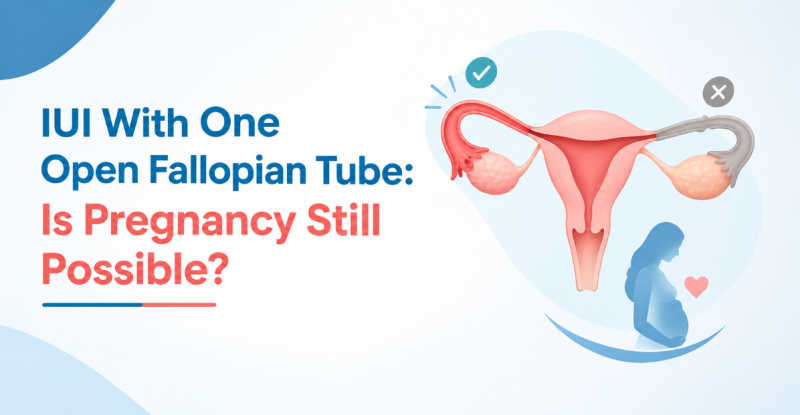
Finding out that one fallopian tube is blocked can feel alarming, especially when you are already trying to conceive. Many women assume it means pregnancy is out of reach. In most cases, that is not true.
Pregnancy can still happen with one healthy, open tube, and intrauterine insemination (IUI) is often a reasonable option to consider. Whether it suits you depends on several factors that a fertility specialist needs to assess. This guide explains how it works, who may benefit, and what to look for when choosing the best IUI centre in Delhi for your care.
Why the Fallopian Tubes Matter
The fallopian tubes carry the egg from the ovary toward the uterus. Fertilisation normally takes place inside the tube, and the resulting embryo then travels to the uterus to implant.
If both tubes are blocked, sperm and egg cannot meet naturally, and IUI is not suitable. If at least one tube is open and working, there is a pathway for fertilisation, so IUI may still be possible.
Can You Get Pregnant With One Open Tube?
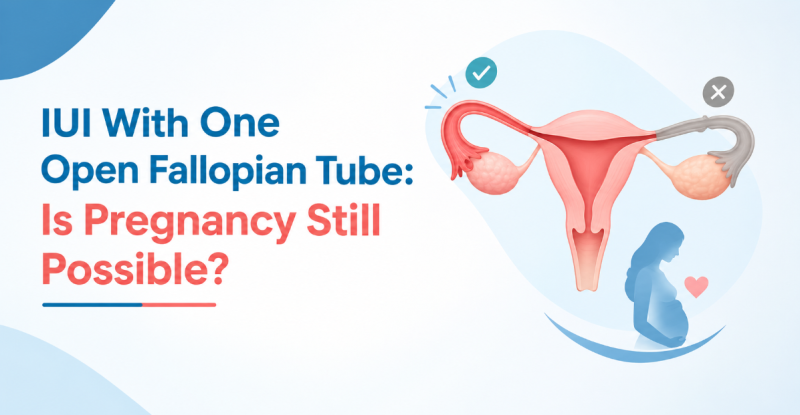
Yes, it is possible. Each month, one ovary releases an egg. The egg can be picked up by either tube, regardless of which ovary it came from. When one tube is blocked, the open tube can still collect the egg, though the chances in any given month may be somewhat lower than when both are open.
Some women conceive naturally with one open tube. IUI can improve the odds by placing prepared sperm closer to the egg at the time of ovulation. No clinic can promise a particular result, and outcomes differ from one person to another.
How IUI Works With One Open Tube
IUI involves placing washed, concentrated sperm directly into the uterus around ovulation. The key point is that fertilisation still happens inside the fallopian tube. That is why having one functioning tube matters.
Timing is especially important in this situation. The egg needs to be released from the ovary on the same side as the open tube, or be picked up by it. Doctors often use ultrasound monitoring to follow follicle growth and plan the insemination accordingly.
Mild ovarian stimulation with medication is sometimes used to encourage the release of more than one egg. This may improve the chance that at least one egg is available to the open tube, though it also carries a small risk of multiple pregnancy, which is why monitoring matters.
What Needs to Be Checked First
Before recommending IUI, a specialist will usually want to confirm that the open tube is truly healthy. A tube can be technically open and still not function well.
Common evaluations include:
- Hysterosalpingography (HSG): an X-ray test using dye to check whether the tubes are open and to look at the uterine cavity
- Saline sonography or hysterosalpingo-contrast sonography: an ultrasound-based alternative
- Pelvic ultrasound: to assess the uterus and ovaries, and to look for fluid in the tubes
- Ovarian reserve tests: such as AMH and antral follicle count
- Hormone tests: including thyroid and prolactin where indicated
- Semen analysis: to confirm sperm quality is suitable for IUI
In some cases, laparoscopy may be suggested to look directly at the tubes and the pelvis, particularly if endometriosis or adhesions are suspected.
Factors That Influence Whether IUI Is a Good Fit
One open tube alone does not decide the plan. Doctors look at the full picture:
- Female age and ovarian reserve: egg quantity and quality affect success in any treatment.
- Health of the open tube: it should be free of damage or scarring that could stop the egg or embryo from moving through.
- Presence of hydrosalpinx: fluid-filled, blocked tubes can reduce implantation chances, and doctors may recommend removing or treating the affected tube before further treatment.
- Sperm quality: IUI generally works best when sperm parameters are normal or mildly reduced.
- Duration of infertility and past treatment: these help determine how many cycles are reasonable.
- History of pelvic infection, ectopic pregnancy, or surgery: these can affect tube health.
How Many IUI Cycles Are Usually Tried?
There is no universal number. Many specialists suggest a limited number of cycles, often around three to four, if there are no other major issues and the open tube has been confirmed healthy. If pregnancy does not occur, the team will usually reassess and discuss other options, such as IVF.
IVF bypasses the tubes entirely, so it may be considered earlier when:
- Both tubes are affected or the open tube looks unhealthy
- The woman is older or has reduced ovarian reserve
- There is significant male factor infertility
- Several IUI cycles have not worked
Warning Signs and When to Seek Advice
Consider consulting a gynaecologist or fertility specialist if you notice:
- Pelvic pain, especially with periods or intercourse
- A history of pelvic inflammatory disease or tuberculosis
- A previous ectopic pregnancy
- Difficulty conceiving after six to twelve months of trying (earlier if you are over 35)
A tube problem is often silent, which is why testing is the only reliable way to know.
Choosing the Best IUI Centre in Delhi
When comparing options for IUI treatment in Delhi, focus on quality of care rather than marketing. Useful questions include:
- Does the clinic carry out a proper tubal and hormonal evaluation before starting?
- Is ovulation monitored with ultrasound rather than guessed?
- Are the risks, expected outcomes, and number of cycles explained honestly?
- Will the doctor tell you when IVF is the better route?
- Is the clinic easy enough to reach for repeated visits?
Accessibility matters because IUI usually needs several visits within a single cycle. Women searching for IUI treatment in Yamuna Vihar Delhi often prefer a nearby clinic for exactly this reason.
Dr. Poonam Goyal, a gynaecologist and fertility specialist in Delhi, advises patients to begin with a complete assessment so the treatment plan is based on their own test results rather than assumptions. This kind of individual approach is what helps couples understand their options clearly and avoid unnecessary delays.
Conclusion
Having only one open fallopian tube does not rule out pregnancy, and IUI can still be a valid option when that tube is healthy and other factors are favourable. The important steps are confirming tube health, assessing age, ovarian reserve and sperm quality, and being realistic about how many cycles to attempt. If you are looking for the best IUI centre in Delhi, choose a team that evaluates thoroughly, communicates openly, and moves to alternatives when the situation calls for it. A timely consultation can bring clarity and save valuable time.
FAQs
1. Can I get pregnant with IUI if one fallopian tube is blocked?
Yes, it is possible if the other tube is open and functioning well. The egg can be picked up by the open tube, even if it was released from the opposite ovary.
2. Does a blocked tube lower IUI success rates?
It may reduce the chance in a given cycle, but success depends more on overall factors such as age, ovarian reserve, sperm quality, and tube health. Your doctor can explain what applies to you.
3. Which test checks whether my tubes are open?
HSG is the most commonly used test. Saline sonography and, in some cases, laparoscopy may also be used.
4. When is IVF recommended instead of IUI?
IVF is usually considered when both tubes are blocked, the open tube is unhealthy, hydrosalpinx is present, or IUI has not worked after several cycles.
5. Should a blocked tube be treated before starting IUI?
Sometimes. If the tube contains fluid (hydrosalpinx), doctors may advise treating or removing it, since it can affect implantation. This decision depends on your individual evaluation.
Source:
Click for the: Full Story
You might like