Close Menu
 World
 Biography
 Health
 Education
 Business
 Lifestyle
 Sports
 Technology
 Animals
 History
 Food
 Religious
 Startups
 Movies
 Politics
 Fashion
 Covid
 Diet
 Fitness
 Marketing
 Travel
 Science
 Reviews
 Social media
 Stories
 Facts
 Art
 Entertainment
Deepak

Health
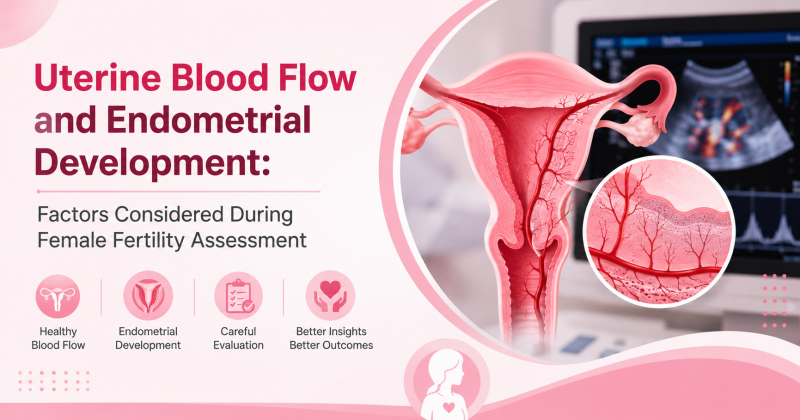
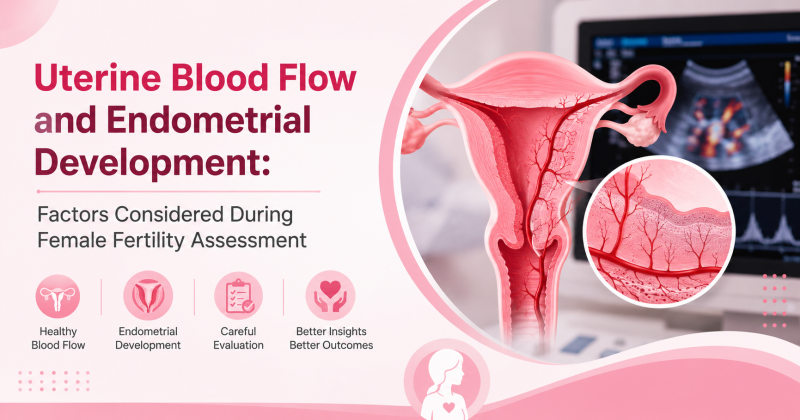
Uterine Blood Flow and Endometrial Development: Factors Considered During Female Fertility Assessment
 Deepak
When couples struggle to conceive, attention often goes to ovulation and egg quality. But the uterus matters just as much. For a pregnancy to establish, the uterine lining (endometrium) must grow well, and the uterus needs healthy blood supply to support it.
This article explains how blood flow and endometrial development are understood during fertility evaluation, what doctors look for, and when to seek guidance. If you are searching for answers about female infertility in Delhi, it can help you understand what a thorough assessment covers.
What Is the Endometrium, and Why Does It Matter?
The endometrium is the inner lining of the uterus. Each cycle, it thickens under the influence of hormones, preparing to receive an embryo. If pregnancy does not occur, the lining sheds as a period.
For implantation, the endometrium needs to be:
- Adequately developed, with suitable thickness and structure
- Hormonally ready, with proper timing in the cycle
- Free of structural problems such as polyps, fibroids pressing into the cavity or scar tissue
- Free of inflammation or infection
How Does Blood Flow Fit In?
The uterus is supplied by blood vessels that carry oxygen, nutrients and hormones to the lining. Good circulation is considered important for endometrial growth.
It is worth being honest here: the role of uterine blood flow in fertility is still debated. Some studies suggest that reduced blood flow patterns may be associated with poorer lining development or implantation difficulty, while others find the evidence inconclusive. Blood flow findings are therefore interpreted alongside other results rather than treated as a standalone explanation.
How Is Endometrial Development Assessed?
A fertility specialist uses several tools to build a picture.
Transvaginal Ultrasound
This is the most common first step. It allows the doctor to:
- Measure endometrial thickness at different points in the cycle
- Observe the lining pattern
- Check for fibroids, polyps, cysts or other structural features
- Assess ovarian follicle growth at the same visit
Doppler Ultrasound
Doppler is an add-on that estimates blood flow in the uterine arteries and around the lining. It is not required for every woman. It may be considered in selected cases, such as repeated implantation difficulty or unexplained findings, and the results should be interpreted with caution.
Hysteroscopy and Related Procedures
Where structural problems are suspected, further tests may be advised. Hysteroscopy allows a direct look inside the uterine cavity and can identify polyps, adhesions or a uterine septum. Saline sonography or hysterosalpingography may also be used to examine the cavity and fallopian tubes.
Hormone Tests and Other Evaluation
Blood tests may check hormones that influence the lining, such as estrogen and progesterone, along with thyroid function and prolactin. In some women, endometrial biopsy or tests for infection or chronic inflammation of the lining may be considered.
Factors That May Affect the Uterine Lining
Several issues can influence endometrial development and are commonly reviewed:
- Hormonal imbalance, including irregular ovulation or low progesterone support
- Uterine fibroids or polyps, depending on size and position
- Intrauterine adhesions after surgery, infection or previous procedures
- Chronic endometritis, a persistent low-grade inflammation
- Adenomyosis or endometriosis
- Previous uterine surgery or pelvic infection
- Medical conditions such as diabetes or thyroid disease
- Lifestyle factors, including smoking and significant weight changes
Many women with a thin or uneven lining have no symptoms, and some with regular periods still have underlying uterine factors.
What About Thin Endometrium?
There is no single universal number that defines “too thin” for every woman. Doctors consider thickness, pattern, timing in the cycle and overall clinical history. A thin lining on one scan does not automatically mean a problem, and treatment, if needed, depends on the cause. Self-medicating or taking supplements to improve blood flow without medical advice is not recommended, since evidence for many popular remedies is limited.
When Should You See a Specialist?
Consider an evaluation if:
- You have been trying to conceive for 12 months, or 6 months if you are over 35
- Your periods are very light, very heavy, painful or irregular
- You have had repeated miscarriages or failed fertility treatment cycles
- Scans have shown a thin lining, fibroids, polyps or fluid in the uterus
- You have a history of uterine surgery, infection or pelvic pain
Early assessment often saves time and reduces uncertainty.
Choosing Care in Delhi
Many women look for the best female infertility in Delhi after a confusing scan report or a long wait without answers. Rather than relying on rankings, it helps to choose a centre that explains each finding, avoids unnecessary tests and treatments, and plans care around your history.
A good infertility specialist in Delhi will look at the whole picture, including ovulation, tubes, uterine health, hormones and your partner’s evaluation, instead of focusing on one factor alone.
Dr. Poonam Goyal, Gynecologist and Fertility Specialist in Delhi, evaluates uterine and endometrial factors as part of a complete fertility assessment, with recommendations based on each couple’s circumstances.
If you want consultation regarding female infertility, you can visit Dr Poonam Goyal at:
- C-3/63A, 64A, opp. Gokulpuri police station, Block C, Panchsheel Hospital, Yamuna Vihar, Shahdara, Delhi, 110053
- HOD IVF & Infertility, Max Superspeciality Hospital, Vaishali
This article is for general education and does not replace personal medical advice.
FAQs
Q1. Does poor uterine blood flow cause infertility?
It may contribute in some cases, but the evidence is not conclusive. Blood flow is considered together with ultrasound findings, hormone levels and other fertility factors.
Q2. How is endometrial thickness checked?
Usually with a transvaginal ultrasound at specific points in the menstrual cycle. Your doctor interprets the thickness together with the lining pattern and your clinical history.
Q3. Can a thin endometrium be treated?
Treatment depends on the cause, such as hormonal issues, scarring or inflammation. Some women improve with targeted treatment, though outcomes vary and cannot be guaranteed.
Q4. Is Doppler ultrasound needed for every fertility evaluation?
No. It is used selectively, for example in repeated implantation difficulty or when other findings are unclear.
Q5. Can I have a problem with my uterine lining even if my periods are regular?
Yes. Regular periods do not rule out polyps, adhesions, inflammation or other uterine factors, which is why a proper evaluation can be useful.
Source:
Click for the: Full Story
You might like