Close Menu
 World
 Biography
 Health
 Education
 Business
 Lifestyle
 Sports
 Technology
 Animals
 History
 Food
 Religious
 Startups
 Movies
 Politics
 Fashion
 Covid
 Diet
 Fitness
 Marketing
 Travel
 Science
 Reviews
 Social media
 Stories
 Facts
 Art
 Entertainment
Deepak

Health
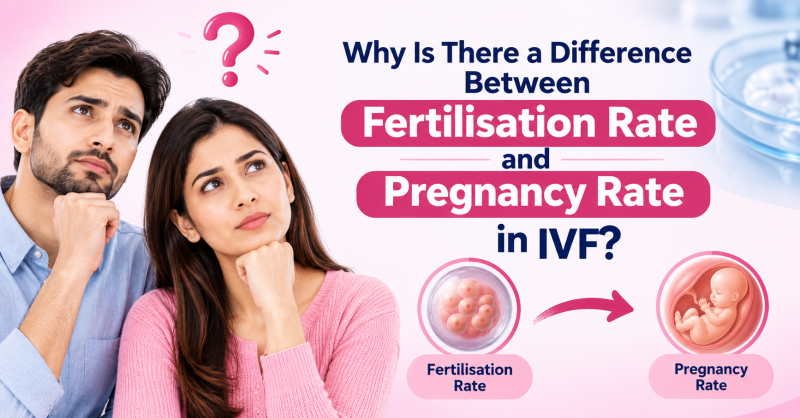
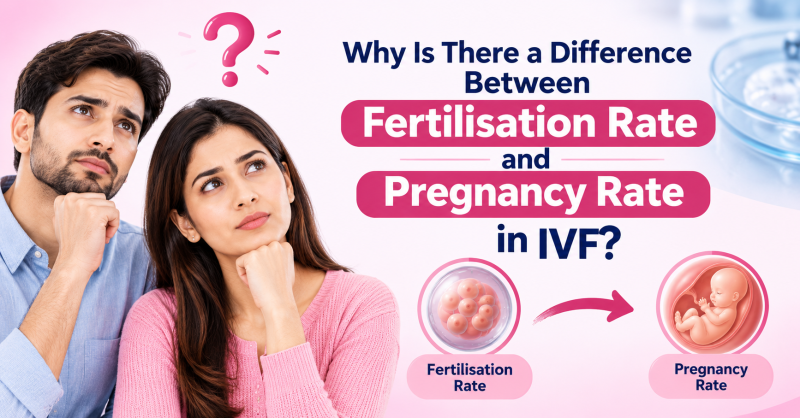
Why Is There a Difference Between Fertilisation Rate and Pregnancy Rate in IVF?
 Deepak
Many couples going through IVF hear two numbers that sound similar but mean very different things: the fertilisation rate and the pregnancy rate. A report may say that most eggs fertilised well, and yet the pregnancy test may still be negative. This can feel confusing and deeply disappointing.
The reason is simple. Fertilisation is only one early step in a long chain of events. A pregnancy depends on several later steps that fertilisation numbers cannot predict. Understanding this difference can help you read your reports with more clarity and less self-blame.
What Is the Fertilisation Rate in IVF?
The fertilisation rate is the proportion of eggs that fertilise after the sperm and egg are brought together, either through conventional IVF or ICSI. It is usually calculated from the mature eggs that were exposed to sperm.
Fertilisation is confirmed about 16 to 18 hours later, when the embryology team checks for two pronuclei. These are the structures that show that genetic material from both the egg and the sperm is present.
The fertilisation rate mainly tells you how well the egg and sperm interacted in the laboratory. It is a useful early indicator, but it is not a measure of whether a baby will result.
What Is the Pregnancy Rate in IVF?
The pregnancy rate describes how often a treatment cycle or an embryo transfer results in a pregnancy. This may be a positive blood test (biochemical pregnancy), a pregnancy seen on ultrasound (clinical pregnancy), or an ongoing pregnancy that continues beyond the early weeks.
Different clinics and studies may report these figures differently, so it is important to ask what exactly is being counted.
Why Are the Two Rates Different?
Between fertilisation and a pregnancy, several things must go right. Each step has its own natural losses.
- Embryo development: A fertilised egg must keep dividing and growing over five to six days. Some fertilised eggs stop developing, even when they looked normal at the start.
- Chromosomal health: Many embryos that stop growing or fail to implant have chromosomal changes. These are often a natural biological variation rather than a result of anything the patient did.
- Embryo selection: Not every fertilised egg becomes a good-quality embryo suitable for transfer or freezing.
- Endometrial receptivity: The uterine lining must be ready to accept the embryo at the right time.
- Implantation: Even a healthy embryo in a receptive uterus may not always implant.
- Early pregnancy continuation: Some pregnancies end early, and this is not always preventable.
So a good fertilisation rate shows that the first step worked. It cannot confirm that the remaining steps will follow.
Factors That Can Influence the Gap
The distance between the two numbers is different for every patient. Some of the factors a doctor may consider include:
- Age of the woman, which is closely linked to egg chromosomal health
- Sperm factors, including DNA integrity in some cases
- Uterine conditions, such as fibroids, polyps, adhesions or adenomyosis
- Tubal issues, like hydrosalpinx, which may affect the uterine environment
- Hormonal and metabolic factors, including thyroid problems, diabetes or PCOS
- Laboratory conditions and embryology expertise
- Previous implantation or pregnancy history
Most of these can be assessed through a proper evaluation. That is why a personalised review is more useful than any single figure.
Fertilisation Numbers Are Not a Verdict
A high fertilisation rate does not guarantee a pregnancy, and a lower fertilisation rate does not always mean treatment cannot succeed. Even a few well-developed embryos can lead to a pregnancy in the right circumstances. Equally, many fertilised eggs can still result in few usable embryos.
If your results seem puzzling, a detailed conversation with an experienced IVF doctor in Delhi can explain where the numbers stand and what they do and do not mean for your situation.
How Should You Read Success Rates From Clinics?
When comparing the best IVF centre in Delhi options, it helps to look beyond headline figures. Consider asking:
- Is the rate per cycle, per embryo transfer or per patient?
- Does it describe positive tests, clinical pregnancies or live births?
- Which age groups does it cover?
- Are the figures from a similar patient profile to yours?
Success rates from different clinics are not always directly comparable, because patient age, diagnosis and treatment protocols vary. A clinic that explains these details honestly is usually a better guide than one that quotes a single impressive number.
What a Specialist May Review After an Unsuccessful Cycle
If a cycle with good fertilisation did not lead to a pregnancy, your doctor may look at several areas:
- Embryo development and grading reports
- The stimulation protocol and egg maturity
- Sperm evaluation, including further testing where appropriate
- Uterine cavity assessment through ultrasound or hysteroscopy
- Endometrial thickness and timing of transfer
- Possible role of genetic screening, in selected cases
Not every patient needs every test. The aim is to find what is relevant to your history rather than to add investigations unnecessarily. Couples searching for the best IVF doctor in Delhi often value exactly this kind of careful, patient-specific reasoning over standard answers.
When Should You Seek Guidance?
It may be worth consulting a fertility specialist if:
- You have had good fertilisation but repeated unsuccessful transfers
- You are unsure how to interpret your embryology report
- You are considering a second opinion before another cycle
- You want to understand whether any part of the plan could be modified
Fertility treatment is a process with many stages. Knowing what each number represents makes the journey easier to understand and to discuss with your doctor.
If you want consultation regarding IVF treatment, you can visit Dr Poonam Goyal at:
- C-3/63A, 64A, opp. Gokulpuri police station, Block C, Panchsheel Hospital, Yamuna Vihar, Shahdara, Delhi, 110053
- HOD IVF & Infertility, Max Superspeciality Hospital, Vaishali
FAQs
1. What is the difference between fertilisation rate and pregnancy rate in IVF?
The fertilisation rate shows how many eggs fertilised in the laboratory. The pregnancy rate shows how often a cycle or embryo transfer leads to a pregnancy. Fertilisation is only the first step, so the two numbers are different.
2. Can a high fertilisation rate still lead to a negative pregnancy test?
Yes. After fertilisation, the embryo must develop, be chromosomally healthy, and implant in a receptive uterus. Any of these steps may not succeed, even when fertilisation was good.
3. Does a low fertilisation rate mean IVF will not work?
Not necessarily. Outcomes depend on the number and quality of embryos that develop, as well as other factors. Your doctor can explain what the result means for your case.
4. What should I ask a clinic about its IVF success rates?
Ask whether the figure is per cycle or per transfer, whether it counts positive tests, clinical pregnancies or live births, and which age group it represents.
5. What can be checked after good fertilisation but no pregnancy?
Your doctor may review embryo development, sperm factors, uterine health, endometrial readiness and your past history. The tests recommended depend on your individual situation.
Source:
Click for the: Full Story
You might like