Close Menu
 World
 Biography
 Health
 Education
 Business
 Lifestyle
 Sports
 Technology
 Animals
 History
 Food
 Religious
 Startups
 Movies
 Politics
 Fashion
 Covid
 Diet
 Fitness
 Marketing
 Travel
 Science
 Reviews
 Social media
 Stories
 Facts
 Art
 Entertainment
Deepak

Health
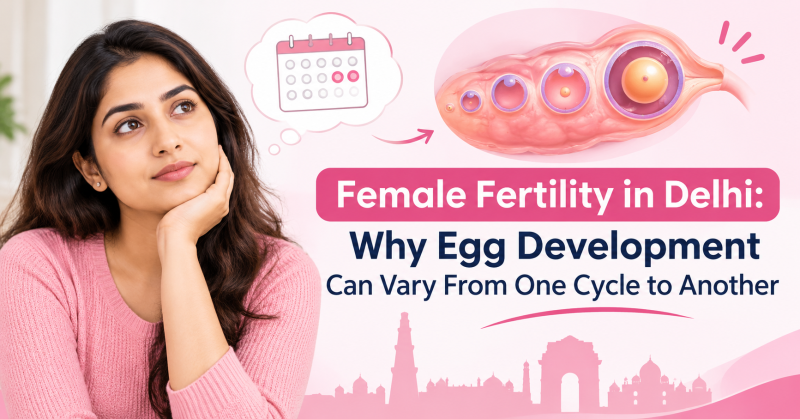
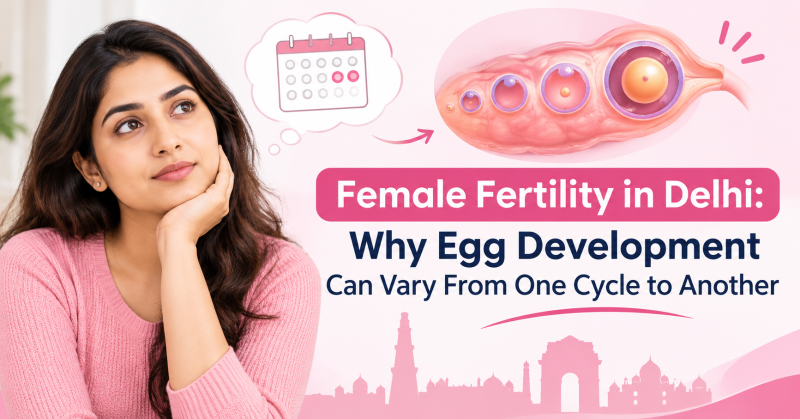
Female Fertility in Delhi: Why Egg Development Can Vary From One Cycle to Another
 Deepak
Many women who track their cycles notice something puzzling. One month a scan shows a well-grown follicle, and the next month the response looks very different. If you are looking for the best female fertility in Delhi, understanding why this happens can ease a lot of worry. In most cases, a variable cycle is not a sign that something is permanently wrong. It is useful information that a doctor can interpret.
What "Egg Development" Actually Means
Each month, a group of follicles (small fluid-filled sacs in the ovary, each holding an immature egg) begins to grow under the influence of hormones. Usually one becomes dominant, matures and releases an egg at ovulation.
Because this process depends on hormonal signals from the brain, the ovaries and other glands, it is sensitive to many influences. No two cycles are exactly alike, so some variation is normal.
Is It Normal for Egg Development to Differ Between Cycles?
Yes, mild variation is common. The number of follicles recruited, the day the dominant follicle emerges and the timing of ovulation can all shift slightly from month to month.
What deserves attention is a pattern: ovulation that is frequently delayed, follicles that stop growing, or cycles where no follicle matures. These are worth discussing with a specialist.
Common Factors Behind Inconsistent Egg Development
Hormonal Fluctuations
FSH, LH, estrogen and AMH guide follicle growth. If the signals are mistimed or weaker in some cycles, follicles may grow slowly or unevenly.
Polycystic Ovary Syndrome (PCOS)
In PCOS, many small follicles can start growing, but they may not mature in a coordinated way. This can lead to irregular or delayed ovulation, and cycles that vary a lot in length.
Thyroid and Prolactin Imbalance
An underactive or overactive thyroid, or raised prolactin, can interfere with ovulation. These are often simple to test and manageable.
Age and Ovarian Reserve
As a woman gets older, the number and quality of remaining eggs gradually decline. Cycle-to-cycle response can become less predictable, even when periods still seem regular.
Stress, Sleep and Lifestyle
Significant physical or emotional stress, disturbed sleep, rapid weight gain or loss, and very intense exercise can temporarily affect the brain's hormonal signals and delay ovulation.
Recent Illness or Medication
A fever, infection, travel across time zones, recent stopping of contraception, or certain medicines can shift a cycle's timing.
Other Reproductive Conditions
Endometriosis, ovarian cysts or previous pelvic surgery may sometimes influence the ovarian environment.
Signs That Your Cycles May Need Assessment
Consider a consultation if you notice:
- Cycles that are often shorter than 21 days or longer than 35 days
- Months where periods are missed without pregnancy
- Ovulation kits or tracking giving unclear or inconsistent results
- Trying to conceive for 12 months without success (or 6 months if you are 35 or older)
- Heavy, very painful or unusually scanty periods
- Excess facial or body hair, persistent acne, or unexplained weight changes
How Doctors Evaluate Inconsistent Egg Development
A fertility assessment is usually step-by-step and tailored to the individual. It may include:
- Detailed history: cycle patterns, past pregnancies, medical conditions, lifestyle and medicines
- Transvaginal ultrasound: to check the uterus, ovaries and follicle count, and sometimes to track follicle growth across a cycle
- Hormone tests: such as FSH, LH, AMH, thyroid hormones and prolactin, timed appropriately
- Further tests when needed: for example, checking the fallopian tubes or the uterine cavity
Follicle tracking over one or two cycles often shows more than a single scan, because it reveals how your body responds over time.
What Can Help
Treatment depends on the cause. Some approaches include:
- Managing thyroid, prolactin or metabolic issues
- Supporting a healthy weight, balanced nutrition, regular sleep and stress management
- Using ovulation-inducing medicines under medical supervision when appropriate
- Timed intercourse guided by monitoring
- Considering assisted options such as IUI or IVF if indicated
Outcomes vary from person to person, and no treatment can promise a pregnancy. A good plan is one that is based on your own test results and revisited as your response becomes clearer.
Why Individual Assessment Matters
Online tools and cycle apps give estimates, not certainty. Two women with the same cycle length can have very different ovarian responses. This is why a clinical evaluation by an experienced gynecologist matters more than assumptions.
Dr. Poonam Goyal is a gynecologist and fertility specialist in Delhi who focuses on understanding the reasons behind each woman's pattern before recommending next steps. Choosing the best obstetrics and gynecology in Delhi is less about a label and more about finding a doctor who listens, explains your reports clearly and offers evidence-based options without pressure.
When to Seek Help
You do not need to wait for a long period of difficulty if your cycles are very irregular or you have known risk factors such as PCOS, endometriosis, previous pelvic infection or advancing age. Early guidance can save time and reduce anxiety.
If you want a consultation regarding female fertility, you can visit Dr Poonam Goyal at:
- C-3/63A, 64A, opp. Gokulpuri Police Station, Block C, Panchsheel Hospital, Yamuna Vihar, Shahdara, Delhi, 110053
- HOD IVF & Infertility, Max Superspeciality Hospital, Vaishali
FAQs
Q1. Is it normal for ovulation to happen on different days each month?
Yes, small shifts are common. Ovulation timing can vary with stress, illness, sleep and hormones. Frequent, large changes or missed ovulation are worth evaluating.
Q2. Can stress really affect egg development?
Significant stress can influence the hormones that regulate follicle growth and may delay ovulation in some cycles. It usually does not cause permanent damage, but ongoing stress is worth addressing.
Q3. Does inconsistent egg development mean I have low egg reserve?
Not necessarily. Variation can come from PCOS, thyroid or prolactin issues, or lifestyle factors. Ovarian reserve is assessed separately with an ultrasound and blood tests such as AMH.
Q4. How many cycles should I track before consulting a doctor?
If cycles are clearly irregular, you can consult sooner. Otherwise, consider seeking advice after 12 months of trying (6 months if you are 35 or above), or earlier if you have symptoms or known risk factors.
Q5. Can irregular egg development be treated?
Often, yes. Treatment depends on the underlying cause and may include lifestyle support, managing thyroid or hormonal conditions, ovulation-supporting medicines, or assisted reproduction. Results differ for each person.
Source:
Click for the: Full Story
You might like