Close Menu
 World
 Biography
 Health
 Education
 Business
 Lifestyle
 Sports
 Technology
 Animals
 History
 Food
 Religious
 Startups
 Movies
 Politics
 Fashion
 Covid
 Diet
 Fitness
 Marketing
 Travel
 Science
 Reviews
 Social media
 Stories
 Facts
 Art
 Entertainment
Rajan

Health
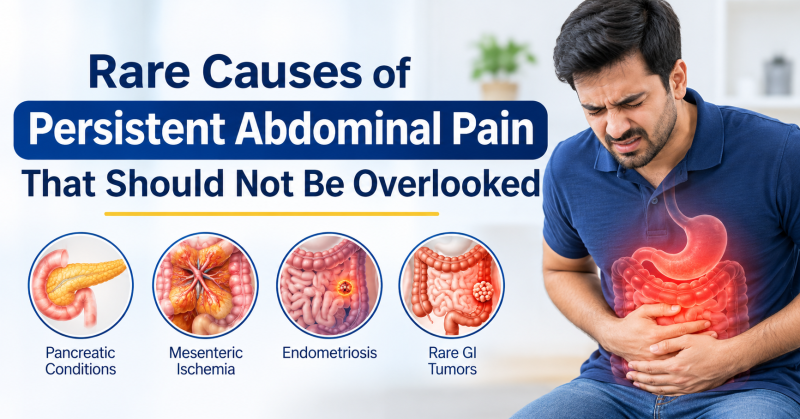
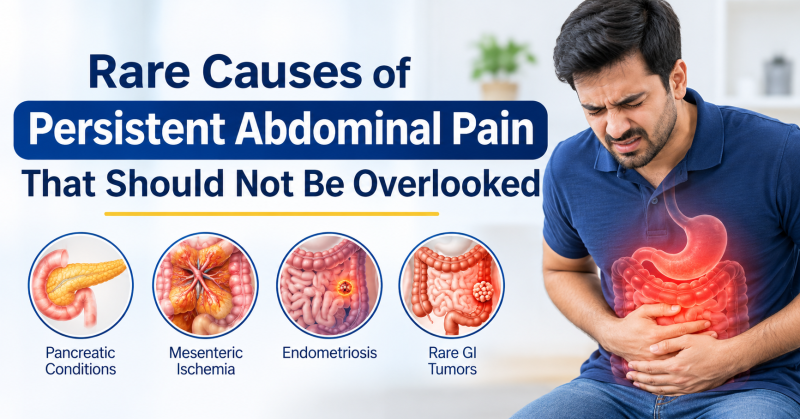
Rare Causes of Persistent Abdominal Pain That Should Not Be Overlooked
 Rajan
Most abdominal pain has a familiar explanation: gas, acidity, constipation, an infection or a food intolerance. But some people live with pain for weeks or months, visit several clinics, receive repeated courses of antacids or antispasmodics, and still have no clear answer. When routine tests come back normal and the pain continues, it is reasonable to ask whether a less common condition is being missed. This article explains which uncommon causes doctors consider, which patterns should raise suspicion, and when an opinion from a gastrointestinal surgeon in Central Delhi or another digestive specialist is worthwhile.
Why Some Abdominal Pain Stays Unexplained
The abdomen contains the stomach, intestines, liver, gallbladder, pancreas, spleen, kidneys, blood vessels and, in women, reproductive organs. Pain from any of them can feel similar: a dull ache, cramp or burning sensation. Rarer conditions are often missed for three reasons:
- Early symptoms mimic common problems such as gastritis or irritable bowel syndrome.
- Pain may come and go, so it appears to settle with each treatment.
- Standard first-line tests, such as a basic ultrasound or blood count, may not detect problems in the intestinal wall, blood vessels or abdominal wall.
Persistence, not intensity, is the key signal. Pain lasting beyond two to three weeks without a clear cause deserves a structured work-up.
Uncommon Causes Worth Knowing About
Conditions Involving the Digestive Tract
- Chronic mesenteric ischaemia: Narrowing of the arteries supplying the intestines reduces blood flow after eating. It typically causes pain 15 to 60 minutes after meals, fear of eating and weight loss. It is more likely in older adults, smokers and people with vascular disease.
- Crohn's disease: This inflammatory bowel disease can affect any part of the digestive tract, and mild forms may be mistaken for irritable bowel syndrome for years. Clues include diarrhoea, fatigue, fever, weight loss, and perianal problems such as fistulas.
- Intestinal tuberculosis: Relevant in India, it often affects the ileocaecal region and may present with long-standing right-sided abdominal pain, low-grade fever, night sweats, weight loss or altered bowel habits. It can resemble Crohn's disease, so careful testing is essential.
- Partial or intermittent bowel obstruction: Adhesions from earlier surgery, a hernia or a stricture can intermittently block the bowel, causing recurring colicky pain, bloating and vomiting.
- Small bowel and other tumours: These are uncommon but can cause vague pain, anaemia, obstruction or hidden bleeding.
Conditions Involving the Abdominal Wall and Nerves
- Anterior cutaneous nerve entrapment syndrome (ACNES): A nerve in the abdominal wall becomes trapped, causing sharp, localised pain that often worsens when tensing the abdominal muscles. It is frequently mistaken for an internal problem.
- Small or hidden hernias: Epigastric, Spigelian or incisional hernias can be too small to feel, yet cause persistent localised pain. They may need an examination while standing and sometimes imaging.
Conditions Involving Blood Vessels and Compression
- Median arcuate ligament syndrome: A band of tissue near the diaphragm compresses the artery that supplies the upper digestive organs, causing post-meal pain, nausea and weight loss. It is a diagnosis of exclusion.
- Superior mesenteric artery syndrome: The duodenum is compressed between two arteries, often after significant weight loss, leading to fullness, vomiting and pain after meals.
Other Conditions Doctors Consider
- Chronic pancreatitis or pancreatic cysts: Persistent upper abdominal pain radiating to the back can have a pancreatic origin even when the person does not drink alcohol.
- Sphincter of Oddi dysfunction: Abnormal function of the muscle controlling bile and pancreatic flow can cause biliary-type pain, sometimes in people who have already had their gallbladder removed.
- Coeliac disease: Often thought of as a diarrhoea condition, it can present with bloating, pain, anaemia or nutritional deficiencies.
- Metabolic and systemic causes: Rarely, conditions such as porphyria, lead poisoning or familial Mediterranean fever cause recurrent abdominal pain.
Red Flags That Call for Prompt Evaluation
Do not wait if persistent abdominal pain occurs with:
- Unintended weight loss
- Blood in stool, black stools or vomiting blood
- Persistent fever or night sweats
- Repeated vomiting or a swollen abdomen
- Pain consistently triggered by eating
- Yellowing of the eyes or skin
- New anaemia or marked fatigue
- Pain that wakes you from sleep
- Onset after age 50, or a family history of bowel cancer, inflammatory bowel disease or coeliac disease
How Doctors Investigate Persistent Abdominal Pain
A careful history often matters more than any scan. Doctors ask where the pain is, how it relates to food, bowel movements, posture and movement, and what previous surgeries, medicines or illnesses are relevant. Depending on the findings, evaluation may include:
- Blood and stool tests: for anaemia, inflammation, infection, coeliac markers and hidden blood
- Ultrasound abdomen: a useful first imaging test
- Upper GI endoscopy and colonoscopy: direct examination with biopsies where needed
- CT or MR enterography/angiography: to assess the small bowel, blood vessels and surrounding structures
- Specialised tests: such as tuberculosis testing, functional pancreatic studies or nerve-block response for suspected abdominal wall pain
Investigations are chosen to match the clinical picture. Repeating the same normal test is less helpful than reconsidering the diagnosis.
When Surgery Becomes Part of the Conversation
Many of these conditions are treated without surgery. Intestinal tuberculosis is treated with anti-tubercular medicines, Crohn's disease with anti-inflammatory and immune-modulating therapy, and coeliac disease with dietary change. Surgery is considered when there is obstruction, a stricture that does not respond to other treatment, a hernia, vascular compression, complications of pancreatitis, or a tumour.
A surgical opinion is also valuable when pain has no clear cause after thorough evaluation, because a surgeon can look at the problem structurally: whether anything is blocked, compressed, herniated or scarred. Patients seeking such an assessment can consult a gastrointestinal surgeon to review their previous reports and decide what further evaluation, if any, is needed. Dr. Tarun Mittal is a surgeon with more than 20 years of experience and can be consulted at Sir Ganga Ram Hospital, Old Rajendra Nagar, New Delhi – 110060, which is accessible for those looking for a gastrointestinal surgeon in Rajinder Nagar or elsewhere in Central Delhi. Recovery depends on the condition and the type of treatment, so the risks, expected hospital stay and return to normal diet and activity should be explained before any procedure.
Preparing for Your Consultation
- Bring all previous reports, scans and prescriptions.
- Note when the pain started, where it is, and what makes it better or worse.
- Record any link with meals, bowel movements or physical activity.
- List all medicines, including painkillers and herbal products.
- Mention weight changes, fever, appetite changes and family history.
Conclusion
Persistent abdominal pain is never something to simply live with. While most causes are common and treatable, rarer conditions do exist, and they tend to be missed when pain is repeatedly treated as acidity or stress. Paying attention to patterns, recognising red flags and pursuing a structured work-up can shorten the path to a diagnosis. If your pain has lasted for weeks despite treatment, an assessment by a qualified gastrointestinal surgeon in Central Delhi can add a valuable perspective and help determine whether further investigation or surgical care is needed.
Disclaimer: This article is for general education and does not replace personal medical advice, diagnosis or treatment.
Frequently Asked Questions
1. Can abdominal pain be serious even if my ultrasound and blood tests are normal?
Yes. Ultrasound and basic blood tests miss many conditions, including problems of the small bowel wall, blood vessels, abdominal wall nerves and early inflammatory disease. Persistent pain usually needs further targeted tests.
2. How long is too long to have abdominal pain?
Pain lasting more than two to three weeks without improvement should be evaluated. Any pain with red-flag symptoms such as weight loss, bleeding or persistent vomiting needs earlier attention.
3. Can pain from the abdominal wall feel like an internal problem?
Yes. Conditions such as nerve entrapment or small hernias can cause localised, sharp or burning pain that mimics gallbladder, stomach or bowel disease. Pain that changes when you tense your abdominal muscles may be a clue.
4. Is stress the cause of unexplained abdominal pain?
Stress can worsen functional conditions such as irritable bowel syndrome, but it should not be assumed to be the cause until organic disease has been reasonably excluded, particularly when warning signs are present.
5. Which specialist should I see first?
A physician or gastroenterologist is a sensible first step. A surgical opinion is appropriate when imaging suggests a hernia, obstruction, vascular compression or tumour, or when pain persists despite medical treatment.
Source:
Click for the: Full Story
You might like