Close Menu
 World
 Biography
 Health
 Education
 Business
 Lifestyle
 Sports
 Technology
 Animals
 History
 Food
 Religious
 Startups
 Movies
 Politics
 Fashion
 Covid
 Diet
 Fitness
 Marketing
 Travel
 Science
 Reviews
 Social media
 Stories
 Facts
 Art
 Entertainment
Deepak

Health
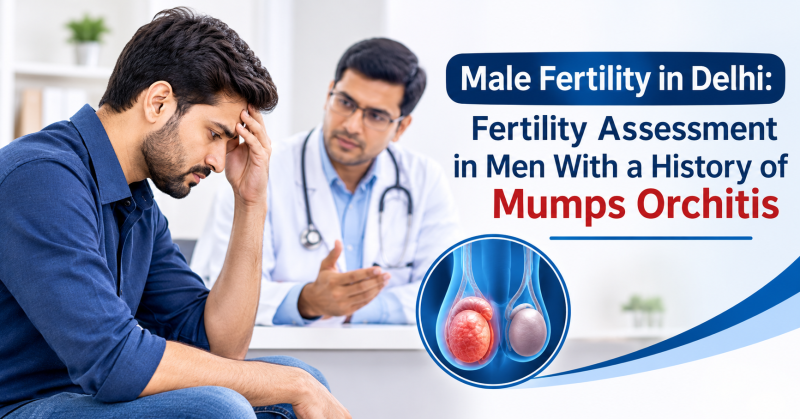
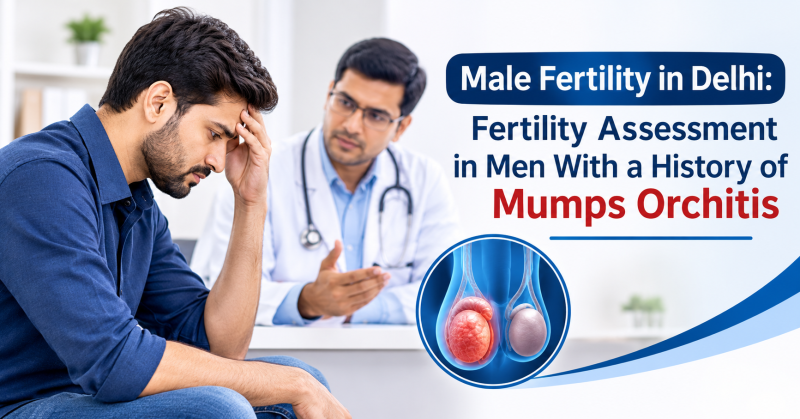
Male Fertility in Delhi: Fertility Assessment in Men With a History of Mumps Orchitis
 Deepak
Many men remember having mumps as a child or teenager, often as a short illness with swollen cheeks and fever. What fewer people realise is that, in some cases, mumps can also affect the testicles. When a couple is later struggling to conceive, this old infection may come back into the picture. If you are looking for guidance on male fertility in Delhi, understanding how mumps orchitis can relate to sperm health may help you decide when to seek an evaluation.
The important point is this: a history of mumps orchitis does not mean a man is infertile. Many men with this history father children. It simply means a careful assessment is worthwhile.
What Is Mumps Orchitis?
Mumps is a viral infection that mainly affects the salivary glands. In some post-pubertal boys and men, the virus can also cause inflammation of one or both testicles. This is called mumps orchitis.
Typical features during the illness include:
- Pain, swelling and tenderness in one or both testicles
- Fever and general discomfort
- Symptoms appearing days after the usual mumps swelling
Orchitis is more commonly reported after puberty than in young children. Often only one testicle is affected, though both can be involved.
How Can It Affect Fertility?
The testicles produce sperm and the hormone testosterone. Inflammation can sometimes damage the delicate tissue where sperm are made. Possible long-term effects include:
- Reduced sperm count: fewer sperm in the semen
- Lower sperm motility or abnormal shape: which may affect how sperm function
- Testicular shrinkage (atrophy): in some men, the affected testicle becomes smaller
- Hormonal changes: in a smaller number of cases, testosterone levels may be affected
The extent of the impact varies widely. Some men recover fully, some have mild changes, and a few may have more significant reductions in sperm production. When only one testicle was involved, the other may continue to function normally.
When Should a Man With This History Get Assessed?
Consider an evaluation if:
- You have been trying to conceive for 12 months without success (or sooner if your partner is 35 or older)
- You had mumps orchitis and are planning a family
- You notice a difference in testicular size or discomfort
- A previous semen report showed abnormal results
Many men prefer not to wait, especially when there is a known past illness. Early clarity can save time and reduce anxiety for both partners.
What Does a Fertility Assessment Usually Include?
A thorough evaluation is individual, but commonly involves the following steps.
Medical History and Examination
The doctor will ask about the timing and severity of the mumps infection, any other illnesses, surgeries, medicines, lifestyle habits and previous conception attempts. A physical examination helps assess testicular size and texture.
Semen Analysis
This is the key first test. It looks at sperm count, motility, shape (morphology) and semen volume. Because results can vary from sample to sample, a repeat test after some weeks is often advised before drawing conclusions.
Hormone Tests
Blood tests such as FSH, LH and testosterone help show how well the testicles and the brain's hormonal signals are working together.
Scrotal Ultrasound
An ultrasound can show testicular size and structure, and can help rule out other contributing conditions.
Additional Tests When Needed
Depending on findings, a doctor may suggest tests such as sperm DNA integrity or genetic evaluation, particularly when sperm counts are very low.
Possible Outcomes and Next Steps
Results may fall into different categories, and the plan depends on what is found.
- Normal or near-normal semen: Natural conception may still be possible, and timed intercourse guidance can help. Female partner evaluation is also part of a complete assessment.
- Mild to moderate reduction: Lifestyle measures, treatment of any associated issues and assisted options such as IUI may be considered, depending on the semen quality and the female partner's health.
- Severely reduced sperm count: IVF with ICSI may be discussed, where a single sperm is selected and injected into an egg.
- Very few or no sperm in the ejaculate: Further evaluation may determine whether a procedure to retrieve sperm from the testicle is an option. Whether this works depends on individual findings.
No approach guarantees a pregnancy, but a clear diagnosis helps couples choose a realistic and informed path.
Supportive Steps for Sperm Health
Regardless of past history, men can support their reproductive health by:
- Avoiding tobacco and limiting alcohol
- Maintaining a healthy weight and regular physical activity
- Eating a balanced diet and managing stress
- Avoiding prolonged heat exposure to the groin area
- Discussing any supplements or medicines with a doctor before use
Why Couple-Based Care Matters
Fertility is a shared journey. Even when a male factor is identified, the female partner's age, ovarian reserve, tubes and uterus also influence treatment choices. Couples searching for the best male fertility in Delhi often benefit most from a team that evaluates both partners together rather than in isolation.
Dr. Poonam Goyal, a gynecologist and fertility specialist in Delhi, takes this couple-focused approach, reviewing male test results alongside the woman's evaluation so that treatment recommendations are coordinated and clearly explained. For families looking for the best obstetrics and gynecology in Delhi, access to a specialist who can guide both fertility treatment and women's health needs in one place can make the process simpler.
If you want a consultation regarding male fertility, you can visit Dr Poonam Goyal at:
- C-3/63A, 64A, opp. Gokulpuri Police Station, Block C, Panchsheel Hospital, Yamuna Vihar, Shahdara, Delhi, 110053
- HOD IVF & Infertility, Max Superspeciality Hospital, Vaishali
FAQs
Q1. Can mumps orchitis cause permanent infertility?
It can reduce sperm production in some men, but permanent infertility is not the usual outcome. The effect depends on how severe the infection was and whether one or both testicles were involved.
Q2. If only one testicle was affected, can I still father a child?
Often, yes. The unaffected testicle may continue producing sperm normally. A semen analysis is the best way to check your current sperm health.
Q3. Which test is most useful for men with a history of mumps orchitis?
A semen analysis is the first step. Doctors may also advise hormone blood tests and a scrotal ultrasound for a fuller picture.
Q4. Can sperm quality improve after mumps orchitis?
Sperm production in some men may improve or stabilise over time, while in others it may remain reduced. Healthy lifestyle habits support overall sperm health, but results differ for each person.
Q5. What treatment options exist if sperm count is low after mumps orchitis?
Depending on test results, options may include lifestyle changes, IUI, or IVF with ICSI. If very few sperm are present, specialised sperm retrieval may be considered. A fertility specialist can recommend what suits your situation.
Source:
Click for the: Full Story
You might like