Close Menu
 World
 Biography
 Health
 Education
 Business
 Lifestyle
 Sports
 Technology
 Animals
 History
 Food
 Religious
 Startups
 Movies
 Politics
 Fashion
 Covid
 Diet
 Fitness
 Marketing
 Travel
 Science
 Reviews
 Social media
 Stories
 Facts
 Art
 Entertainment
Badal

Health
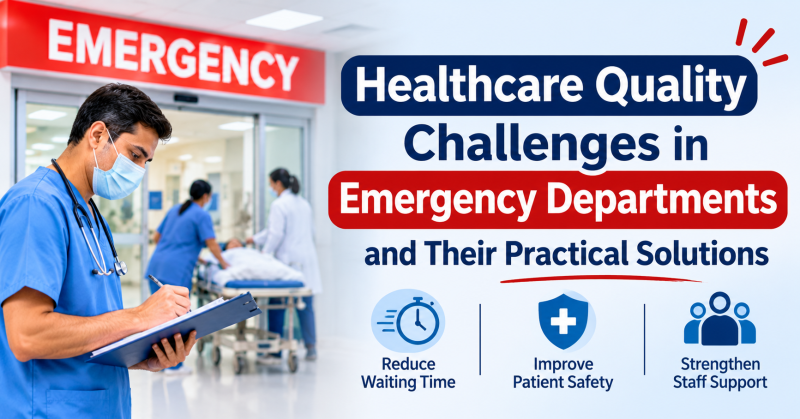
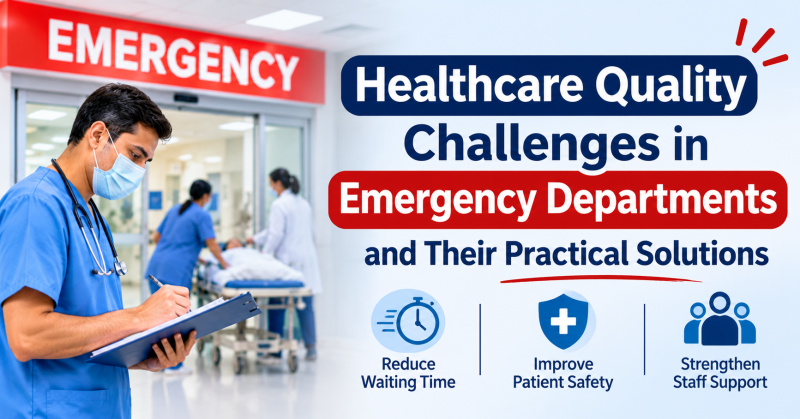
Healthcare Quality Challenges in Emergency Departments and Their Practical Solutions
 Badal
Emergency departments (EDs) struggle most with crowding, delayed triage, unclear handovers, and incomplete records, and the practical fix is a set of simple, measurable systems: structured triage, clear escalation pathways, standard handover tools, and contemporaneous documentation. This Healthcare Quality Guide in Delhi explains where EDs commonly fall short, what hospitals are generally expected to do, and how teams can reduce patient harm and legal exposure without adding unnecessary bureaucracy.
Why Emergency Departments Are a Quality Hotspot
Emergency care combines uncertainty, time pressure, and high patient volumes. Patients arrive without histories, decisions are made on incomplete information, and staff are interrupted constantly. In a large city like Delhi, where tertiary hospitals draw patients from across the region, these pressures can be amplified.
Quality problems here are rarely caused by one person. They usually come from system gaps: no clear triage rules, overloaded beds, poor communication between shifts, or missing escalation routes. A good Hospital Quality Guide in Delhi therefore starts by looking at processes rather than individuals.
Common Quality Challenges
Crowding and delayed assessment. When beds and staff are stretched, high-risk patients can wait too long or be missed.
Inconsistent triage. Without a standard tool and regular training, two nurses may give the same patient different priority levels.
Weak handovers. Information lost between ED, ward, ICU, and ambulance teams is a frequent source of errors.
Incomplete or late documentation. Notes written hours later, missing times, and unsigned entries make care hard to review.
Delayed senior or specialist input. Junior staff may hesitate to escalate, or on-call systems may be unclear.
Consent and communication gaps. In emergencies, families may be anxious, uninformed, or unable to be reached.
Medication and diagnostic errors. Look-alike drugs, unclear verbal orders, and missed results are recurring risks.
Legal and Regulatory Responsibilities
Hospitals and doctors in India owe patients a duty of reasonable care. In Jacob Mathew v. State of Punjab (2005), the Supreme Court held that medical negligence is judged by the standard of a reasonably competent practitioner, and that criminal liability requires a high degree of negligence. Emergency care has its own landmark: in Parmanand Katara v. Union of India (1989), the Supreme Court emphasised that doctors should provide immediate medical aid to injured persons without waiting for legal formalities. Hospitals should also be aware of the Clinical Establishments (Registration and Regulation) Act, 2010, which applies in states and union territories that have adopted it, and confirm which provisions apply to their facility.
Because requirements and standards change, any medico legal guide for hospitals in Delhi should be checked against current notifications, council guidance, and accreditation norms before it is adopted into policy.
A Realistic Example
A middle-aged patient arrives with vague abdominal pain during a busy evening shift. He is triaged as low priority, sits in the waiting area, and is later found to have a serious condition that needed earlier attention. No reassessment time is recorded, and the handover to the night team says only “pain abdomen, waiting.”
Had the department used a defined triage scale with mandatory reassessment intervals, a short structured handover, and a rule for escalating patients whose condition changes, the delay may have been caught. The staff were competent. The system was what failed.
Practical Solutions That Work
- Use a standard triage system and train every nurse and junior doctor on it, with periodic audits.
- Set reassessment intervals for waiting patients and document each one.
- Adopt a structured handover format such as SBAR (Situation, Background, Assessment, Recommendation).
- Define escalation pathways so juniors know exactly whom to call and when.
- Standardise emergency consent practice, including how to record cases where consent cannot be obtained.
- Reduce medication risk with read-back for verbal orders and clear labelling of high-alert drugs.
- Track a few metrics, such as door-to-doctor time, left-without-being-seen rates, and return visits within 72 hours.
- Hold regular case reviews that focus on learning, not blame.
Documentation Checklist for the Emergency Department
- Time of arrival, triage category, and name of the triaging staff
- Presenting complaint, vitals, and examination findings
- Time of first doctor review and senior review
- Investigations ordered, results reviewed, and actions taken
- Medications with dose, route, and time
- Consent, or emergency circumstances if consent was not possible
- Handover notes with names and times
- Discharge advice, warning signs, and follow-up plan
- Refusals or leaving against medical advice, with reasons
Entries should be dated, timed, signed, and legible. Corrections should be added as dated addenda, never by overwriting.
When Hospitals Should Seek Specialist Support
Hospital administrators and ED leads should seek expert input when designing consent policies, handling a serious adverse event, responding to a notice, or preparing for an inspection. Specialists such as Dr. Vimal Kant Goyal, whose medico-legal and hospital quality resources address documentation and risk management, can help translate legal expectations into workable ED protocols.
Conclusion
Better emergency care comes from dependable systems more than from heroic effort. Standardise triage, structure handovers, define escalation, and document in real time. Use this Healthcare Quality Guide in Delhi as a starting checklist for your own audit, and review it with clinical, nursing, and administrative leaders. This article offers general information, not legal advice for any specific situation. For particular cases, consult a qualified medico-legal professional.
Frequently Asked Questions
1. What is the biggest quality problem in emergency departments?Crowding and delayed assessment are widely reported, but most serious failures involve several linked gaps, such as poor triage, weak handover, and missing escalation.
2. Must emergency departments treat patients before completing formalities?The Supreme Court in Parmanand Katara v. Union of India stressed that emergency aid should not be delayed for legal formalities. Hospitals should still document what was done and why.
3. How often should triage staff be trained?No single frequency applies to every hospital. Many facilities run induction training and refreshers at regular intervals, supported by audits. Follow your accreditation or internal policy requirements.
4. Does good documentation prevent legal claims?No. It cannot guarantee any outcome, but clear and timely records help show what was assessed, advised, and done.
5. Which metrics should a small hospital ED start with?Door-to-doctor time, triage accuracy, left-without-being-seen rate, and unplanned returns are practical starting points that most facilities can measure.
Source:
Click for the: Full Story
You might like