Close Menu
 World
 Biography
 Health
 Education
 Business
 Lifestyle
 Sports
 Technology
 Animals
 History
 Food
 Religious
 Startups
 Movies
 Politics
 Fashion
 Covid
 Diet
 Fitness
 Marketing
 Travel
 Science
 Reviews
 Social media
 Stories
 Facts
 Art
 Entertainment
Deepak

Health
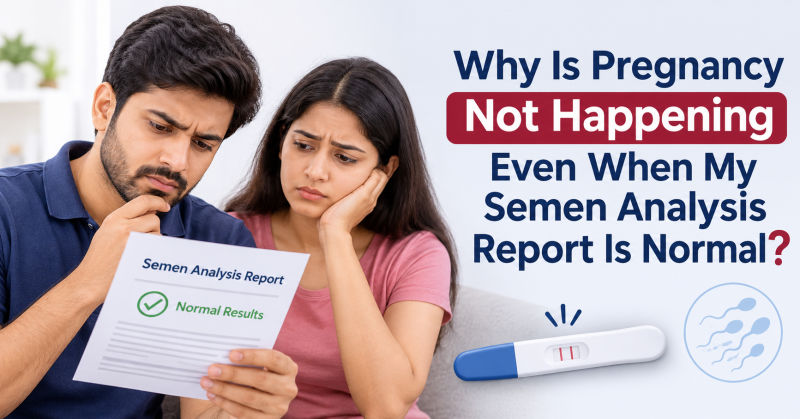
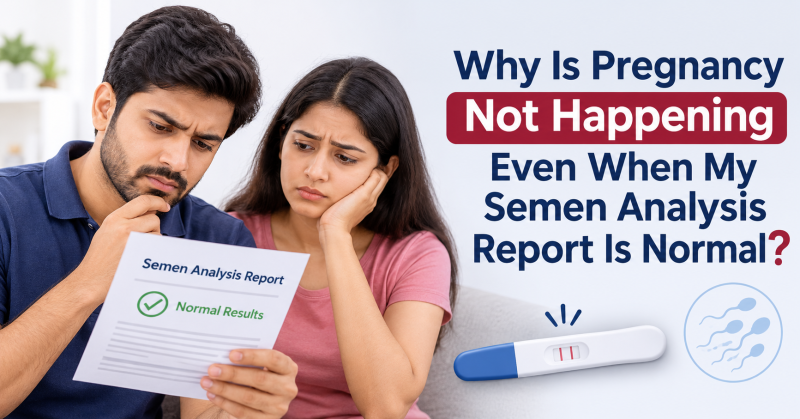
Why Is Pregnancy Not Happening Even When My Semen Analysis Report Is Normal?
 Deepak
A normal semen analysis can feel like good news, and it often is. But when months pass without a pregnancy, a “normal” report can also leave couples confused. If the numbers look fine, why is conception not happening?
The answer is that a semen analysis is a useful screening test, not a complete verdict on fertility. Understanding its limits helps couples take the right next step, whether they are exploring male fertility in Delhi or looking at the whole fertility picture together.
What a Normal Semen Analysis Actually Tells You
A standard semen report usually measures:
- Sperm count (concentration)
- Motility (how well sperm move)
- Morphology (shape and structure)
- Volume and other basic parameters
When these fall within reference ranges, it suggests that sperm production is broadly adequate. What it does not show is how sperm behave inside the female body, whether their DNA is intact, or whether they can fertilise an egg effectively.
Semen quality can also vary from one sample to another. Illness, fever, stress, poor sleep or a short abstinence period can influence a single result, so one report may not reflect your usual pattern.
Hidden Male Factors a Routine Report May Miss
Even with normal numbers, some male factors may remain undetected:
- Sperm DNA damage, which is not part of a routine analysis
- Antibodies that interfere with sperm function
- Subtle functional problems, such as difficulty binding to or penetrating the egg
- Lifestyle and environmental influences such as smoking, heavy alcohol use, heat exposure or certain medicines
These are not found in every man, and they are not tested in every couple. Doctors usually consider them when pregnancy has not occurred despite reasonable time and otherwise normal findings.
The Female Side Matters Just as Much
Fertility is a shared process. When a semen report is normal, attention often turns to the woman’s evaluation. Possible factors include:
- Irregular or absent ovulation, including PCOS
- Blocked or damaged fallopian tubes
- Endometriosis or pelvic adhesions
- Uterine factors such as fibroids, polyps or a septum
- Reduced ovarian reserve, particularly with advancing age
- Thyroid or prolactin imbalance
Regular periods do not always mean ovulation is healthy. Many couples benefit from an evaluation that looks at both partners together, which is why a doctor trained in both gynaecology and fertility care can be helpful.
Timing and Intercourse Patterns
Sometimes the issue is simply timing. Sperm can survive for a few days in the female reproductive tract, while an egg survives for a much shorter period after release. Intercourse that is too infrequent or poorly timed relative to ovulation can reduce the chance of conception, even when both partners are healthy.
Cycle tracking, ovulation kits or ultrasound-based monitoring can sometimes clarify this.
Unexplained Infertility
In some couples, all standard tests come back normal and no clear reason is found. This is called unexplained infertility. It does not mean nothing is wrong, only that current tests cannot identify the cause. Many couples in this situation still conceive, either naturally or with treatments such as IUI or IVF, depending on age, duration of infertility and other factors.
When Should You Seek Help?
Consider consulting a fertility specialist if:
- You have been trying for 12 months without success (or 6 months if the woman is over 35)
- Periods are irregular, very painful or absent
- There is a history of pelvic infection, surgery, injury or testicular problems
- You have had a previous pregnancy loss
- You feel something may be wrong, even if reports look normal
Seeking advice early does not commit you to any treatment. It simply gives you clarity.
What a Complete Evaluation May Include
A structured assessment may involve:
- Detailed history of both partners
- Repeat semen analysis if needed, and further male tests when indicated
- Ovulation assessment and hormone tests
- Pelvic ultrasound
- Tubal and uterine evaluation
- A discussion of timing, lifestyle and next steps
Couples often find it reassuring when results are explained in plain language and each step has a clear purpose.
Choosing Where to Get Guidance
When searching for the best male fertility in Delhi, it helps to look beyond reputation alone. Consider whether the clinic evaluates both partners, explains results clearly and avoids rushing into advanced treatment without reason. Many couples also prefer a practice with strong gynaecological care, and some search for the best obstetrics and gynecology in Delhi so that female and male factors can be reviewed together.
Dr. Poonam Goyal is a Gynecologist and Fertility Specialist in Delhi who works with couples facing delayed conception. Her approach centres on understanding each couple’s history and reports before recommending any tests or treatment, so the plan fits the individual situation.
If you want consultation regarding fertility treatment, you can visit Dr Poonam Goyal at:
- C-3/63A, 64A, opp. Gokulpuri police station, Block C, Panchsheel Hospital, Yamuna Vihar, Shahdara, Delhi, 110053
- HOD IVF & Infertility, Max Superspeciality Hospital, Vaishali
FAQs
1. Can a man still be infertile if his semen analysis is normal?
Yes, in some cases. A routine report does not assess factors such as sperm DNA integrity or how well sperm function in fertilisation. A fertility specialist can advise whether further tests are appropriate.
2. Should a semen analysis be repeated?
Often yes. Semen quality can vary between samples, so doctors may repeat the test to confirm the result, especially if pregnancy has not occurred.
3. If the semen report is normal, is the problem with the woman?
Not necessarily. Female factors are common, but some couples have no identifiable cause, and some have contributing factors in both partners. A joint evaluation gives the clearest picture.
4. How long should a couple try before seeking help?
Generally 12 months, or 6 months if the woman is over 35. Earlier consultation is reasonable with irregular periods, known gynaecological conditions or a relevant medical history.
5. What is unexplained infertility?
It describes couples whose standard fertility tests are normal but who have not conceived. Treatment options are individualised, based on age, duration of trying and overall health.
Source:
Click for the: Full Story
You might like