Close Menu
 World
 Biography
 Health
 Education
 Business
 Lifestyle
 Sports
 Technology
 Animals
 History
 Food
 Religious
 Startups
 Movies
 Politics
 Fashion
 Covid
 Diet
 Fitness
 Marketing
 Travel
 Science
 Reviews
 Social media
 Stories
 Facts
 Art
 Entertainment
Badal

Health
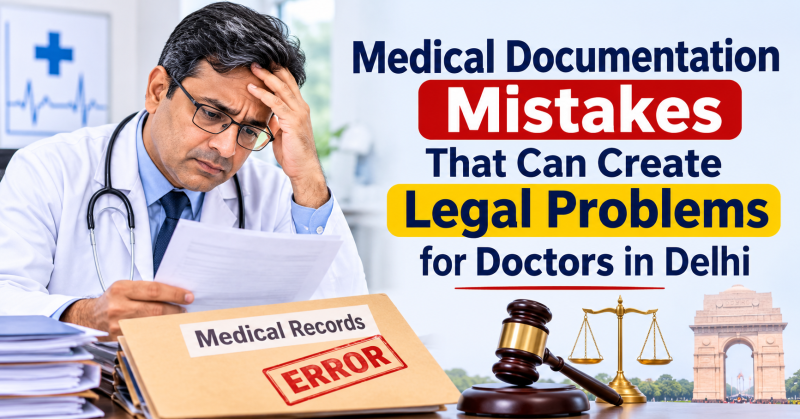
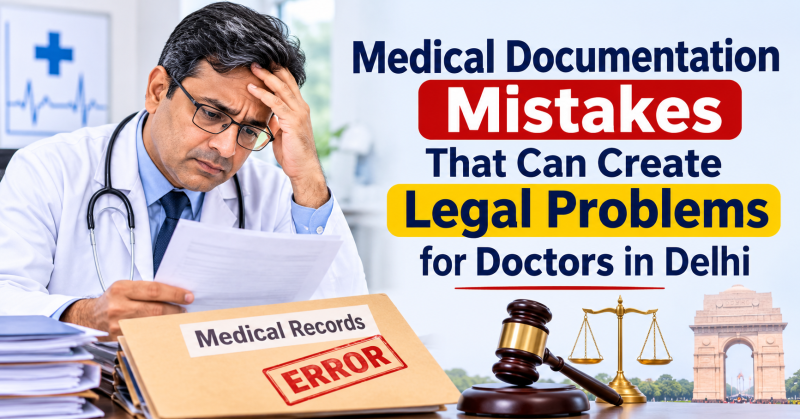
Medical Documentation Mistakes That Can Create Legal Problems for Doctors in Delhi
 Badal
Incomplete, altered, or missing records are among the most common reasons a clinical decision becomes a complaint. This Legal Guide for Doctors in Delhi explains which documentation errors expose practitioners to consumer, medical council, and criminal proceedings, and how to prevent them. In short: record what you assessed, advised, and consented to at the time, keep it legible and dated, never alter it afterwards, and retain it for as long as the regulations and your risk assessment require.
Why Documentation Matters in a Dispute
When a patient alleges negligence, the first thing reviewed is usually the file. Medical services can fall within the Consumer Protection Act, a position the Supreme Court recognised in Indian Medical Association v. V.P. Shantha (1995). Doctors in Delhi may also face a complaint before the Delhi Medical Council, and in serious cases, criminal scrutiny. In Jacob Mathew v. State of Punjab (2005), the Supreme Court set a high threshold for criminal negligence against doctors. Even so, a poorly kept record can make a defensible decision look careless.
Good records do not guarantee any outcome. They do show a reviewing body what you knew and why you acted as you did.
Common Documentation Mistakes
Missing or vague consent. A signature on a blank or generic form is weak evidence. In Samira Kohli v. Dr. Prabha Manchanda (2008), the Supreme Court stressed that consent must be informed, meaning the patient is told about the nature of the procedure, material risks, and alternatives.
Illegible or unsigned notes. Handwriting no one can read, entries without a date, time, or signature, and unnamed authors make it hard to show who decided what.
Overwriting or backfilling. Changing an entry after a complaint arrives, or writing notes long after the event, can damage your credibility far more than the original gap. Corrections should be dated, signed, and leave the original visible.
Copy-paste entries. Identical notes across visits suggest that no real examination took place.
Not recording what the patient declined. If you advised admission, a test, or a referral and the patient refused, that conversation belongs in the record.
Weak handover and referral notes. Verbal-only instructions between shifts or between colleagues often leave no trace.
Delays in giving records. Under the Indian Medical Council (Professional Conduct, Etiquette and Ethics) Regulations, 2002, records are to be maintained for three years, and a patient’s request for them is to be met within 72 hours. NMC has since notified newer conduct regulations, so confirm which provisions currently apply before relying on any timeline.
A Realistic Example
Consider a general physician who treats a patient with chest discomfort and advises an ECG and referral to a cardiology centre. The patient declines and leaves. Weeks later, the family files a complaint. If the file notes only “chest pain, medicines given,” the doctor’s advice cannot be shown. If it records the symptoms, examination findings, the advice given, the patient’s refusal, and the warning about risks, the doctor can show a reasoned approach. The care given is the same in both cases. The paper trail is what differs.
Practical Checklist for Every Patient Record
- Patient identity, date, and time on every entry
- Presenting complaint, history, and examination findings
- Differential diagnosis and the reason for the chosen plan
- Investigations ordered, results reviewed, and follow-up planned
- Prescriptions with drug, dose, route, and duration
- Consent, specific to the procedure, with risks and alternatives discussed
- Refusals, non-compliance, and advice against medical opinion
- Referrals and handovers, with names and times
- Corrections made by single-line strike-through, dated and signed
- Secure storage, with access limited to authorised staff
If you use electronic records, ensure that edits are logged and backed up. Patient data should also be handled in line with applicable data protection law, so check current requirements for your setup.
When to Seek Professional Guidance
Seek advice early if you receive a legal notice, a council inquiry, a patient’s request for records that you are unsure how to answer, or a complaint that touches on a gap in your file. Do not alter or add to the record in response. Preserve it as it stands and speak to a qualified adviser. Practitioners looking for medico legal advice for doctors in Delhi can consult specialists such as Dr. Vimal Kant Goyal, whose medico-legal resources for practitioners explain how to respond to notices and complaints. Seeking legal help for doctors in Delhi before replying to a notice is usually better than correcting the record afterwards.
Conclusion
Most documentation problems are avoidable with consistent habits: write contemporaneous notes, record consent and refusals, never alter after the fact, and store records securely. Use this Legal Guide for Doctors in Delhi as a periodic audit of your own files, and review your templates at least once a year. This article is general information, not legal advice for any specific case. If a dispute arises, consult a qualified medico-legal professional.
Frequently Asked Questions
1. How long should a doctor keep patient records in India?The 2002 conduct regulations require a minimum of three years from the commencement of treatment. Many practitioners keep records longer, since consumer complaints can be filed within two years of the cause of action, and other proceedings may follow later. Check the current NMC and Delhi Medical Council requirements and any rules specific to your facility.
2. Can I add to a record after a complaint is filed?You should not alter existing entries. If a genuine correction is needed, make it as a clearly dated and signed addendum and take legal advice first.
3. Is a signed consent form enough to protect me?No. A form helps only if the consent behind it was informed and specific. Record the discussion as well as the signature.
4. Do small clinics need the same standard of documentation as hospitals?The principles are the same. Clinics may use simpler formats, but the record should still show assessment, advice, consent, and follow-up.
5. Should I give original records to a patient on request?Practice varies, so follow current regulations and your institution’s policy. Providing copies and keeping the originals secure is a common approach. If you are unsure, seek advice before responding.
Source:
Click for the: Full Story
You might like