Close Menu
 World
World
 Biography
 Health
 Education
 Business
 Lifestyle
 Sports
 Technology
 Animals
 History
 Food
Food
 Religious
 Startups
 Movies
 Politics
 Fashion
 Covid
Covid
 Diet
Diet
 Fitness
 Marketing
 Travel
 Science
 Reviews
 Social media
 Stories
 Facts
Facts
 Art
Art
 Entertainment
Deepak

Health
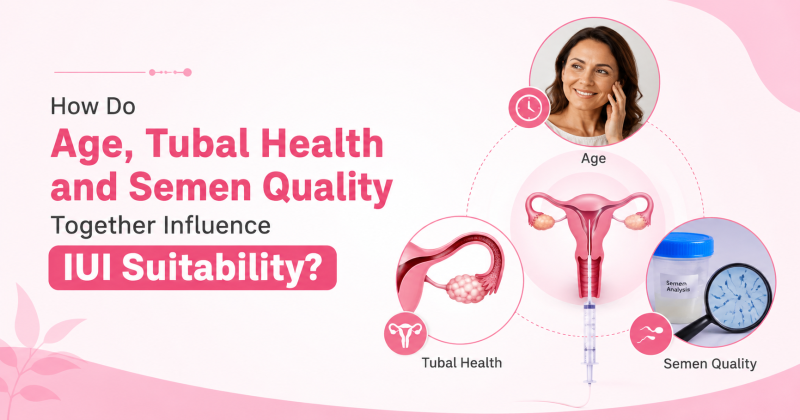
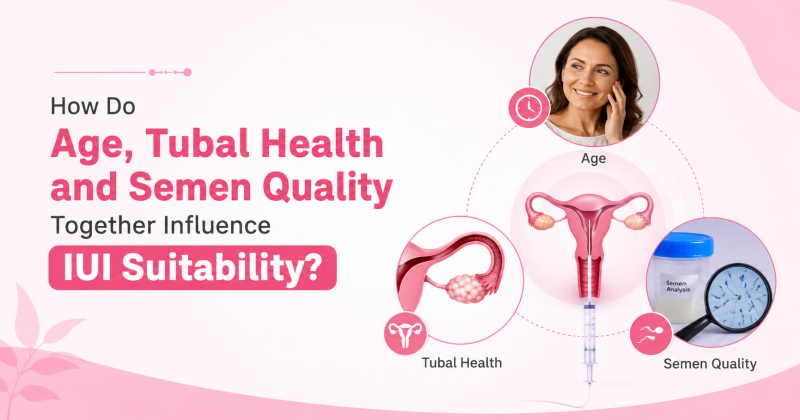
How Do Age, Tubal Health and Semen Quality Together Influence IUI Suitability?
 Deepak
Many couples hear that intrauterine insemination (IUI) is a simple, less invasive first step. That is often true, but IUI does not suit every couple. Whether it is a reasonable option depends on how several factors interact, not on any single test result.
Three of the most important factors are the woman’s age, the health of her fallopian tubes, and the man’s semen quality. Doctors look at all three together before recommending a treatment plan. A careful evaluation at a fertility clinic or an IUI centre in Delhi usually starts here.
What Is IUI, and Why Does Suitability Matter?
In IUI, a semen sample is collected and processed in the laboratory. The healthiest, most active sperm are concentrated and placed directly into the uterus around the time of ovulation.
IUI does not bypass the fallopian tubes. Sperm still have to travel through the tubes to meet the egg, and fertilisation still happens inside the body. That is why the condition of the tubes, the quality of the sperm, and the woman’s egg reserve all affect whether IUI has a realistic chance of working.
Choosing IUI without checking these factors can mean months of effort on a treatment that was never well matched to the couple’s situation.
How Age Influences IUI Suitability
Female age is closely linked to egg quantity and quality. Fertility generally declines gradually with age, and the decline tends to become more noticeable after the mid-30s. Age alone does not decide anything, though. Two women of the same age can have very different ovarian reserve.
When assessing age, doctors usually consider:
- Ovarian reserve, often checked through blood tests such as AMH and an ultrasound antral follicle count
- Regularity of ovulation and cycle patterns
- How long the couple has been trying to conceive
- Any earlier pregnancies or fertility treatments
For a younger woman with good ovarian reserve, a few IUI cycles may be reasonable. For a woman closer to or past her late 30s, or one with reduced reserve, doctors often recommend a shorter trial of IUI, or may suggest moving to IVF sooner, because time becomes a more important factor.
How Tubal Health Shapes the Decision
Because IUI depends on sperm and egg meeting naturally, at least one healthy, open fallopian tube is generally considered essential.
Tubal problems can come from past pelvic infections, endometriosis, previous abdominal or pelvic surgery, or earlier ectopic pregnancy. Often there are no obvious symptoms.
Tubal patency is commonly assessed through:
- Hysterosalpingography (HSG): an X-ray test using contrast dye to show whether the tubes are open
- Sonosalpingography: an ultrasound-based alternative
- Laparoscopy: a keyhole procedure used in selected cases
What the results may mean:
- Both tubes open: IUI is generally a reasonable option if other factors are favourable.
- One tube open: IUI may still be possible, though the plan is individualised.
- Both tubes blocked: IUI is not expected to work, and IVF is usually discussed instead.
- Hydrosalpinx (fluid-filled tube): this may affect implantation, so the tube may need treatment before any procedure.
Why Semen Quality Matters
Semen quality is just as important, and it is assessed through a semen analysis. Doctors look at sperm count, motility (how well sperm move), morphology (shape), and volume.
IUI is often more suitable when semen parameters are normal or only mildly reduced. Clinics commonly look at the total motile sperm count after processing, because this reflects how many healthy sperm will actually reach the uterus. Exact thresholds vary between clinics and guidelines, so your doctor will interpret your report in context.
If sperm count or motility is severely reduced, or if there are other male-factor concerns, IUI may have limited benefit. In such cases, options such as ICSI within an IVF cycle may be discussed. A semen analysis can also vary from one sample to another, so a repeat test is sometimes advised before conclusions are drawn.
Why These Three Factors Must Be Read Together
This is the point many couples miss: the three factors work as a combination. A single favourable result does not guarantee that IUI will work, and a single concern does not always rule it out.
Some examples of how they interact:
- A younger woman with open tubes but significantly low sperm motility may need a different approach than IUI alone.
- A woman in her late 30s with open tubes and normal semen parameters may be offered a limited number of IUI attempts before reassessment.
- A couple with excellent semen quality but blocked tubes will usually not benefit from IUI, regardless of age.
- Mild concerns in two areas may add up, making IUI less likely to succeed than any one concern would suggest.
This is why a complete assessment matters more than relying on one report.
What a Thorough IUI Evaluation Usually Includes
A well-planned evaluation before IUI Treatment in Delhi, or anywhere else, typically covers:
- A detailed medical and fertility history for both partners
- Ovulation and ovarian reserve assessment
- A pelvic ultrasound to look at the uterus and ovaries
- A tubal patency test
- A semen analysis, repeated if needed
- A discussion of how long the couple has been trying and what outcomes are realistic
Reviewing these results together lets the doctor explain whether IUI is a sensible next step, how many cycles are reasonable, and when to consider other options.
Choosing the Right Place for IUI Care
Couples searching for the best IUI centre in Delhi often focus on the procedure itself. A more useful question is whether the clinic will assess suitability properly before recommending it. Good signs include a clear explanation of your test results, honest discussion of realistic outcomes, and a plan with defined checkpoints.
Dr. Poonam Goyal is a gynecologist and fertility specialist in Delhi who approaches treatment this way, looking at the couple’s full picture before advising on IUI or other options. The same careful approach applies to women seeking broader gynecological care, and it is what many patients look for when they search for the best obstetrics and gynecology in Delhi.
When to Seek Professional Guidance
Consider consulting a fertility specialist if:
- You are under 35 and have been trying for a year without success
- You are 35 or older and have been trying for six months
- You have irregular periods, known tubal problems, endometriosis, or a history of pelvic infection
- A semen analysis has shown abnormal results
- You have had previous pregnancy loss or fertility treatment
Early evaluation does not mean you need treatment. It simply gives you clear information so you can make decisions without losing time.
If you would like a consultation regarding IUI treatment, you can visit Dr. Poonam Goyal at:
- Panchsheel Hospital: C-3/63A, 64A, opp. Gokulpuri Police Station, Block C, Yamuna Vihar, Shahdara, Delhi, 110053
- Max Super Speciality Hospital, Vaishali: HOD, IVF & Infertility MAX SUPERSPECIALITY HOSPITAL Vaishali
This article is for educational purposes and does not replace personalised medical advice. Treatment decisions should be made after consulting a qualified doctor.
Frequently Asked Questions
1. Can IUI work if only one fallopian tube is open?
It can in some cases. Pregnancy may be possible if one tube is healthy and open, but the decision depends on your age, ovarian reserve, and semen quality. Your doctor will advise on whether a trial of IUI is reasonable.
2. At what age is IUI less likely to be suitable?
There is no single cutoff. Fertility declines gradually, and ovarian reserve varies between women. Doctors consider age together with test results, and may recommend fewer IUI cycles or an earlier move to IVF for women with reduced reserve.
3. What semen parameters are considered suitable for IUI?
Doctors usually look for adequate sperm count and motility, often assessed as total motile sperm count after processing. Thresholds vary, so your semen report should be interpreted by a fertility specialist.
4. Is an HSG test necessary before IUI?
A tubal patency test is generally recommended, because IUI relies on at least one open tube. Your doctor will decide which test is most appropriate for you.
5. How many IUI cycles are usually tried before considering IVF?
This varies with age, test results, and how long a couple has been trying. Many doctors suggest a limited number of cycles and reassess, rather than continuing indefinitely without progress.
Source:
Click for the: Full Story
You might like