Close Menu
 World
World
 Biography
 Health
 Education
 Business
 Lifestyle
 Sports
 Technology
 Animals
 History
 Food
Food
 Religious
 Startups
 Movies
 Politics
 Fashion
 Covid
Covid
 Diet
Diet
 Fitness
 Marketing
 Travel
 Science
 Reviews
 Social media
 Stories
 Facts
Facts
 Art
Art
 Entertainment
Badal

Health
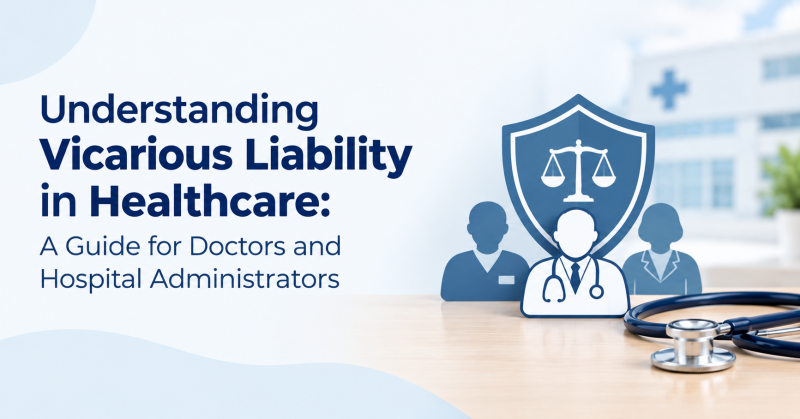
Understanding Vicarious Liability in Healthcare: A Guide for Doctors and Hospital Administrators
 Badal
Badal
Short answer: Vicarious liability means one party can be held legally responsible for the negligent acts of another, usually because of the relationship between them. In healthcare, a hospital may be answerable for the conduct of staff working on its behalf, even when the hospital itself did nothing wrong. Whether it applies in a given case depends on the facts. Many doctors and administrators look for the best medicolegal consultant in Delhi only after a claim arrives, so it helps to understand the basics early.
The issue reaches beyond hospital owners. Consultants, residents, nurses, visiting doctors, and clinic managers can all be affected. A medico legal expert in Delhi will often start by asking a simple question: what was the relationship between the hospital and the person who treated the patient?
What Vicarious Liability Means in a Hospital
Ordinarily, a person is responsible for their own negligence. Vicarious liability is an exception. It can arise where the person who caused harm was acting for another party, within the scope of that relationship.
For a patient, the practical result is that a complaint or claim may be directed at the hospital, the treating doctor, or both. Liability is not automatic. A claimant would still have to establish negligence, and courts and consumer forums examine the facts of each case.
Who May Be Affected
- Hospital owners and administrators, who may face claims for care delivered under their name
- Employed doctors and resident doctors, who may be named alongside the institution
- Visiting or consulting doctors, whose status often creates questions
- Nurses, technicians, and support staff, whose acts can form part of a complaint
- Clinic owners who engage associates, locums, or trainees
Arrangements differ widely. A salaried employee, an honorary consultant, and an independent practitioner who only uses the hospital’s facilities may be treated differently. Contracts and conduct both matter.
Factors That Often Shape the Question
Assessments of this kind commonly look at practical points such as:
- Who appointed the doctor, and under what terms
- Who controls the doctor’s schedule, duties, and billing
- Whether the patient came to the doctor or to the hospital
- How the hospital presents the doctor to the public
- What the patient was told and what they signed
These are considerations, not a formula. Whether a particular arrangement leads to liability is a legal question, and the answer may differ from case to case.
Practical Steps for Hospital Administrators
Clear systems reduce confusion and improve patient safety at the same time.
- Define each doctor’s status in writing. Appointment letters or agreements should state the nature of the relationship.
- Verify credentials. Check registration, qualifications, and privileges before a doctor begins work.
- Set clinical protocols. Cover emergencies, handovers, consent, escalation, and discharge.
- Supervise juniors. Make senior backup and review expectations clear.
- Hold appropriate insurance. Confirm what the policy covers and for whom.
- Track incidents. Record adverse events and near misses, and review them without blame.
- Be clear with patients. Signage, forms, and billing should accurately reflect who is providing care.
A medico legal consultant in Delhi can help review these arrangements, though the contract wording is best settled with a lawyer.
Practical Steps for Doctors
- Understand your own status at each hospital where you practise, and keep a copy of your agreement
- Know what your indemnity or insurance covers, and whether it extends to your work at every location
- Keep records that are complete, timely, and legible
- Document consent, risks explained, and advice given
- Record handovers and instructions to nursing staff clearly
- Escalate concerns about staffing or equipment in writing
- Avoid delegating tasks to someone not qualified or authorised to perform them
For online or telephone consultations, keep the same standard of records: what was discussed, advice given, and any limits of remote assessment.
What to Document
Well-kept records help everyone involved understand what happened, whatever the legal outcome:
- Consent forms and counselling notes
- Treatment notes with times and the name and role of each person involved
- Orders given verbally, with a written entry made as soon as possible
- Handover notes between shifts
- Communication with the patient’s family
- Any adverse event, with an objective account of the response
Never alter a record after a complaint arises. A clarification should be a separate, dated entry.
Common Mistakes to Avoid
- Assuming a visiting doctor’s responsibility belongs only to the doctor
- Leaving employment or visiting terms undocumented
- Letting junior staff manage serious cases without supervision
- Treating a patient complaint as a nuisance
- Replying to a legal notice informally or late
- Discussing the incident in group chats or on social media
- Assuming insurance covers every situation without reading it
When to Seek Professional Guidance
Seek advice when you receive a legal notice, a consumer complaint, or a police query, or when a serious adverse outcome occurs. It is also sensible to seek guidance when drafting doctor-hospital agreements or reviewing risk policies. Early advice helps you respond consistently and keep the record intact.
Conclusion
Vicarious liability is a question of relationships and facts, not a rule that applies the same way to everyone. Clear agreements, supervision, and honest documentation reduce confusion and protect patients. If a claim does arise, the best medicolegal consultant in Delhi is one who explains your position plainly and works alongside your lawyer without overpromising.
If you would like to consult Dr. Vimal Kant Goyal in person, you can visit him at C-3/62A, 63A, 64A, Block C, Yamuna Vihar, Delhi, 110053.
This article is for general information only and is not a substitute for advice on a specific case.
Frequently Asked Questions
1. Is a hospital always liable for a doctor’s negligence?No. It depends on the relationship between them and the facts of the case. A claimant must still establish negligence.
2. Can a visiting consultant also be held responsible?A visiting consultant is generally answerable for their own professional conduct. Whether the hospital shares responsibility depends on how the arrangement works in practice.
3. Does hospital insurance protect individual doctors?Not necessarily. Policies differ in who and what they cover, so read the terms and ask the insurer directly.
4. What should I do if a patient’s family threatens legal action?Stay calm, record the conversation factually, secure the full file, and inform your administration. Consider speaking to a medico legal consultant in Delhi before responding formally.
Source:
Click for the: Full Story
You might like