Close Menu
 World
World
 Biography
 Health
 Education
 Business
 Lifestyle
 Sports
 Technology
 Animals
 History
 Food
Food
 Religious
 Startups
 Movies
 Politics
 Fashion
 Covid
Covid
 Diet
Diet
 Fitness
 Marketing
 Travel
 Science
 Reviews
 Social media
 Stories
 Facts
Facts
 Art
Art
 Entertainment
Rajan

Health
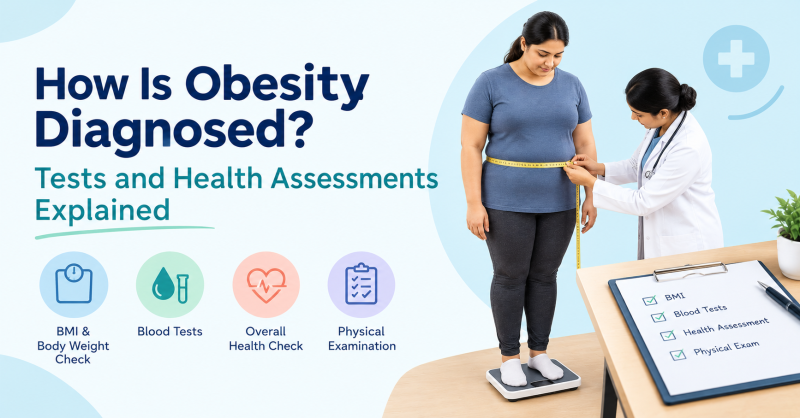
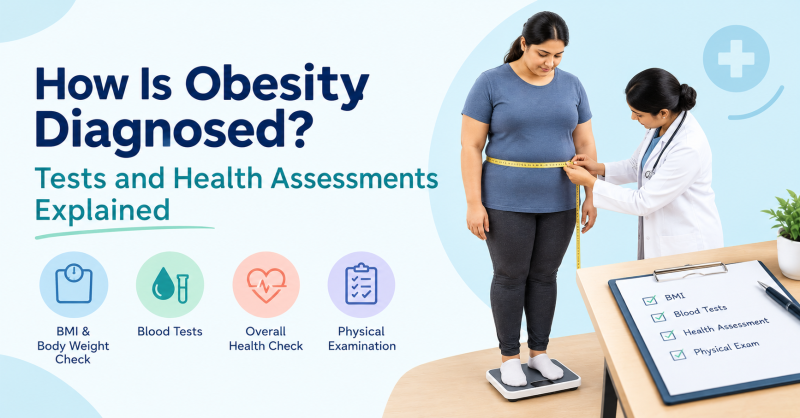
How Is Obesity Diagnosed? Tests and Health Assessments Explained
 Rajan
Rajan
Many people assume obesity is judged by a number on the scale or by how someone looks. In reality, a proper diagnosis looks at body composition, where fat is stored, and how weight is affecting your health. This matters because the right treatment plan, whether lifestyle changes, medication, or surgery, depends on an accurate assessment first.
This article explains the main measurements and tests doctors use, what a full health evaluation involves, and how the results shape the best obesity treatment in Delhi for an individual patient.
Step 1: Body Mass Index (BMI)
BMI is calculated by dividing your weight in kilograms by your height in metres squared. It is the most common screening tool because it is quick and free.
Standard WHO categories are:
- Underweight: below 18.5
- Normal: 18.5 to 24.9
- Overweight: 25 to 29.9
- Obese: 30 and above
BMI Cut-Offs for Indians
South Asians tend to develop diabetes, high blood pressure, and heart disease at lower BMIs than other populations. For this reason, Indian and Asian guidelines use stricter thresholds:
- Overweight: 23 to 24.9
- Obese: 25 and above
BMI is a useful starting point, but it has limits. It can't tell fat from muscle, and it says nothing about where fat sits in the body. That's why doctors rarely rely on it alone.
Step 2: Waist Circumference and Waist-to-Hip Ratio
Fat stored around the abdomen (visceral fat) is more strongly linked to diabetes, fatty liver, and heart disease than fat on the hips or thighs. Doctors measure around the waist at the level of the navel.
For Asian adults, a waist measurement above roughly 90 cm in men and 80 cm in women is generally considered a sign of central obesity. A waist-to-hip ratio above 0.9 in men or 0.85 in women points to the same risk.
Step 3: Body Composition Analysis
To see how much of your weight is fat, your doctor may use:
- Bioelectrical impedance analysis (BIA): a quick, non-invasive scan, often done on a special scale.
- Skinfold measurements: using calipers on specific body sites.
- DEXA scan: a more precise imaging test that measures fat, muscle, and bone density.
These tools are especially useful for people whose BMI misleads, such as athletes or those with low muscle mass.
Step 4: Medical History and Physical Examination
A diagnosis is more than numbers. Your doctor will usually ask about:
- Weight history and previous attempts at weight loss
- Eating patterns, sleep, stress, and physical activity
- Family history of obesity, diabetes, or heart disease
- Current medications, since some can cause weight gain
- Symptoms such as snoring, joint pain, or acid reflux
A physical exam covers blood pressure, heart rate, and signs of conditions like thyroid problems or insulin resistance.
Step 5: Blood Tests and Investigations
Tests help uncover underlying causes and weight-related complications. Common ones include:
- Fasting blood glucose and HbA1c: to check for prediabetes or diabetes.
- Lipid profile: cholesterol and triglycerides.
- Liver function tests: to detect fatty liver disease.
- Thyroid function (TSH): to rule out hypothyroidism.
- Vitamin D and B12: deficiencies are common in people with obesity.
- Hormone tests: such as those for PCOS in women, when symptoms suggest it.
- Sleep study: if sleep apnoea is suspected.
- Abdominal ultrasound: to check the liver and gallbladder.
Understanding the Stages of Obesity
Doctors may classify obesity by BMI class, but also by how it affects daily health:
- Class 1: BMI 30 to 34.9
- Class 2: BMI 35 to 39.9
- Class 3: BMI 40 or above
Two people with the same BMI can need very different care. Someone with diabetes and sleep apnoea may need a more intensive approach than someone with no related conditions.
How Diagnosis Guides Treatment
Once results are in, treatment is matched to your health profile. Options generally move from least to most intensive:
- Lifestyle therapy: structured nutrition, exercise, and behavioural support
- Medication: prescribed for eligible patients, with medical supervision
- Endoscopic procedures: such as intragastric balloons in selected cases
- Metabolic and bariatric surgery: considered for higher BMI, or lower BMI with related conditions, after other approaches have fallen short
Choosing the Best Obesity Treatment in Delhi
The best obesity treatment in Delhi is not a single procedure. It is a plan built after thorough assessment, delivered by a multidisciplinary team of physicians, dietitians, and surgeons. Look for clear explanations of why a treatment is recommended, honest discussion of risks, and structured follow-up.
Where surgery is being considered, technique matters as well. Robotic-assisted procedures can offer precise movements and a magnified 3D view, which some surgeons find helpful, especially in complex or high-BMI cases. If you're exploring a robotic obesity surgeon in Delhi, ask about their case volume and how they handle complications rather than relying on the technology alone. Convenience counts too, since many patients prefer to look for the best obesity treatment in Central Delhi for easier access to repeat visits.
Frequently Asked Questions
1. Is BMI enough to diagnose obesity?
No. BMI is a screening tool. Doctors combine it with waist measurement, body composition, medical history, and blood tests for a full picture.
2. What BMI is considered obese in India?
Under Asian-Indian guidelines, a BMI of 25 or above is classed as obese, and 23 to 24.9 as overweight.
3. Do I need blood tests if I only want to lose weight?
Yes, they are advisable. Hidden issues like thyroid disorders, insulin resistance, or vitamin deficiencies can affect weight and influence which treatment is safest for you.
4. When is surgery considered?
Generally for people with a BMI of 37.5 or above, or 32.5 or above with related conditions, who haven't achieved lasting results with supervised lifestyle changes. Eligibility is decided individually.
5. Can obesity be diagnosed at home?
You can calculate BMI and measure your waist at home as a first check, but a proper diagnosis needs a doctor's assessment.
Conclusion
Diagnosing obesity is about understanding your whole health profile, not just a number on a scale. BMI, waist size, body composition, and blood tests each add a piece of the picture, and together they point toward safer, more effective treatment. When you're ready to look for the best obesity treatment in Delhi, begin with a comprehensive evaluation and choose a team that explains your options clearly.
Disclaimer: This article is for general information and does not replace personalised medical advice. Consult a qualified healthcare professional for diagnosis and treatment.
Source:
Click for the: Full Story
You might like