



 Close Menu
 World
World
 Biography
 Health
 Education
 Business
 Lifestyle
 Sports
 Technology
 Animals
 History
 Food
Food
 Religious
 Startups
 Movies
 Politics
 Fashion
 Covid
Covid
 Diet
Diet
 Fitness
 Marketing
 Travel
 Science
 Reviews
 Social media
 Stories
 Facts
Facts
 Art
Art
 Entertainment
Rajan

Health
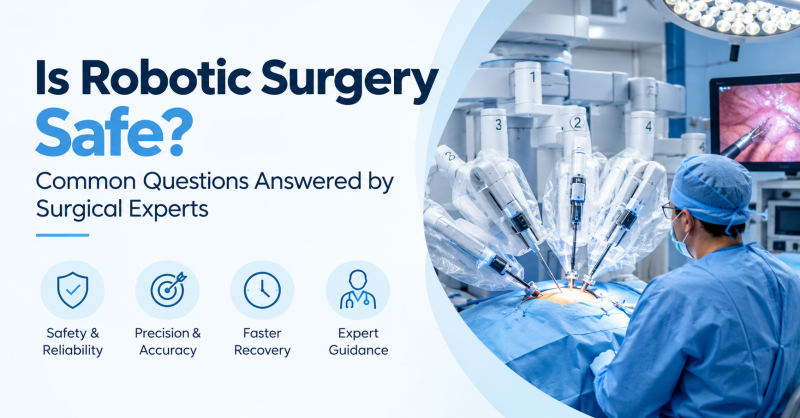
Is Robotic Surgery Safe? Common Questions Answered by Surgical Experts
 Rajan
Rajan
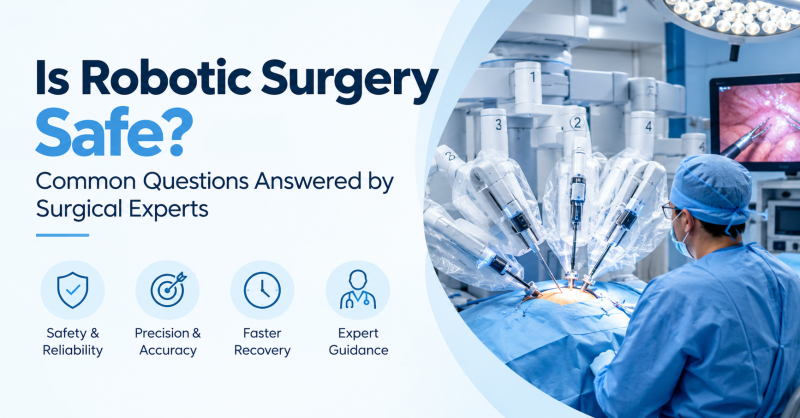
When a doctor suggests robotic surgery, many patients wonder, “Is a machine really operating on me?” It is one of the most common questions surgeons hear. The short answer is that robotic surgery is considered safe and well established when a trained surgeon performs it in a well-equipped hospital. The longer answer depends on what the technology does, who operates it and which patients benefit most.
This guide explains how robotic surgery works, what the real risks are and how to find the best robotic surgeon in Rajinder Nagar or elsewhere in Delhi NCR.
What Is Robotic Surgery?
Robotic surgery is a form of minimally invasive surgery. Instead of one large incision, the surgeon makes a few small cuts and inserts thin instruments and a high-definition camera.
The robot does not think or act on its own. The surgeon sits at a console near the patient and controls every movement. The system converts the surgeon’s hand motions into precise movements of the instruments inside the body. The robot is a highly advanced tool, not an independent operator.
Key features of robotic systems include:
- 3D high-definition magnified vision of the surgical area
- Wristed instruments that bend and rotate beyond the range of a human hand
- Tremor filtration, which steadies the surgeon’s movements
- Ergonomic consoles that reduce surgeon fatigue during long procedures
Is Robotic Surgery Safe?
Yes, for the right patient and the right procedure. Robotic-assisted surgery has been used worldwide for over two decades in urology, gynaecology, general surgery and gastrointestinal procedures. Studies show outcomes comparable to open surgery, and sometimes better for blood loss, hospital stay and recovery time.
No operation is risk-free, though. Safety depends on three things:
- The surgeon’s training and experience with robotic platforms
- The hospital’s infrastructure, including anaesthesia, ICU backup and trained support staff
- Careful patient selection, since not every condition needs a robotic approach
What Are the Possible Risks?
Robotic surgery carries the general risks of any operation, plus a few specific to the technique:
- Bleeding or infection at the surgical site
- Reactions to anaesthesia
- Injury to nearby organs (uncommon)
- Conversion to open surgery if a complication arises
- Longer operating time early in a surgeon’s learning curve
Technical failure of the robot itself is rare. Systems run self-checks before and during surgery, and teams are trained to switch to laparoscopic or open methods if needed. This is one reason experience matters so much.
Benefits Patients Commonly Report
When robotic surgery suits the condition, patients often notice:
- Smaller incisions and less visible scarring
- Less pain after surgery
- Reduced blood loss
- Shorter hospital stay
- Faster return to normal routine
These benefits are not guaranteed. A complex or advanced condition may still need open surgery, and a good surgeon will say so honestly.
Who May Not Be Suitable for Robotic Surgery?
Your surgeon may advise against a robotic approach if you have:
- Extensive scar tissue from earlier operations
- A very advanced or widely spread condition
- Heart or lung problems that make long anaesthesia risky
- Anatomy that makes minimally invasive access unsafe
A thorough consultation, with imaging and a review of your medical history, is essential before deciding.
How to Find the Best Robotic Surgeon in Delhi NCR
Searching for the best robotic surgeon in Delhi NCR can be overwhelming, and the word “best” is often used loosely. Instead of relying on rankings or advertisements, look at verifiable factors:
- Formal training and credentials in minimally invasive and robotic surgery
- Volume and experience with the specific procedure you need
- Hospital affiliation with modern facilities and emergency support
- Willingness to explain alternatives, including non-surgical options
- Clear communication about risks, costs and recovery
- Reliable follow-up and post-operative care
Choosing the Best Robotic Surgeon in Rajinder Nagar
For patients in West and Central Delhi, Rajinder Nagar is a convenient base for specialist care. It is home to Sir Ganga Ram Hospital, one of the city’s long-established tertiary care centres. Many patients searching for the best robotic surgeon in Sir Ganga Ram Hospital are looking for the same combination: an experienced surgeon backed by strong institutional support, from diagnostics to intensive care.
When you compare options for the best robotic surgeon in Rajinder Nagar, check how many robotic procedures the surgeon performs, which conditions they treat and how they handle complications. Surgeons such as Dr. Tarun Mittal, who practises minimally invasive and robotic surgery in this part of Delhi, are worth consulting if you want to understand whether a robotic approach suits your condition. Meeting two specialists before deciding is a sensible habit for any major procedure.
Questions to Ask Before Your Surgery
Going into a consultation prepared helps you get clear answers. Consider asking:
- Why is robotic surgery recommended for me over laparoscopic or open surgery?
- How many similar procedures have you performed robotically?
- What are the specific risks in my case?
- What is the expected recovery timeline?
- What happens if the procedure needs to be converted to open surgery?
- What will the total cost include?
Conclusion
Robotic surgery is a safe, proven option when a well-trained surgeon performs it for the right condition. The technology improves precision and often speeds up recovery, but it does not replace surgical judgment. The surgeon, the hospital and the quality of your pre-operative evaluation matter more than the machine itself.
If you are looking for the best robotic surgeon in Rajinder Nagar, take your time. Review credentials, ask direct questions and choose someone who gives you honest, personalised guidance. An informed decision is the best foundation for a successful surgery and a smooth recovery.
You can also consult Dr Tarun Mittal at Sir Ganga Ram Hospital,Old Rajendra Nagar, New Delhi-110060
Disclaimer: This article is for general informational purposes only and is not a substitute for professional medical advice. Please consult a qualified surgeon about your specific condition.
Frequently Asked Questions
1. Can the robot make mistakes on its own?No. The robot cannot move without the surgeon’s input. Every action is controlled by the surgeon, and the system is designed to stop if it detects a fault.
2. Is robotic surgery better than laparoscopic surgery?Not always. Both are minimally invasive. Robotic surgery offers greater precision and visualisation, which helps in complex or tight-space procedures, while laparoscopy remains an excellent option for many conditions. The right choice depends on your diagnosis and your surgeon’s expertise.
3. How long does recovery take after robotic surgery?It varies by procedure. Many patients go home within one to three days and resume light activity within a couple of weeks, though complex surgeries take longer. Your surgeon will give you a timeline specific to your case.
4. Is robotic surgery more expensive?It can cost more than conventional surgery because of the technology involved. Shorter hospital stays and quicker recovery can offset some of the difference. Ask for a detailed estimate in advance and check your insurance coverage.
5. How do I choose the best robotic surgeon in Rajinder Nagar or Delhi NCR?Focus on credentials, procedure-specific experience, hospital infrastructure and how openly the surgeon discusses risks and alternatives. A consultation, and a second opinion if you are unsure, will tell you more than any online ranking, whether you are looking for the best robotic surgeon in Delhi NCR or a specialist at a hospital like Sir Ganga Ram.
Source:
Click for the: Full Story
You might like






You Might Like this