



 Close Menu
 World
World
 Biography
 Health
 Education
 Business
 Lifestyle
 Sports
 Technology
 Animals
 History
 Food
Food
 Religious
 Startups
 Movies
 Politics
 Fashion
 Covid
Covid
 Diet
Diet
 Fitness
 Marketing
 Travel
 Science
 Reviews
 Social media
 Stories
 Facts
Facts
 Art
Art
 Entertainment
Rajan

Health
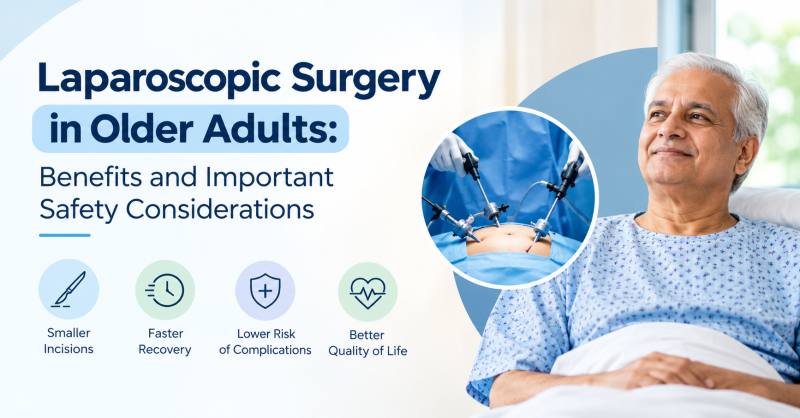
Laparoscopic Surgery in Older Adults: Benefits and Important Safety Considerations
 Rajan
Rajan
For many families, the hardest part of an older parent’s surgery is not the diagnosis. It is the fear that the body may not cope with the operation. A gallbladder problem, a hernia or a digestive condition can seem manageable until the word “surgery” enters the conversation.
The good news is that age alone is no longer a barrier. Laparoscopic, or keyhole, surgery has made operations gentler for people in their 60s, 70s and beyond. This guide explains the benefits, the safety considerations and what to look for when searching for the best laparoscopic surgeon in Sir Ganga Ram Hospital or elsewhere in the city.
What Is Laparoscopic Surgery?
Laparoscopic surgery is a minimally invasive technique. The surgeon makes several small incisions, usually 0.5 to 1.5 cm, and inserts a thin camera and specialised instruments. The abdomen is gently inflated with gas so the surgeon can see clearly on a high-definition monitor.
Compared with open surgery, which needs a single large incision, this approach causes less tissue trauma. For older patients, that difference matters a great deal.
Common laparoscopic procedures in older adults include:
- Gallbladder removal (cholecystectomy)
- Hernia repair, including inguinal, umbilical and incisional hernias
- Appendix removal
- Bowel and colorectal surgery
- Anti-reflux surgery for severe acid reflux
- Selected procedures for stomach and abdominal conditions
Benefits of Laparoscopic Surgery for Older Adults
Older patients often have less physical reserve, so a gentler operation can change the whole recovery experience. Studies and clinical experience consistently point to these advantages:
- Less pain. Smaller incisions mean lower need for strong painkillers, which can cause confusion or constipation in older people.
- Shorter hospital stay. Many patients go home within one to three days, reducing exposure to hospital-acquired infections.
- Faster mobility. Getting out of bed early lowers the risk of blood clots, pneumonia and muscle loss.
- Lower wound complications. Smaller wounds mean fewer infections and, in many cases, a lower chance of wound-related hernias.
- Quicker return to independence. Eating, walking and managing daily tasks usually resume sooner.
Is Laparoscopic Surgery Safe After 60 or 70?
For most older adults, yes, provided the patient is carefully assessed and the surgeon is experienced. Chronological age matters less than overall health, often called “physiological age.” A fit 75-year-old may handle surgery better than a 60-year-old with uncontrolled diabetes or heart disease.
That said, older patients do face higher baseline risks, and these need to be managed deliberately.
Important Safety Considerations
Pre-operative Assessment
A thorough check-up before surgery is the most important safety step. It usually includes:
- Heart evaluation (ECG, echocardiogram if needed)
- Lung function assessment
- Kidney and liver function tests
- Blood sugar and blood pressure control
- Review of all medicines, especially blood thinners
Anaesthesia Concerns
Laparoscopy needs general anaesthesia, and the gas used to inflate the abdomen can affect breathing and circulation. A skilled anaesthesia team will monitor older patients closely and tailor doses to their age and health. Patients with severe lung or heart disease need extra planning.
Medication Management
Blood thinners, diabetes medicines and blood pressure tablets may need adjusting before surgery. Never stop or change them without medical advice.
Nutrition and Frailty
Poor nutrition and frailty increase complication risks. Improving protein intake and light activity before surgery, where time allows, supports healing.
When Open Surgery May Be Safer
Sometimes laparoscopy is not the best option. Extensive scarring from past operations, advanced disease or unstable heart and lung conditions may make open surgery safer. A good surgeon will be honest about this and may convert to open surgery during the procedure if safety requires it. Conversion is not a failure. It is a safety decision.
How to Choose a Laparoscopic Surgeon
The quality of the surgeon and the hospital team strongly influences outcomes, especially in older patients. Look for:
- Formal training and experience in advanced laparoscopic techniques
- Procedure-specific volume, meaning how often they perform your type of surgery
- Hospital infrastructure, including ICU backup, geriatric support and anaesthesia expertise
- Clear communication about risks, alternatives and recovery
- A coordinated approach involving physicians, cardiologists and anaesthetists when needed
Finding the Best Laparoscopic Surgeon in Central Delhi
Searching for the best laparoscopic surgeon in Central Delhi can bring up long lists and bold claims. Rather than relying on advertisements, focus on credentials, hospital affiliation and how thoroughly a surgeon evaluates your parent’s overall health before recommending surgery.
Central Delhi has several established tertiary care centres, and Rajinder Nagar is home to Sir Ganga Ram Hospital, a long-standing multi-speciality institution. Families looking for the best laparoscopic surgeon in Sir Ganga Ram Hospital are typically seeking a combination of surgical skill and strong hospital support for elderly patients. Those comparing options for the best laparoscopic surgery in Rajinder Nagar should ask about experience with older patients specifically. Surgeons such as Dr. Tarun Mittal, who performs minimally invasive and laparoscopic procedures in this area, are among the specialists worth consulting for an opinion on whether keyhole surgery suits an older family member’s condition.
Recovery Tips for Older Adults
- Begin gentle walking as soon as your surgeon allows
- Follow a light, protein-rich diet as advised
- Take prescribed medicines on time
- Avoid heavy lifting for the period your surgeon recommends
- Watch for warning signs such as fever, worsening pain, persistent vomiting or redness at the wound, and report them promptly
- Arrange family support at home for the first week or two
Conclusion
Laparoscopic surgery has made safe, effective treatment possible for many older adults who might once have avoided surgery altogether. Smaller incisions, less pain and quicker recovery are real advantages, but they depend on careful assessment, good anaesthesia care and an experienced surgical team.
If you are searching for the best laparoscopic surgeon in Sir Ganga Ram Hospital, look beyond labels. Ask direct questions, review experience with elderly patients and choose a surgeon who values safety over speed. The right decision, made with accurate information, gives older patients the best chance at a smooth recovery.
Disclaimer: This article is for general informational purposes only and is not a substitute for professional medical advice. Please consult a qualified surgeon about your specific condition.
Frequently Asked Questions
1. Is there an age limit for laparoscopic surgery?No fixed age limit exists. Suitability depends on overall health, the condition being treated and the surgeon’s assessment, not the number on the birth certificate.
2. Is laparoscopic surgery safer than open surgery for the elderly?In many cases, yes. It usually means less pain, fewer wound problems and faster recovery. However, some conditions still need open surgery, so the decision should be individualised.
3. How long does recovery take?Many older adults go home within one to three days and resume light activity within one to two weeks. Complex procedures take longer.
4. What are the main risks for older patients?Anaesthesia-related effects, heart or lung complications, bleeding, infection and, occasionally, the need to convert to open surgery. Proper pre-operative assessment reduces these risks.
5. How do I find the best laparoscopic surgeon in Central Delhi?Check training, procedure-specific experience, hospital facilities and how clearly the surgeon explains risks. A second opinion is a sensible step for any major surgery in an older person.
Source:
Click for the: Full Story
You might like






You Might Like this